 Retro Replay Retro Gaming History, Reviews & Emulation

Retro Replay Review
Gameplay
Aftermath gets to its point quickly. Missiles are coming down, six bases need protecting, and you fire from a central hub to stop them. There is no long learning curve between you and the pressure; the first few moments already ask you to choose which threats matter most.
The limited ammunition is the rule that gives the game its bite. You cannot simply fire at every incoming missile and hope the screen clears itself. A wasted shot can become the mistake you regret when several targets are closing in at once, so the simple act of aiming carries more tension than it first appears to.
Losing the hub is especially punishing. Your bases may still be standing, but you are unable to fire for the rest of that level, leaving you to watch the remaining missiles decide your fate. That harshness will either make you want an immediate rematch or convince you that this particular arcade template is too unforgiving.
There is little room here for anyone who needs variety or a broader adventure around the action. If you enjoy the clean, score-chasing discipline of Missile Command-style defense, though, the directness is part of the draw: learn to waste less ammunition, react faster, and keep one more base alive than last time.

Graphics
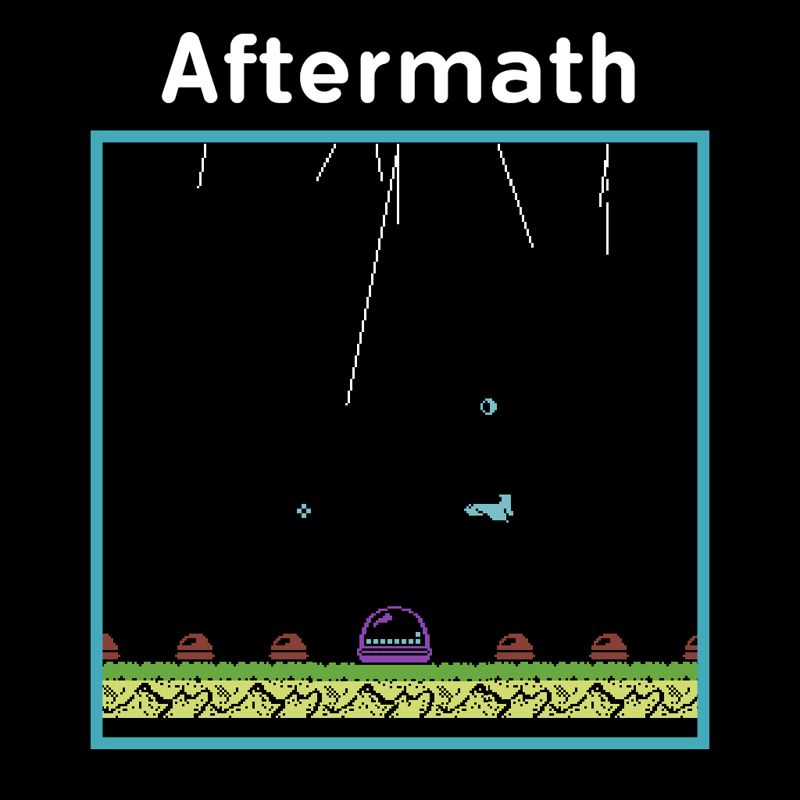
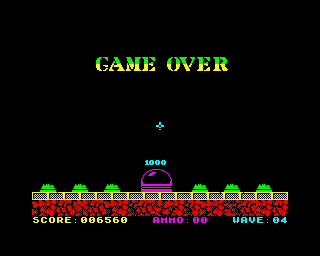
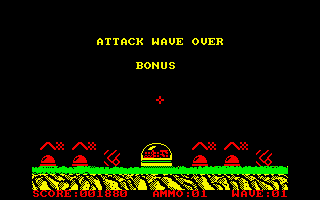
The action is arranged around a clear bottom row of six bases and the firing hub, with enemy missiles descending toward them. That straightforward layout keeps the urgent question—what needs saving next—easy to read while you play.
Story
Aftermath is not interested in building a narrative around its missile defense setup. You are given a battlefield, a set of bases, and an escalating need to prevent their destruction.
That stripped-back approach suits an arcade shooter built around immediate restarts. There are no characters or plot turns to slow down the loop; your personal story is the one where a calm opening suddenly turns into a scramble as your defenses begin to disappear.
If you want stakes delivered through a campaign or a detailed setting, this will feel thin. The stakes here are purely functional but instantly understandable: keep the six bases alive, because once they are all gone, the game ends.
Overall Experience
Aftermath is a focused clone rather than a reinvention. It takes the central pressure of Missile Command—prioritizing incoming threats under limited resources—and presents it without distraction.
Its best moments come when your ammunition is running low and you have to make a hard call about which missile gets your next shot. Its weakest point is equally clear: if that one loop does not hook you, there is not much else waiting behind it.
Give it a chance if you like old-school arcade games that demand quick judgment and accept repeated failure as part of the fun. Everyone else may find its single-minded design more punishing than rewarding, but for a brief high-score session, it has a sharp and recognizable tension.


Reviews
There are no reviews yet.