 Retro Replay Retro Gaming History, Reviews & Emulation
Retro Replay Review
Gameplay
The first stretch gets you thinking like a scavenger rather than charging ahead. Astérix can carry only one item at a time, so every pickup is a small commitment: take an ingredient now, or bring the shield needed to cross an arrow-filled route? That restriction is the heart of the game. It turns even simple progress into a route-planning problem, and it gives the hunt for potion ingredients more bite than a straightforward side-view action game would have had.
Calling in the other Gauls is where the design starts to click. Find Idéfix and you can bring in Obelix to punch through walls, but he is not an unlimited solution; without enough wild boar, he falls asleep. Cacofonix has his own narrow but essential purpose, since he alone can defeat the music-loving Druid. These conditions make the party feel less like a set of interchangeable helpers and more like a chain of problems you have to solve in the right order.
That same structure can be unforgiving. The on-screen time, magic-potion, and wild-boar meters mean you are managing several pressures at once, and carrying the wrong item can turn a sensible-looking path into wasted travel. If you enjoy old puzzle games that expect you to learn by trying, remembering, and revising a plan, that tension is satisfying. If you want an Asterix game where you can simply wallop Romans and move on, its stop-start inventory logic may wear thin.
Still, the game deserves credit for using its license to shape the puzzles rather than merely decorate them. Obelix’s appetite, Cacofonix’s musical role, and Astérix’s brains all matter to progress. The obstacles are not just locked doors with arbitrary keys; they ask you to consider which Gaul and which object belong at the next barrier.
Graphics
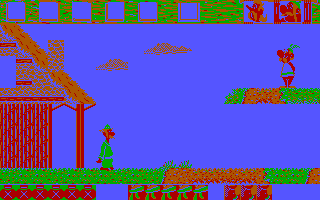
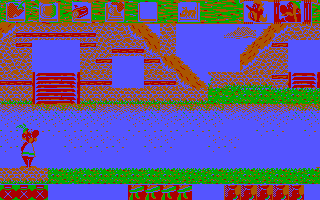
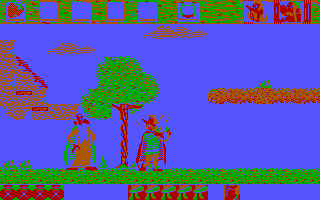
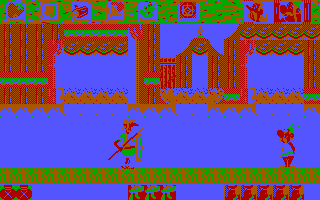
The action is shown from a side view, fitting the game’s movement-and-obstacle layout. More importantly for play, that viewpoint keeps walls, arrows, items, and the routes you need to reconsider in front of you rather than hidden behind a more complicated perspective.
Story
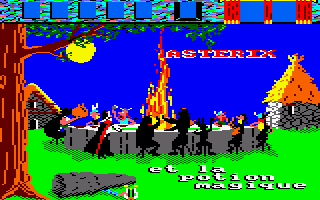
This is Asterix at his most cheerfully ridiculous. Getafix’s kidnapping initially sounds serious, until the Romans’ demand for a power potion is answered by the Gauls’ scheme to make their hair grow faster. It is exactly the sort of smug, playful reversal that suits the comic’s long-running Roman-versus-Gaul joke.
The plot does not need to carry heavy drama because the character-based tasks do that work. Astérix collects, Obelix breaks things, and Cacofonix handles the one enemy whose love of music makes him uniquely qualified. Their familiar traits become practical goals, which makes the licensed setup feel purposeful rather than pasted on.
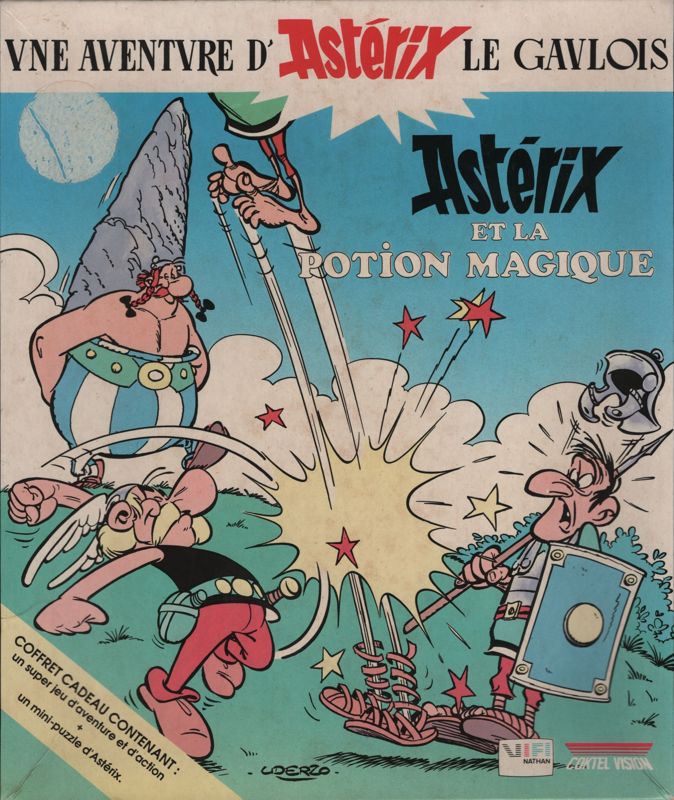
There is also a nice bit of period packaging around the game: the original box included a mini-puzzle and a short black-and-white comic, “In 50 BC.” If this leaves you wanting another take on the Gauls, the related Astérix game is worth a look.
Overall Experience
Astérix et la Potion Magique is more thoughtful than its broad comic premise first suggests. Beneath the Roman gags sits a tightly constrained puzzle game about inventory, paths, summoned allies, and dwindling resources. The satisfaction comes from finally recognizing why a shield, a boar, or a particular character had to be saved for later.
It is not a relaxed adventure. A time limit always hangs over your decisions, and the one-item rule can make experimentation expensive. That friction is very much part of the experience: it gives success weight, but it also means patience is a prerequisite. You need to be willing to retrace your thinking after a bad choice.
Give it a chance if you like compact old-school games that turn familiar characters into puzzle pieces and do not mind being asked to plan ahead. The hair-potion plot is a fun hook, but the lasting reason to play is the way its small set of rules keeps producing awkward, funny, and genuinely satisfying little dilemmas.


Reviews
There are no reviews yet.