 Retro Replay Retro Gaming History, Reviews & Emulation


Retro Replay Review
Gameplay
The first stretch of Greyfell is about getting your bearings: each area is a separate, non-scrolling isometric screen, and progress comes from noticing routes, finding objects, and working out where those objects matter. It has that old-school exploratory pull where an apparently blocked path is less a dead end than a reminder to search elsewhere. When you finally connect an item to the obstacle it solves, the game delivers the small but satisfying feeling that made this kind of adventure-action hybrid stick.
Combat is the awkward counterweight. Norman can punch or use one of three spells, while enemies can be avoided when space allows, but fighting effectively is important because every mistake chips away at his life energy. Flowers restore that energy, so they become valuable breathing room rather than mere scenery. The tension works best when you are deciding whether to risk a confrontation or preserve health by slipping around it; it works less well when the icon-driven command system makes you spend attention selecting an action in the middle of danger.
That interface is central to whether Greyfell clicks for you. You assign the command you want to the action button, which is manageable once you settle into its rhythm, but it adds friction to a game already asking you to navigate enemies and puzzles. Fortunately, being able to save at any time makes experimentation far less punishing. Save before trying an uncertain route or a difficult fight, because this is a game that rewards patience, memory, and a willingness to retry more than quick reflexes alone.

Graphics
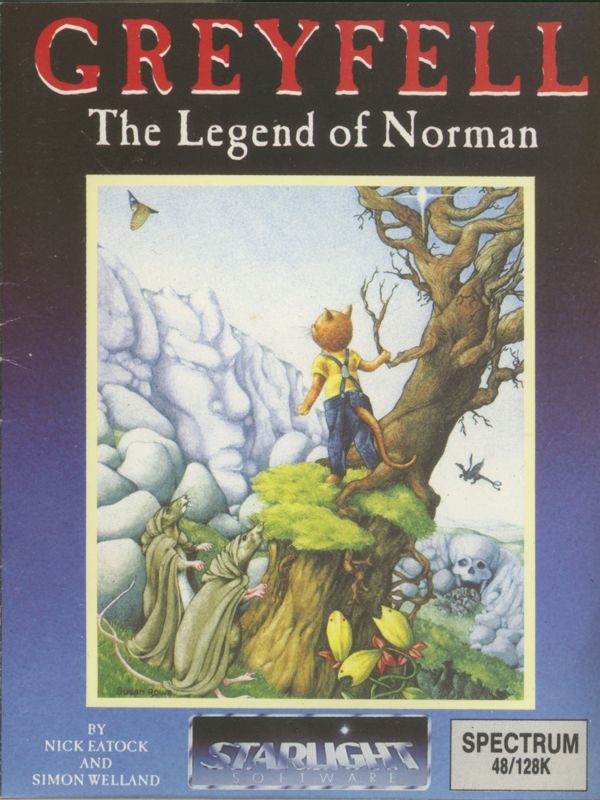
The isometric viewpoint gives Greyfell’s connected screens a clear board-game-like layout, making it easier to judge where Norman, enemies, and exits sit within each small area. Humanoid animal characters fit the fantasy premise neatly, while the screen-by-screen structure keeps each location focused rather than sprawling.

Story
Greyfell does not waste time complicating its motive. Mauron has stolen the Orb of Life, Greyfell is suffering, and Norman decides he has had enough. It is a clean setup, but Norman being an ordinary cat who simply chooses to act gives the quest a pleasantly direct, scrappy tone.
The journey to the magician’s castle supplies a useful sense of direction even as the game sends you through disconnected-looking puzzle spaces. Friendly animals offer hints along the way, including drunken rabbits, which gives the world a little personality without turning the story into the main attraction. Their purpose is practical: listen to them, because their guidance can spare you a lot of aimless wandering.
Don’t come expecting a heavily developed fantasy narrative. The story is a sturdy frame for the exploration and resistance against Mauron, and it succeeds when it keeps you invested in reaching the castle and reclaiming the Orb of Life. Norman’s mission is easy to understand, which matters in a game whose puzzles already demand concentration.
Overall Experience
Greyfell: Legend of Norman is a middling but recognizable piece of 1980s home-computer design: part action game, part item-based puzzle trek, and often more demanding than its premise suggests. Its best moments come from cautiously exploring, extracting a useful clue from a friendly character, and opening up the next piece of the route. The structure invites steady, methodical play rather than a reckless charge forward.
Its frustrations are just as clear. Enemies are persistent, health can disappear when combat goes badly, and the command-selection interface puts an extra layer between you and what you want Norman to do. That may be part of its period charm for you, or it may be the reason the game never becomes more than a curiosity. The anytime save feature does a great deal of work here, turning a potentially exhausting trek into something you can tackle in short, low-risk sessions.
Give it a chance if you enjoy older isometric games where careful observation matters as much as fighting and where progress is earned one useful item at a time. If you want immediate combat responsiveness or a story that develops beyond its opening rescue-the-land premise, Norman’s quest will likely feel stiff. There is enough adventure in Greyfell to make its rougher edges worth tolerating for genre devotees, but it is not an easy recommendation beyond that crowd.



Reviews
There are no reviews yet.