 Retro Replay Retro Gaming History, Reviews & Emulation
Retro Replay Review
Gameplay
L’Aigle d’Or starts with the kind of invitation that either hooks you immediately or sends you running: name your hero in versions that allow it, buy gear, and step into a castle where many earlier treasure seekers have died. There is no gentle runway. You are expected to explore carefully, collect what might matter, and survive long enough to reach the Golden Eagle. That directness gives the opening real tension. A rope is not flavor text when you have had to spend money on it before venturing deeper.
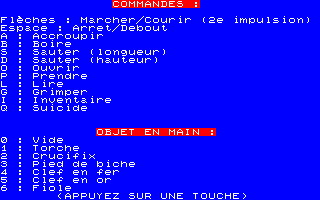
Movement uses the arrow keys, while actions are entered through the first letter of a verb; opening a chest, for instance, means pressing O. It is a distinctly old-fashioned interface, but it suits a game that wants you to stop and consider each interaction rather than rush through rooms. Keys, gold, medicines, equipment, traps, monsters, and hidden passages turn the castle into a compact obstacle course with adventure-game thinking mixed into its action.
The sticking point is navigation. Rooms can look much the same, and the game strongly rewards making a map as you go. That can be wonderfully absorbing when you uncover a secret way through and finally understand how one section connects to another. It can also become frustrating when your notes are incomplete and you are retracing steps through near-familiar spaces. Bring paper, label exits carefully, and treat every room as something to investigate rather than merely pass through.
Graphics
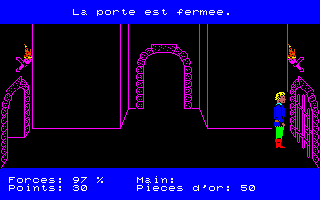
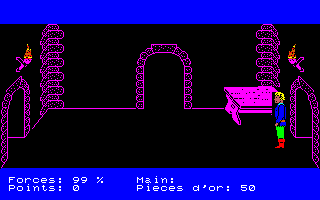
The Amstrad CPC version is noted for enhanced graphics and sound. More importantly for play, the castle is built from fixed, flip-screen rooms, so each new screen arrives as a small space to inspect for exits, hazards, monsters, and secrets. The repeated-looking rooms make mapping more important, not less.
Story
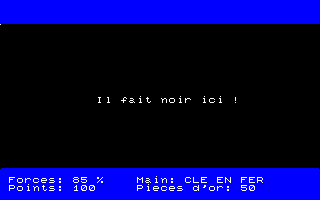
This is a lean treasure quest, not a character-heavy tale. You enter Eagle’s Castle in Westphalia as a seeker after the Golden Eagle, with the warning that plenty of people have died trying before you. That is enough setup to give the castle a threatening reputation without slowing down the search.
The story is mostly carried by what you do: purchasing the right equipment, finding keys, pushing into hidden routes, and keeping yourself alive with medicine when danger catches you. The objective stays clear throughout, which is a strength in a game already asking you to hold a map and an inventory plan in your head.
Do not come expecting elaborate twists or a large cast. The payoff is the feeling of penetrating a dangerous place one room at a time, until the Golden Eagle stops being an abstract prize and becomes the answer to all that cautious exploration.
Overall Experience
L’Aigle d’Or has the stern, hands-on charm of a 1986 home-computer adventure. It makes you supply part of the experience yourself: your map, your memory of which chest or corridor mattered, and your willingness to learn through risk. When that rhythm clicks, the castle feels like a genuine puzzle box rather than a sequence of screens.
Its age is felt most sharply in the interface and in the visual sameness of the rooms. You will need tolerance for keyboard-letter commands and for getting lost. Yet those rough edges are tied to the game’s central pleasure: this is an adventure about paying attention, not being swept along.
Give it a chance if you enjoy methodical dungeon delving, handwritten maps, and games that make every discovery feel earned. Skip it if you need quick navigation, constant story momentum, or clear guidance. For the right retro mood, this remains a demanding little hunt with a tangible destination. For more background on the game, see L’Aigle d’Or’s history and release information.


Reviews
There are no reviews yet.