 Retro Replay Retro Gaming History, Reviews & Emulation

Retro Replay Review
Gameplay
The first few minutes are all about resisting the urge to treat the balloon like a conventional shooter. You can steer and drop bombs, but your actual control is tied up in high-pressure thrust, the wind, hydrogen gas, and sandbags. That makes every pass over an enemy shack feel less like lining up a shot and more like wrestling a slow-moving machine into the one useful patch of sky.
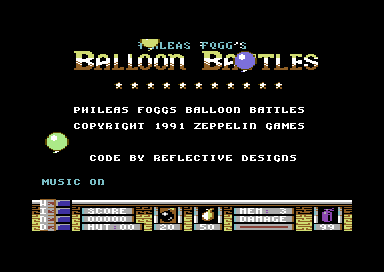
Once that starts to click, the game’s mix of jobs becomes its strength. You are mapping territory, locating shacks, bombing them, and avoiding obstacles along with Musketeers firing cannons and muskets. The visible wind direction and counters for bombs, sandbags, damage, lives, remaining shacks, and score give you the information needed to make decisions, rather than leaving the balloon’s behaviour entirely to guesswork.
The catch is that the day’s rising temperature makes the balloon rise and fall more quickly. That is a smart source of pressure because it changes the handling problem as you play instead of letting you settle into one safe rhythm. Frustration can set in when wind and altitude work against a carefully planned bombing run, but that same resistance is the point: success feels earned when you manage to correct course and finish the job.
Graphics
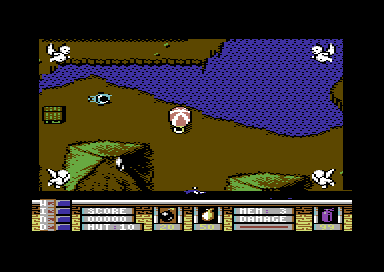
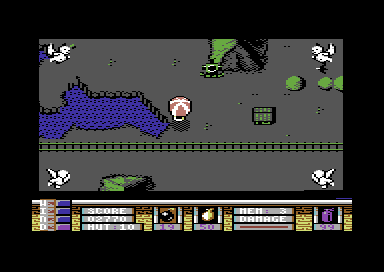
The action uses a top-down, multi-directional scrolling view, keeping the balloon, terrain, enemy shacks, and hazards in the same moving playfield. A status display around the action tracks wind, supplies, damage, lives, objectives, and score, which is especially useful in a game built around juggling several pressures at once.

Story
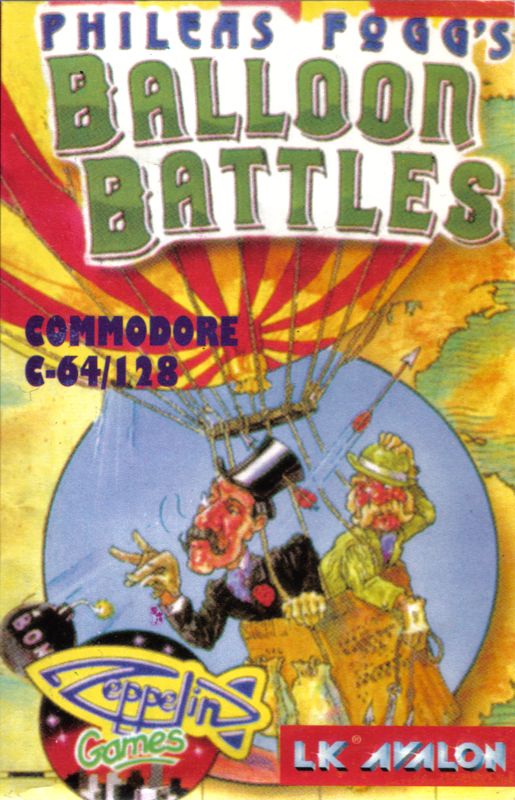
The story is gloriously strange in a way that suits a compact arcade game. While attempting to travel around the world in 80 days, Phileas Fogg pauses to assist the Allies, taking his hot-air balloon over enemy territory to map it and destroy enemy shacks.
That premise does not need much elaboration to do its job. It gives the missions an immediate purpose and neatly explains why the central vehicle is a balloon rather than something more familiar to an action game. Fogg’s famous journey becomes a detour into wartime aerial work.
More importantly, the narrative and play pull in the same direction. Mapping ground and identifying bombing targets are not decorative excuses around the action; they are the stated reason you are exposed to wind, obstacles, and hostile fire. It is a thin setup, but a focused one.
Overall Experience
Phileas Fogg’s Balloon Battles is an appealingly peculiar action game because it asks you to master a vehicle that is inherently hard to command. The top-down scrolling format keeps the goal clear, while the balloon’s shifting altitude and the wind turn clear goals into tense, improvised routes.
You should give it a chance if you enjoy arcade challenges where movement itself is the main puzzle. The bombing matters, but the memorable part is making the balloon arrive in a useful position with enough bombs, sandbags, and durability left to capitalize. If you want immediate, precise control, its deliberate unruliness may wear you down.
Its payoff is the satisfaction of converting a messy situation into a successful pass: reading the wind, adjusting height, avoiding fire, and finally putting a bomb on the right shack. That is a sturdy loop, and the warming-day twist gives it enough escalating instability to make each outing feel like more than a routine score chase.



Reviews
There are no reviews yet.