 Retro Replay Retro Gaming History, Reviews & Emulation
Retro Replay Review
Gameplay
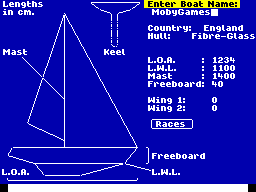
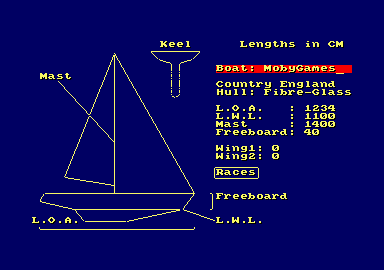
The first race in Sailing asks you to do more than point a boat at a finish line. Before you launch, you challenge an opponent no more than two ranking spots above you, look at its ship and the weather report, and adjust your own boat accordingly. Changing such things as hull material and overall length gives the league ladder a welcome strategic hook: a loss can make you reconsider your preparation instead of simply blaming a bad turn.
Once the race starts, you are in a first-person view, following the course and trying to beat the opposing vessel. The useful information sits at the bottom of the screen: wind strength, wind direction, boat speed, and a mini-map. The game’s central pleasure is in reading those indicators and working out how the conditions should change your route. It is a compact simulation-minded challenge, and it rewards patience more than quick reflexes.
The spinnaker creates the most interesting trade-off. You can raise and turn it, but doing so prevents manual steering. That forces a real commitment: chase better sail control and accept that you cannot instantly correct your course, or retain direct control and give up that option. Frustration arrives when you misread the wind or commit at the wrong time, but that tension is also what separates the races from a straightforward speed contest.
Difficulty selection changes your starting league position, which in turn changes the caliber of the opponents immediately available to challenge. That is a sensible way to tailor the climb. Start lower if you want time to understand the instruments and boat setup; begin higher if you already enjoy being asked to make informed choices before the race even begins.
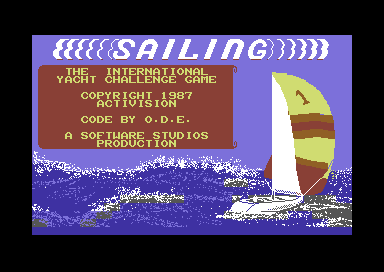
Graphics
The racing view puts you in the boat rather than above it, with the most important visual element being the status display along the bottom. Wind data, speed, and the mini-map are the pictures you will spend the most time reading, because they directly guide every decision on the water.
Story
There is no grand narrative pulling you through the season. Your story is the league climb: pick an opponent above you, race them, and work toward the top ranking.
That stripped-back structure fits the game’s competitive focus. Each rival represents the next hurdle rather than a character with a separate arc, so the drama comes from whether your boat preparation and on-water decisions can close the gap.
It also means you need to bring some of your own motivation. If rising through a sporting ladder is enough of a goal, the format has clarity. If you need changing events or a story beyond the competition itself, the league framework may feel dry.
Overall Experience
Sailing is most enjoyable when you treat it as a small tactical sailing problem repeated under changing conditions. The loop of scouting weather, modifying the boat, and then managing the course gives victories more weight than a simple arcade race would. You are not merely trying to go fast; you are trying to make a plan that holds up once the race begins.
Its narrow focus is both its strength and its limit. The first-person races and constant instrument checks can feel methodical, and the restriction on steering while operating the spinnaker will test your patience. Yet the rule is meaningful rather than arbitrary, because it makes sail handling a decision with consequences.
Give it a chance if you enjoy older sports games that expect you to learn their logic and take pride in incremental improvement. The payoff is the satisfaction of turning weather information and equipment choices into a climb up the league. At 6.9, it is a solid, specialized sailing game: engaging for the right temperament, but unlikely to convert anyone who wants instant action over considered racing.


Reviews
There are no reviews yet.