 Retro Replay Retro Gaming History, Reviews & Emulation
Retro Replay Review
Gameplay
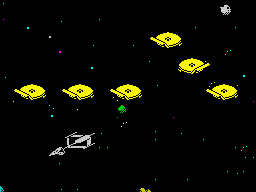
The first stage gets straight to the point: mines arrive in groups of three, and staying alive means moving cleanly while firing before any survivors swing back in from the side. It is basic arcade pressure, but it works because the threat does not politely disappear once you have dodged it. A loose run can turn dangerous very quickly, so shooting aggressively is usually the safer choice.
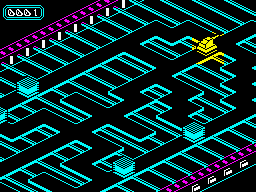
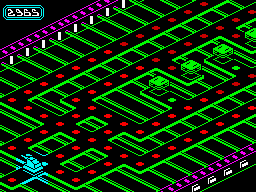
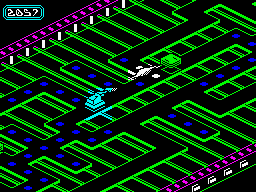
Reaching the station changes the rhythm nicely. The Pac-Man-like maze has you driving a tank around glowing balls while avoiding robot enemies, except you can shoot back and you only need enough pickups to earn access to the exit. That makes it less about perfectly clearing a board and more about judging when you have taken sufficient risk. The important wrinkle is the uncollectable balls: their layout becomes information you need to carry into the next test.
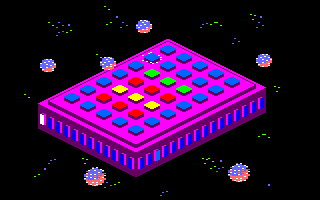
That final panel is where Sigma 7 becomes more demanding than it first appears. You bounce a ball across buttons to recreate the earlier pattern, but a moving force field can cost a life and button hits only count when the required colour is active. It is a fussy, tense combination of timing and recall. Then the whole sequence loops with faster enemies, giving skilled runs a clear endurance challenge rather than a neat final ending.
Graphics
Sigma 7 moves between a diagonally scrolling shooter, a maze-based tank screen, and a button panel full of flashing colours. The changing viewpoints help separate its three challenges, while the coloured buttons are directly tied to the final stage’s timing puzzle.
Story
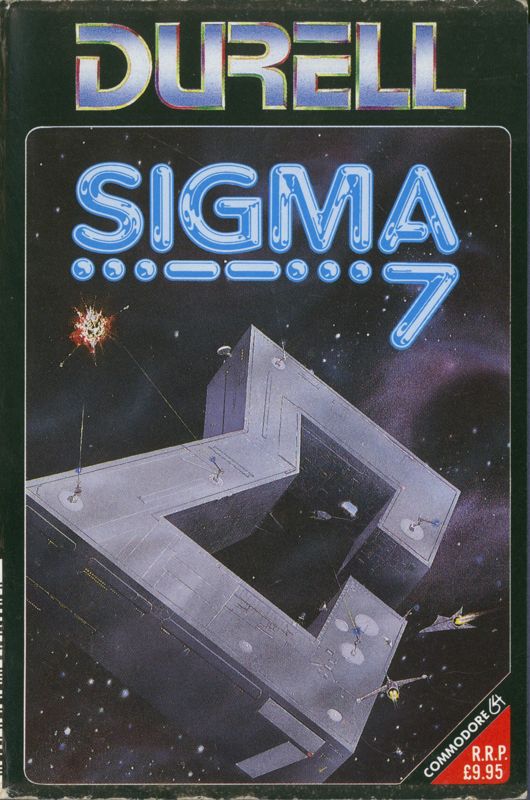
There is not much narrative weight here, but the setup does its job: the robots on space station Sigma 7 have gone out of control, and you are working toward the central controls to put things right. It gives the succession of arcade tests a destination instead of making them feel entirely random.
The station is less a place to explore than a frame for the escalating tasks. You are not asked to untangle a large sci-fi drama; you are asked to survive the route to a solution. For this kind of 1980s score-chasing action, that is enough.
The strongest bit of continuity comes from the maze feeding its pattern into the final panel. Remembering what you saw gives the stages a small but meaningful connection, making the journey through the station feel more deliberate than three disconnected minigames.
Overall Experience
Sigma 7 is a sharp little arcade relay race. Its best quality is the way it keeps changing what it wants from you: shooting accuracy first, then practical maze routing, then memory and precise timing. None of the stages has room to become elaborate, but together they create a satisfying progression from immediate action to focused concentration.
Frustration is part of the deal. Mines that return from the side punish half-finished evasions, the maze asks you to take risks around enemies, and the last challenge can waste a life over one mistimed interaction with the force field or colour cycle. If you want a forgiving game or a deep campaign, this will wear thin. If you enjoy learning a compact arcade sequence until it starts to click, its brisk loop is the payoff.
A 6.1 feels fair: Sigma 7 is inventive enough to stand out, yet its appeal depends heavily on your tolerance for repetition and old-school punishment. Give it a chance if the idea of mastering three linked tests sounds more fun than exhausting. For a little more context on its release history, see Sigma 7’s game history.


Reviews
There are no reviews yet.