 Retro Replay Retro Gaming History, Reviews & Emulation
Retro Replay Review
Gameplay
The first few rounds of Quink are wonderfully direct: scan eight entries, work out the shared connection, and remove the intruders before the clock expires. That is a strong puzzle hook because you are not simply recalling facts; you are testing a theory about the whole list, then risking a selection on it. When you instantly see the pattern, it feels clever. When you only see a possible pattern, every click carries tension.
The three-life rule keeps wrong guesses from being harmless experimentation, while the round score requirement stops survival alone from carrying you forward. That combination gives the game real bite. You can identify some loners, avoid a complete collapse, and still fail to advance because you did not score enough. If you enjoy quiz games that ask for accuracy under pressure, this is exactly the kind of friction that makes another attempt tempting. If you want to poke around until an answer reveals itself, it can become irritating fast.
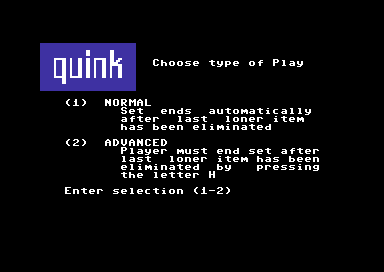
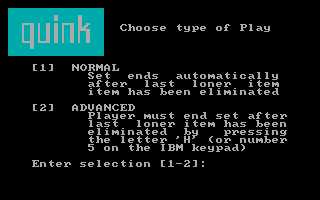
Category variety is Quink’s best defense against repetition. Fame, pop culture, science and nature, general knowledge, and the more whimsical Imagination material create very different kinds of mental searches. Mixed Bag sounds particularly punishing in the right way, since it prevents you from settling into one comfortable knowledge lane. Difficulty and time options let you tune the pace, while advanced play makes you take responsibility for declaring the board cleared rather than waiting for confirmation.
The challenge rounds are smart palate cleansers. A single-loner round turns the game into a quick-draw test: find one answer quickly or lose the opportunity on a bad pick. Matchmaker shifts the question from exclusion to association, asking you to pair an outer item with the center entry. Neither changes the basic trivia-puzzle foundation, but both give the scoring chase enough variation to break up standard rounds.
Graphics
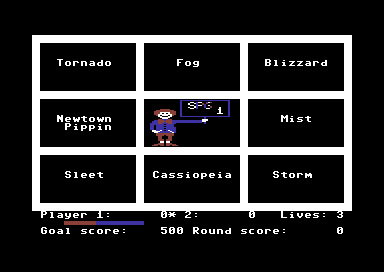
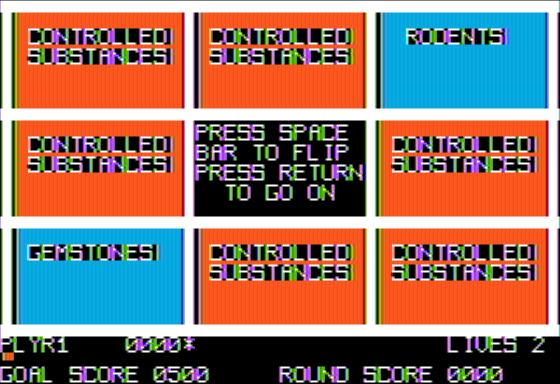
Quink’s action is built around lists of words and a board of entries, with eight items in standard rounds and nine in Matchmaker. That straightforward layout suits a game where you need to compare terms quickly; the important thing is keeping the possible connection and the suspected loners in your head before time runs down.
Story
Quink turns each round into a tiny story of inference: a cluster of terms arrives, a hidden connection gradually comes into focus, and the outliers become the problem you have to solve. The payoff comes from recognizing the category before the timer makes you commit.
The subject matter supplies the game’s personality. A set built around famous generals plays differently in your head from one about mixed drinks, diseases, opera, or Monopoly avenues, even though the rule is unchanged. That broad spread gives each new board a fresh little premise without needing much setup.
There is also a satisfying escalation built into the scoring structure. A correct answer is not merely a personal victory; it is part of reaching the round goal and earning the next set of questions. Challenge rounds punctuate that rhythm with smaller, more immediate tests of speed or matching instincts.
Overall Experience
Quink is a lean, demanding trivia puzzle that works best when you enjoy being put on the spot. Its central trick is strong enough to survive repeated use because a list can be difficult for several different reasons: you may not know the subject, you may know it but miss the category, or you may see the category and still hesitate over which entries do not fit.
The frustration is honest rather than arbitrary. A wrong answer costs a life, and a cautious run can still end short of the score goal, so bad rounds sting. Yet that pressure is also why the game has more staying power than a loose collection of questions. It asks you to perform, not just recognize an answer after seeing it.
Give Quink a chance if word association, general knowledge, and timed deduction sound like a satisfying mix. The best sessions will be the ones where you trade theories with a second player or surprise yourself by spotting a connection at the last second. It is less welcoming as a relaxed trivia browse, but for gamers who like their knowledge tests brisk and unforgiving, the payoff is a sharp little brain workout.


Reviews
There are no reviews yet.