 Retro Replay Retro Gaming History, Reviews & Emulation

Retro Replay Review
Gameplay
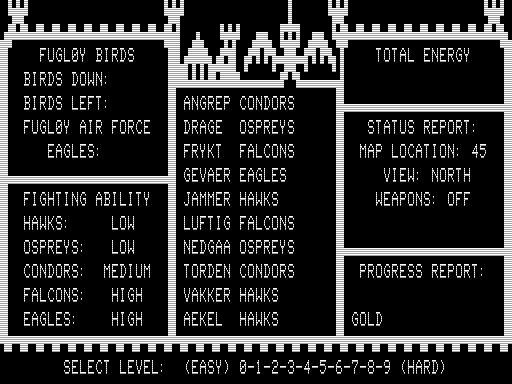
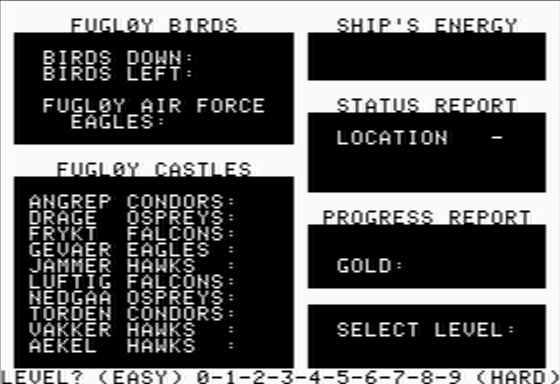
Voyage of the Valkyrie is at its strongest when you stop treating the castles as a straight checklist. You begin with information on each castle’s defenders, and that immediately invites a more interesting question than “where do I go next?”: which fight can you afford right now? A heavily defended target may be worth bypassing, while a quick skirmish followed by an escape to refuel can be the smart play. That mix of route planning and opportunistic combat gives the game more bite than its simple goal suggests.
Energy is the pressure behind nearly every decision. Travel drains it, firing drains it, and taking enemy hits drains it; let either your general stores or weapon energy run dry and your run is over. Friendly bases offer relief, and disengaging from combat restores weapon energy, but neither safety net removes the tension. The roving Eagles are especially nasty because one hit with shields down ends your career outright. This is a game that rewards leaving before greed turns a manageable flight into a restart.
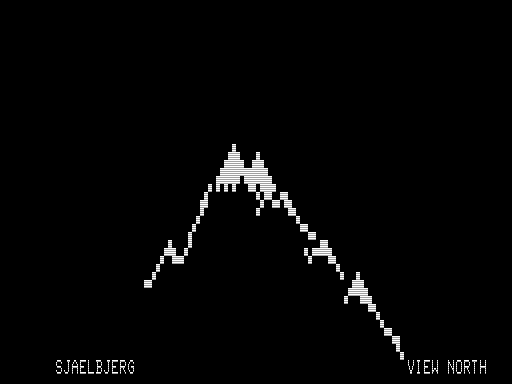
The first-person view splits its attention between travel and battle. While flying the island, you read the mountain terrain and fog banks for safe passages. In combat, a moving crosshair is your means of lining up laser shots on attacking birds. It is direct, but not mindless: piloting, ammunition-like energy management, and an enemy hierarchy from Hawks through cleverer Eagles keep you alert.
Because FUGLØY never changes, a paper map is not busywork here; it is part of the game’s intended learning curve. The included worksheet makes sense once you have flown into enough bad routes to want notes of your own. Ten difficulty settings also give the island a long runway, changing opposing forces by roughly an order of magnitude. On Apple II, two people can divide piloting and gunnery duties, a genuinely fitting cooperative setup for a game built around divided attention.
Graphics
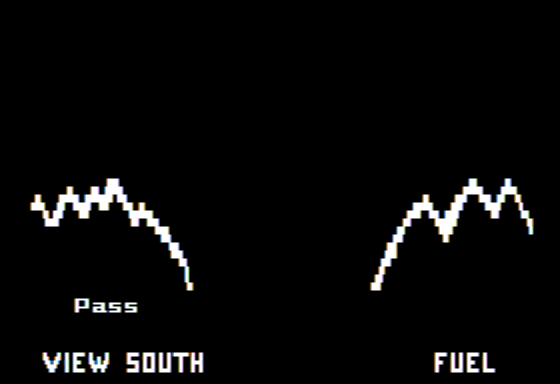
The game stays in a first-person cockpit view. Travel shows the island’s topography and its dangerous fog banks, while combat puts attacking birds in front of a moving aiming reticle. The key visual strength is functional clarity: you can read that you are threading a hazardous route or trying to catch a target in the crosshairs without a detached map or external battle screen.
Story
The story is a thin but flavorful frame: you pilot the Valkyrie to reclaim the ancient Ø for Scandinavian ancestors by conquering FUGLØY’s ten castles. It does not need more plot to establish a purpose. The island, its Norwegian-named strongholds, and its hostile bird air forces give your repeated sorties a sense of place.
Birds as the defending air force are a strange choice, and that strangeness helps. Hawks serve as the entry-level danger, while Eagles become the feared threat, especially the roving squadron that can instantly punish exposed shields. The game turns that hierarchy into a practical reason to respect the island rather than merely a bit of lore.
Richard Wagner’s operas are the memorable storytelling flourish. Music appears at key stages, and the Apple release even pushed stereo through an output normally used for data, with the manual recommending a hardware modification to hear it. For an early-1980s computer game, that is a bold effort to make a conquest run feel ceremonial. For more release and historical background, see Voyage of the Valkyrie’s history.
Overall Experience
This is a demanding, deliberately old-fashioned game in the good sense: it expects you to learn the island, take notes, and accept that a bad decision can end a run fast. The static map may initially seem limiting, but it is what lets knowledge accumulate. Once routes and castle threats start to stick in your head, the game shifts from daunting maze to tactical playground.
The friction is real. A veteran pilot can be erased by a single unshielded Eagle hit, and resource mistakes have consequences. If you want constant novelty or a forgiving action game, that harshness will wear you down. If you enjoy mastering a fixed space through planning, though, the danger makes each successful run feel earned rather than accidental.
Voyage of the Valkyrie deserves a look as an ambitious Apple II action game that joins flight combat, navigation, strategy, and unusually prominent music into one tense trip. Its best moments come from making a cautious call—skip this fortress, dive through that pass, refuel now—and discovering it was exactly what kept the Valkyrie flying. The payoff is worth the patience for anyone willing to meet it on its own exacting terms.


Reviews
There are no reviews yet.