 Retro Replay Retro Gaming History, Reviews & Emulation

Retro Replay Review
Gameplay
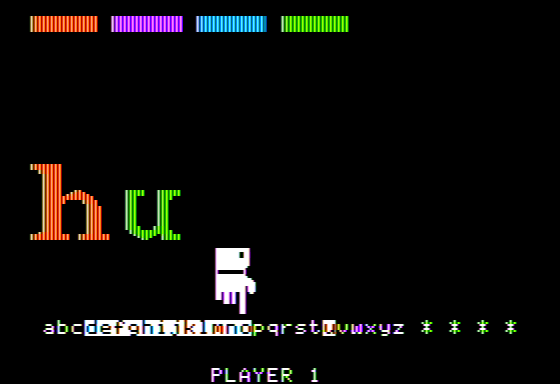
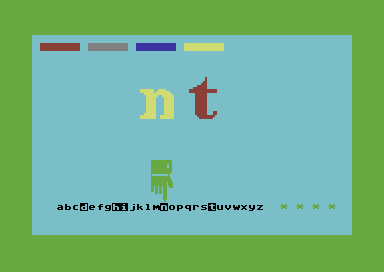
The first few rounds make the hook immediately clear. An incomplete word starts at the top, drifts steadily downward, and asks you to identify its missing letters from the alphabet lined up below. It is a basic idea, but the moving deadline changes the mood from a worksheet to a quick-fire spelling test. You are not merely recognizing a word; you are recognizing it before your attention slips and the timer, made visible by that falling word, wins.
What works well is the balance between certainty and panic. A nearly complete word can make you feel clever for an instant, then turn awkward when several blanks leave too many possibilities. Correct answers earn points, while wrong letter choices hurt your scoring, so blind guessing is not a great long-term strategy. Hints are a fair concession: spend one to reveal a missing letter, solve the word with less credit, and move on. They make the game friendlier for younger players or anyone brushing up on spelling without removing the tension entirely.
The seven skill levels matter because they adjust both word complexity and available time. Early settings let you settle into the rhythm; higher ones demand faster recognition and a stronger vocabulary. The demon words are the most effective wrinkle. They move much faster, offer no hints, and are deliberately harder, creating sudden bursts of pressure. Normally, failing one does not cost a life, which keeps them from feeling punitive. Level 7 changes that with challenge rounds made solely of demon words, and that is where the game stops being a gentle educational diversion and starts asking for real composure.
Five lives give each session a clean arcade-like shape, but the repetition can wear thin if the central task does not already appeal to you. There is no escaping the fact that you will spend the whole game filling blanks in words under time pressure. Still, a pool of more than 700 words gives the format useful variety in length and difficulty, and the scoring encourages you to improve rather than simply scrape through with hints.
Graphics
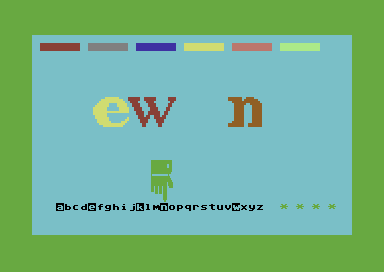
The screen is built around the falling word at the top and the complete alphabet along the bottom, so your eyes always know where to look. Asterisks mark the available hints, and the downward movement gives the otherwise plain word display its urgency. This is a functional, uncluttered look that keeps the letters and blanks front and center.
Story
There is no narrative to carry you from round to round. The game’s drama comes from the word itself: whether you can solve it, whether you should spend a hint, and whether it will reach the bottom before you lock in the answer.
That absence suits the format. A story would only slow down a game built around immediate recognition, and the demon words provide all the escalating stakes it needs. Their unanswered solutions remain hidden when you fail, which gives them a slightly mischievous edge and invites another attempt.
If you want character, plot, or a broader educational context around the spelling exercises, this will feel bare. If you are happy with a focused score chase where vocabulary knowledge is the whole point, the lack of narrative is easy to accept.
Overall Experience
Webster: The Word Game succeeds because it understands that spelling can become exciting when every answer has a deadline. Its rules are easy to grasp in seconds, but the faster settings and demon words prevent it from becoming completely automatic. You can play a short run, lose all five lives, and still feel tempted to restart because you know a few quicker decisions would have changed the result.
The payoff depends on your tolerance for educational games that stay focused on one task. It does not broaden beyond incomplete words, letters, hints, and score management, so it will not convert anyone who finds spelling drills inherently dull. Yet that focus is also its strength: it turns vocabulary recognition into a clean contest rather than burying it under distractions.
Give it a chance if you enjoy word games with arcade pressure, want a straightforward way to test spelling, or are looking for a challenge that can scale from approachable to punishing. The toughest mode, with its demon-word challenge rounds, gives practiced players a reason to return. For everyone else, the lower levels offer a brisk and honest little word game that makes every missing letter count.


Reviews
There are no reviews yet.