 Retro Replay Retro Replay gaming reviews, news, emulation, geek stuff and more!
Retro Replay Review
Gameplay
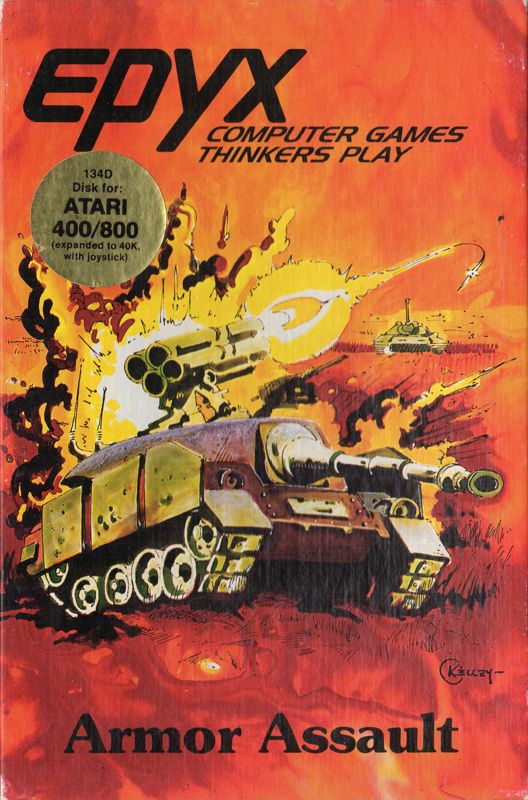
Armor Assault starts with a pleasingly focused premise: you command just six tanks, not an entire army, and each round asks for a handful of consequential orders. You choose where to move, whether to lay mines, and whether a tank should use direct fire or hold for opportunity fire. Then both sides carry out their orders simultaneously. That delay between planning and resolution is where the game earns its tension, because an apparently safe route can become a trap the instant both commanders have made the same clever guess.
Opportunity fire is the standout idea. Committing a tank to it means giving up direct fire for the round, but it can punish an enemy tank that moves into the wrong place. You are not merely lining up shots; you are trying to read an opponent’s intentions. That makes cautious movement, feints, and timing matter more than brute force. It can also be frustrating when your prediction misses and a tank spends the round waiting for an enemy that never crosses its sights, but that frustration belongs to the central contest rather than feeling arbitrary.
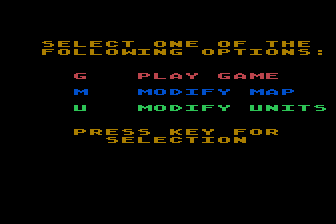
Terrain keeps the small maps from becoming simple shooting galleries. Movement costs force you to consider the route rather than only the destination, while cover can make a supposedly obvious attack less attractive. The six available tank types add another layer before a match begins, since each carries its own strengths and weaknesses. Twelve scenarios with objectives usually built around taking or destroying a target give those decisions a useful purpose, and the editor extends the game beyond the supplied set with custom maps and tanks.
Graphics
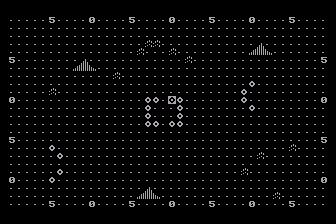
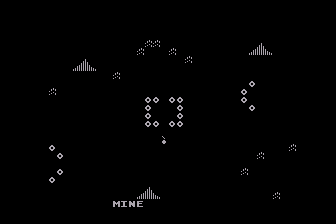
The top-down battlefield view suits a game about tracking tank positions and judging routes across terrain. With only a few units on each side, it is easy to keep the whole fight in your head and watch how simultaneous orders collide.
Story
Armor Assault frames its battles as NATO-versus-Soviet tank clashes in a Cold War setting. That is a clean fit for the game’s restrained scale: the conflict supplies immediate sides and stakes without distracting from the tactical board in front of you.
The scenarios create their own small battlefield narratives through their victory conditions. A mission to seize a target pushes you toward movement and positional control; one built around destruction makes firing lanes, cover, and timing feel more urgent. The meaning comes from the choices you make under pressure, not from a long chain of plot beats.
That stripped-back approach works because the simultaneous system naturally produces memorable reversals. A tank you expected to catch may avoid your ambush, or an advance meant to secure an objective may run into a response you failed to anticipate. The story of a match is the plan that worked—or the one that collapsed in a single round.
Overall Experience
Armor Assault is a sharp recommendation if you want tactical armor combat without the weight of a large military simulation. Its rules are simple enough to grasp quickly, yet the one-action-style restrictions around movement, mines, direct fire, and opportunity fire ensure that easy decisions rarely stay easy. The first hour is about learning what each order means; the payoff comes when you begin planning around what the other commander is likely to do.
Its modest unit count is a strength, not a compromise. Losing or misusing one tank matters immediately, and victories feel earned because they come from better positioning and better anticipation rather than from grinding through a huge force. The map and tank editor is especially valuable for anyone who enjoys testing a tactical system after the stock scenarios have done their job.
If you enjoy turn-based games that make you commit to a plan before seeing the consequences, Armor Assault has real bite. It is less about commanding an army than winning a tight duel of prediction, and that focus has helped it remain an interesting early tactics design. For release and background context, the Armor Assault history is useful reading after you have spent time with its battlefield mind games.


Reviews
There are no reviews yet.