 Retro Replay Retro Gaming History, Reviews & Emulation
Retro Replay Review
Gameplay
The first hour of Chancellor Of The Exchequer is likely to feel less like commanding an empire than taking over an intimidating ledger. You begin in 1805, with eight provinces to manage during the opening of the Industrial Revolution, and every meaningful moment comes down to production and resource distribution choices. There is no action buffer between you and the responsibility: you make the calls, advance time, and live with the economic direction you have set.
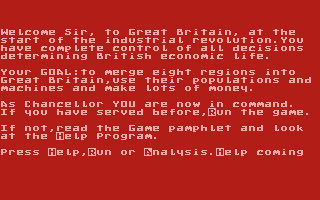
What starts to click is the long-term logic of its objective. You are not merely chasing an abstract total. Each province needs enough development to merge with Great Britain, reducing the burden of administration, while industrialization and population growth feed the larger ambition of making Britain a serious power. That gives the menu-driven structure a welcome sense of purpose. A good decision matters because it moves a specific part of the map toward becoming easier to govern.
The friction is equally clear. This is a game for someone who finds decisions satisfying in themselves. Since it spends almost all of its time in menus, there is little immediate spectacle or variety to break up the planning. If you need tactical battles, character-driven dilemmas, or frequent surprises to stay engaged, the same production-and-distribution loop can become a wall rather than a challenge.
For the right mood, though, that severity is a strength. Chancellor Of The Exchequer asks you to think like a minister rather than a conqueror. Give it a chance if you enjoy economical, turn-based management games where steady structural improvement is the payoff, and where simplifying your own administration feels like a genuine victory.
Graphics
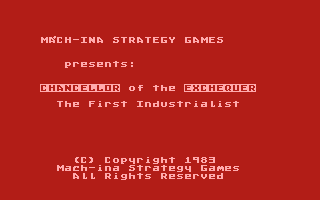
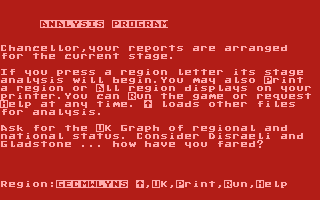
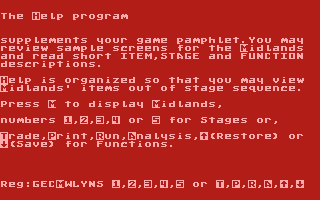
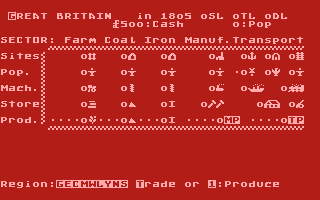
Almost everything is text-based and menu-led. You will spend your time reading economic information and making selections rather than looking at animated industries, detailed provinces, or battle scenes. It is a functional look for a game built around accounting decisions, but it asks you to supply much of the historical imagination yourself.
Story
There is no authored drama carrying you from one event to the next. The story is the national one you create: Britain begins in 1805, and you try to steer its provinces through industrial development toward greater population and power.
That restraint suits the subject. Putting you in the role of the financial and economic minister makes every improvement feel like policy rather than heroics. A province merging into Great Britain is not presented as a plot twist; it is the administrative consequence of work you have done over many turns.
It also means the game’s narrative pull depends entirely on whether you can invest in those numbers. If you like imagining the political weight behind budgets and regional development, the bare framework leaves room for that. If you want named figures, incidents, or a historical campaign full of written events, this will feel austere.
Overall Experience
Chancellor Of The Exchequer is a focused economic strategy game with little interest in softening its subject. It commits to the bureaucracy of national development, and that makes it more distinctive than a generic “build the economy” exercise. You are managing the machinery that might turn Britain into a larger industrial power, not simply accumulating wealth for its own sake.
Its age and text-heavy format make patience essential, but the underlying goal structure is sound: develop provinces, grow the population, and make administration less cumbersome as regions integrate. That is a clean loop, even if it is one delivered with a very dry interface.
Recommended for dedicated strategy historians and menu-management enthusiasts, especially if you enjoy tracing broad consequences from small economic choices. Most others will find the lack of visual momentum and the constant menu work hard to overcome. It is a demanding specialist game, but a coherent one.


Reviews
There are no reviews yet.