 Retro Replay Retro Gaming History, Reviews & Emulation
Retro Replay Review
Gameplay
Kid Grid is at its best when you have almost finished a square, two pursuers are cutting off obvious routes, and you have to decide whether a stun is a smart escape or a wasteful panic button. The basic goal—capture squares for points and finish the grid to advance—sounds modest, but four enemies turn each route into a small tactical problem. You are not simply drawing lines; you are trying to avoid building yourself into a dead end.
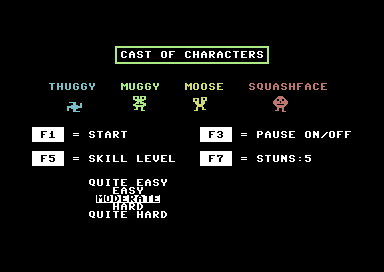
The stun gun gives you control without making the game comfortable. A stun freezes pursuers instantly but only briefly, so it buys a gap rather than a victory. Difficulty determines whether you receive three, five, or seven stuns, and unused charges carry forward. That carryover is the sharpest part of the design: playing cautiously can leave you well supplied later, while repeatedly burning stuns to escape short-term trouble can make the next level feel much tighter.
Question marks are where the straightforward grid-clearing objective gets deliciously greedy. Catching one earns 100 to 500 points, while letting it escape costs 10, which encourages you to take routes you might otherwise avoid. The penalty is small enough that you can sensibly let a dangerous target go, but the reward is large enough to keep tempting you back. That is a good arcade balance: you can play safe, but the game always has a way to lure you into risk.
Frustration will set in if you dislike pressure built around being cornered. With four pursuers, a poor route can become unrecoverable quickly, and a brief stun does not erase a bad decision. Still, the rules are clean, the scoring is easy to understand, and each life teaches a practical lesson about where not to commit. Starting with five lives and gaining another at 10,000 points gives you room to learn instead of demanding perfection immediately.
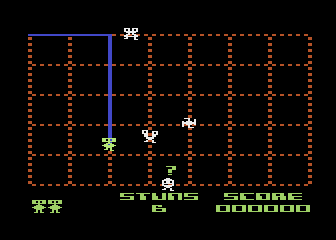
Graphics
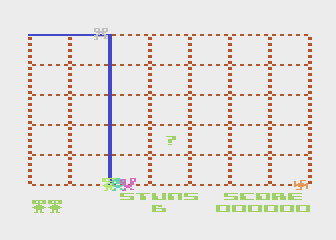
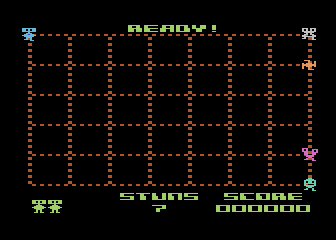
The action is framed as a fixed, top-down grid, which suits the game’s chase-heavy design. You can focus on open squares, advancing lines, your position, and the approaching pursuers without having to decipher a busy playfield.
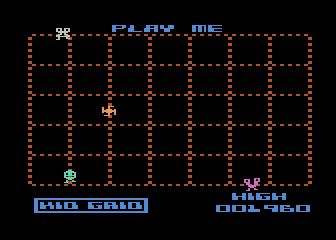
Story
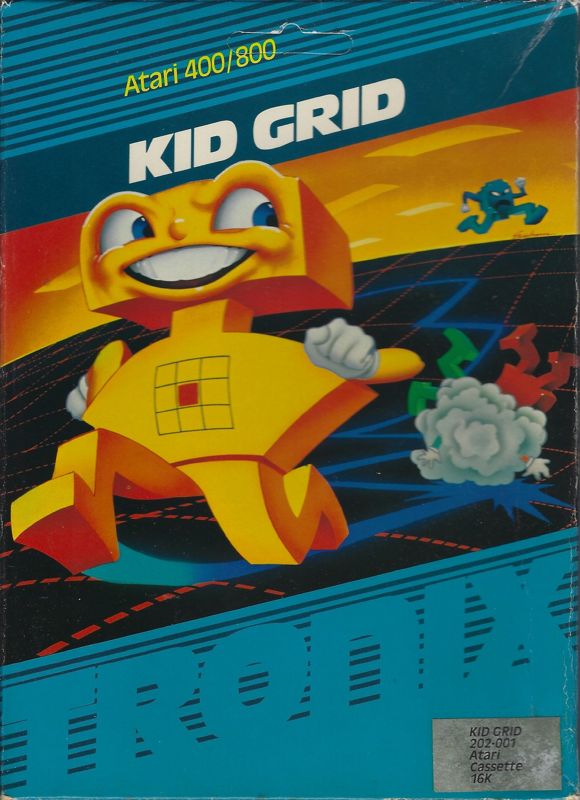
Kid Grid keeps its fiction stripped to the essentials: you control Kid Grid, and four pursuers are trying to corner and kill him while he completes each grid. That thin setup is enough to give the scoring race a little personality. You are not an abstract cursor; you are a kid trying to stay one step ahead of a hostile pack.
The real drama comes from the situations the rules create. A question mark appearing at the wrong time becomes a tempting prize, while an incomplete section of grid becomes a dangerous promise that you still have to fulfill. The game turns movement and timing into its own tiny chase narrative.
That directness fits the arcade format. There is no need for elaborate motivation when each level already asks a clear question: can you complete the grid before the pursuers force you into a mistake? If you enjoy games that let score, survival, and escalating pressure carry the momentum, Kid Grid’s spare premise works.
Overall Experience
Kid Grid is a compact action-puzzle game with more tactical bite than its simple objective suggests. Capturing squares feels satisfying, but the game earns its tension through limited stuns and enemies that punish careless routes. Once the value of saving stuns starts to click, each completed grid feels less like routine cleanup and more like a controlled escape.
The point system gives repeat runs a purpose beyond merely reaching the next level. Squares are worth 100 points, question marks can be worth far more, and the 10,000-point extra life creates a meaningful reason to keep playing aggressively when you have confidence. It is a score chase where greed is often rewarding, but never free.
Give it a chance if you enjoy old-school games that make a few rules interact in stressful, replayable ways. Its strongest moments come from quick decisions rather than spectacle: preserve a stun, grab the bonus, finish the square, or run. The payoff is a lean arcade challenge that remains engaging because every small advantage can become the difference between clearing a grid and losing a life.


Reviews
There are no reviews yet.