 Retro Replay Retro Gaming History, Reviews & Emulation


Retro Replay Review
Gameplay
The first few minutes of Savage Pond are immediately understandable: steer a tadpole around the pond, eat amoeba for score, and grab worms when they fall in. The tension comes from knowing that worms are more than bonus food. Eat five, build the counter to five, and a beetle larva appears; catching that larva before the worm count resets is how you advance. That gives the game a brisk, hungry rhythm instead of leaving you to simply circle the water chasing points.
What starts to click is the way food and danger overlap. Dragonflies drop eggs into the pond, and you can eat both those eggs and the larvae that hatch from them. Leave them to develop into nymphs, though, and the pond becomes more hostile. You are constantly deciding whether to pursue the immediate target, clean up trouble before it matures, or stay out of the path of dangers that can end the game.
The frog stadium is the point where Savage Pond gains a little more bite. You keep control of the tadpole, but gain the frog’s tongue as another action, eventually letting you eat dragonflies themselves. That extra responsibility is a smart escalation: the game does not discard its original movement challenge, but asks you to manage more of the pond’s food chain at once.
Frustration will come from the reset pressure. Missing worms can turn a promising attempt into a scramble, and the threats are not harmless background decoration. Still, the rules are clear enough that failure points back to better prioritising on the next run. If you enjoy arcade games that demand quick reactions and a firm grasp of a small set of escalating rules, Savage Pond has a sharper hook than its humble setup suggests.
Graphics
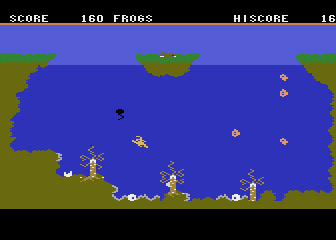
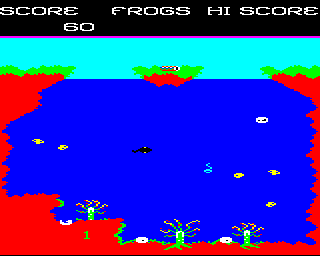
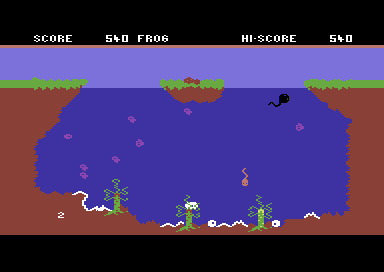
The game is built around a side-view pond screen where the important creatures are easy to pick out: your tadpole, amoeba, falling worms, dragonfly eggs, larvae, nymphs, and later the frog stadium. The action stays concentrated in that pond space, which suits a game built around spotting food and threats before they become a problem.
Story
Savage Pond has no need for a conventional plot. Its story is the small, repeated arc of survival and growth: you begin as a tadpole, feed your way through the pond’s hazards, and work toward a frog colony.
That progression gives the score-chasing a little context. A worm is not merely another object to collect, because it helps trigger the beetle larva needed to advance. Dragonfly eggs are not just threats either; at first they are potential food, and later their development changes the terms of the pond.
The move to the frog stadium provides the clearest sense of advancement. Gaining a tongue action and eventually turning dragonflies from predators into prey makes success feel like a change in your place within the pond, not just a larger number on the score counter.
Overall Experience
Savage Pond is a compact arcade survival game with an unusually tidy chain of cause and effect. You eat to grow your chances, but what you fail to eat can develop into danger. That simple loop keeps the action focused and gives the game more texture than a straightforward high-score chase.
Its strongest quality is escalation. The goal is never buried under complicated systems: eat worms, trigger the larva, advance, and survive the creatures sharing the pond. Yet the changing status of eggs, larvae, nymphs, and dragonflies means you cannot treat every target the same way for long.
Give it a chance if you like old-school action games that reward repeated attempts, fast recognition, and learning exactly when to chase food versus when to remove a future threat. It can be unforgiving when the worm counter slips away, but the frog stadium’s added action and the steadily shifting pond hierarchy make the payoff worthwhile.


Reviews
There are no reviews yet.