 Retro Replay Retro Gaming History, Reviews & Emulation
Retro Replay Review
Gameplay
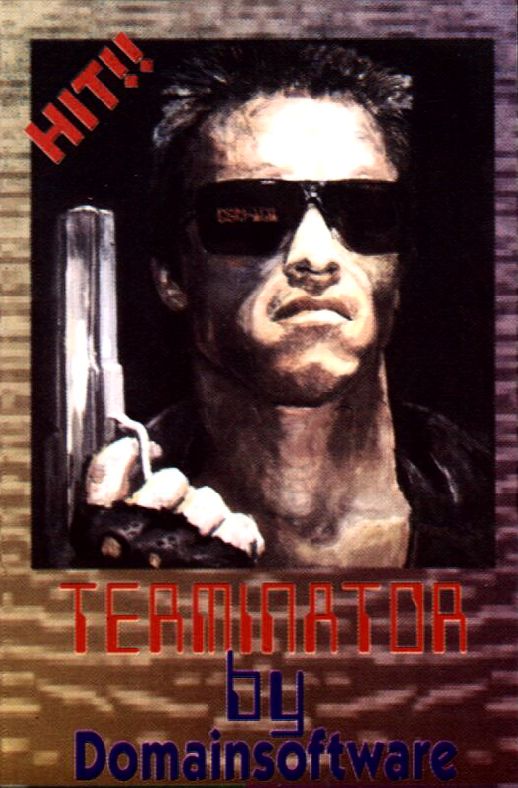
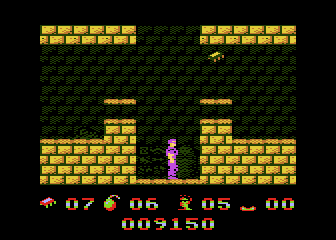
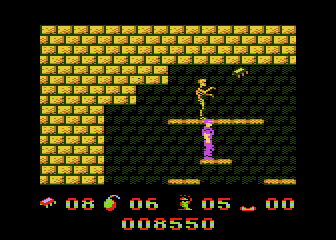
Terminator opens with the kind of objective you understand immediately: collect a set number of chips, kill the cyborg guardian, and reach the teleporter. That simple loop suits a side-view platform shooter, because you always know what you are working toward even as enemies turn the route into a fight. The changing time periods keep the journey from feeling like one long corridor, giving each stage a new historical backdrop for the same hard-edged mission.
Combat has a useful bit of bite. You can rely on weapons and bombs when the enemy count builds up, but the cyborg guardian cannot be punched to death. That distinction matters: it prevents the boss encounter from becoming a mindless extension of ordinary fighting and puts real value on using the tools you have. If you rush in treating every opponent alike, the guardian is where the game pushes back.
The emergency relocation is the most interesting pressure valve. Getting stuck with no way back does not automatically end the attempt; you can warp to the start position. But with only five uses, it is not something to burn casually. That limitation should make progress tense in the right way, though it will also test your patience if you spend a rescue on a bad read of the route rather than a genuine dead end.
Graphics
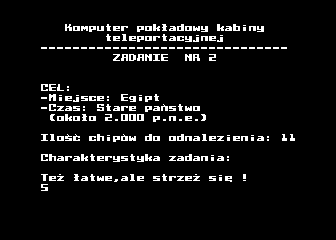
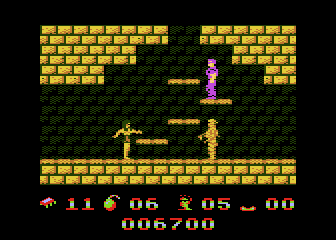
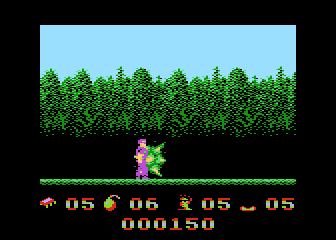
Terminator uses a side-view perspective, with stages set across the Stone Age, Ancient Egypt, Medieval Malbork, nineteenth-century Oklahoma City, and Los Angeles in 1993. The era-hopping gives the game a broader visual range than a single-setting run-and-gun, while the cyborg guardian supplies a consistent enemy presence from one destination to the next.
Story
This is not a game that asks you to settle in for elaborate plot turns. Its story is carried by the repeated act of being transferred through history, clearing each destination, and moving on through the teleporter. That is enough to give the action a direction beyond simply surviving another screen of enemies.
The five locations do most of the narrative work. Jumping from prehistoric territory to Egypt, a medieval stronghold, nineteenth-century Oklahoma City, and 1993 Los Angeles creates a brisk chase across time. The structure has a pulpy, videogame-first charm: history is not there for a lecture, but as a sequence of places you need to fight your way through.
The cyborg guardian also gives the campaign a clear recurring obstacle. Since it demands more than a fist attack, it feels tied to the game’s central mission rather than merely being another enemy in the way. Do not come expecting deep character work; come for a compact time-travel setup that keeps sending you toward the next confrontation.
Overall Experience
Terminator sounds strongest when you meet it on its own direct terms: a compact Atari 8-bit action game built around collecting, shooting, bombing, and escaping. The first hour’s pull is easy to see in that clean sequence of goals, and the period changes offer a reason to keep pushing past the next teleporter.
Frustration is likely to arrive when a route leaves you stranded or when limited relocation uses disappear too quickly. Still, the restart power is a thoughtful concession to a game with potentially punishing layouts. It asks you to manage risk rather than simply accept a failed run the moment your position goes wrong.
Give it a chance if you enjoy lean, demanding platform shooters where success comes from handling a stage’s immediate problems efficiently. Its payoff is the satisfaction of turning a strict checklist—chips, guardian, teleporter—into a rhythm you can execute under pressure. Anyone wanting a more story-heavy Terminator game should look elsewhere, but as a time-hopping action challenge, it has a sharp enough hook.


Reviews
There are no reviews yet.