 Retro Replay Retro Replay gaming reviews, news, emulation, geek stuff and more!
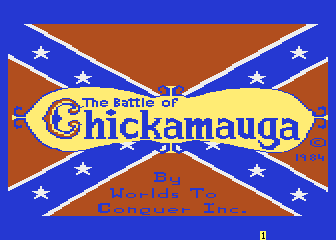
Retro Replay Review
Gameplay
The first few turns ask you to think ahead rather than merely make a move. You assign orders, your opponent does the same, and both sets of orders are carried out together. That simultaneous resolution is the heart of The Battle of Chickamauga: a seemingly safe maneuver can become a problem when the enemy had the same ground in mind, and a good plan has to account for uncertainty instead of perfect information.
Morale and fatigue keep the fighting from feeling like a flat exchange of pieces. Unit abilities and tactics matter too, so the best answer is not always to drive forward at every opportunity. You need to consider whether a unit is ready to press an attack, whether it can hold its position, and how much risk you are accepting when information is incomplete. When a plan works through those pressures, the result feels earned.
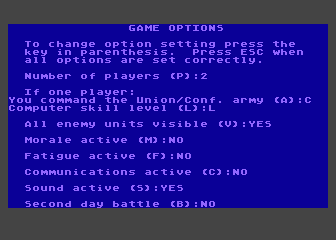
Frustration can set in if you want immediate feedback from every decision. Simultaneous turns naturally mean you sometimes commit before knowing exactly what the other side will do, and the hidden-enemy option can make that tension sharper. But the game lets you adjust options before and during a match, including disabling mechanics such as enemy invisibility outside sight. That flexibility is valuable: you can make the contest more approachable before leaning into its tougher rules.
Graphics
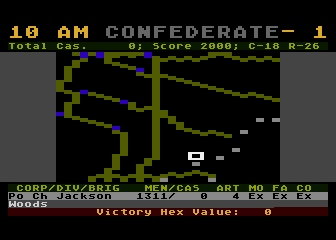
The top-down battlefield view keeps the focus on the positions of Union and Confederate units. It is a practical fit for a game built around reading the field and issuing orders, making troop movement easier to follow than a more dramatic camera would.
Story
This is not a character-driven Civil War tale. Its story comes from the historical frame: you command either the Confederates or Union troops during the Battle of Chickamauga in 1863, trying to defeat the opposing army.
That narrow focus works because the game does not pretend the battle needs extra drama layered over it. The narrative tension is created by command decisions—whether your troops can sustain a push, whether their morale holds, and whether a tactical choice pays off when both sides move at once.
Choosing a side also gives the scenario some replay value. You are not just repeating the same set of orders from the same perspective; you are taking responsibility for the other army’s problems and opportunities. For a historical strategy game, that is a more useful kind of story than a pile of exposition.
Overall Experience
The Battle of Chickamauga is a compact, serious turn-based wargame with one especially strong idea: neither commander gets the luxury of reacting after every enemy move. Its simultaneous-order system turns ordinary positioning into a prediction game, and morale and fatigue give those predictions consequences.
It will not win over someone who wants a fast-moving strategy game or a detailed narrative campaign. The pace is deliberate, and the pleasure lies in weighing a decision, committing to it, then living with the result. Go in expecting a contest of judgment rather than a constant stream of spectacle.
For fans of Civil War strategy and old-school tactical games, the payoff is real. Start with the adjustable options if the stricter rules feel intimidating, then bring the full uncertainty back once you understand the flow of a battle. Beneath its focused scope is a game that respects your ability to plan—and your willingness to accept that even a sound plan can fail.


Reviews
There are no reviews yet.