 Retro Replay Retro Gaming History, Reviews & Emulation
Retro Replay Review
Gameplay
The first thing that distinguishes Rommel: Battles for Tobruk is that you do not simply move, attack, and wait for the other side to respond. Both armies receive detailed orders, and those orders resolve at the same time. That turns a clean-looking hex map into a contest of prediction. You have to consider where the enemy might be going rather than merely reacting to a move already on the board, and a plan that looks safe can unravel when both sides act.
Supply and aircraft are not side concerns here. They are a stated focus of the simulation, alongside morale, fatigue, and unit capabilities, so success asks for more than lining up the strongest available units. You need to think about whether your forces can sustain a push and how air power fits the wider plan. That is exactly the sort of pressure that makes a campaign over Tobruk feel like a wargame rather than a sequence of isolated tactical puzzles.
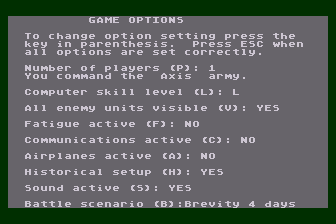
There is a welcome amount of control over how demanding the experience becomes. You can adjust AI strength, choose whether enemy units are visible, and even disable supply or airplane effects. Newcomers can lower the number of moving parts before diving into the full model; experienced opponents can keep the fog and logistical pressure intact. The trade-off is obvious: the more systems you enable, the more time you should expect to spend studying the board before committing orders.
The four strategic map views and the corps, supply, and airplane tables sound dry, but they are the tools that keep a large operation manageable. Terrain, Allied positions, Axis positions, and the full-unit picture can each be checked separately. If you enjoy pausing to assess a front from several angles, that is satisfying. If you want immediate action and simple, transparent consequences from each turn, this methodical pace can become frustrating.
Graphics
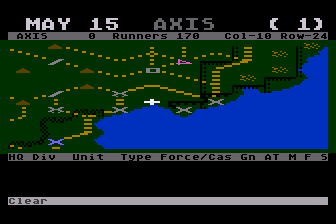
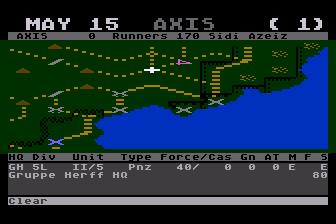
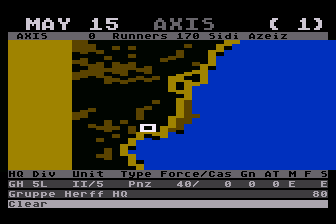
The game is built around tactical and strategic maps: hexagonal cells, unit positions, terrain information, and table-based status views. On the Atari 8-bit, the view is functional rather than theatrical, with the map serving as the main picture you will spend your time reading.
That focus suits the material. Separate maps for terrain and each side’s forces give you a clearer way to inspect the battlefield, while the corps, supply, and aircraft tables put vital numbers close at hand.
Story
This is history as a chain of military problems, not a character-led World War II drama. The subject is the struggle between Rommel’s Panzerarmee and the British 8th Army around Tobruk, covering Brevity, Battleaxe, Crusader, and Gazala. The story comes from the decisions you make under that historical frame.
That approach works because the campaign has natural stakes: territory, exhausted formations, supply lines, and the pressure to make an offensive hold together. When your orders resolve simultaneously with the opponent’s, the conflict can feel less like a reenactment on rails and more like an argument over what might have happened.
Anyone hoping for a guided narrative or a personal view of the people involved will find little reason to linger in the framing. Rommel: Battles for Tobruk is concerned with armies, fronts, and operational consequences. Its historical interest is strongest for gamers who already find those subjects compelling.
Overall Experience
Rommel: Battles for Tobruk has the stern, absorbing pull of a serious board wargame translated to a computer. A turn can demand caution, because orders are committed before you know precisely how the opposing plan will play out. When your read of the battlefield proves right, that uncertainty makes the result feel earned.
The game is most rewarding when you embrace its logistics and air-war concerns instead of treating them as obstacles around the combat. Start with the adjustable complexity if the full ruleset feels intimidating, then add hidden enemy units and the deeper systems once the flow of simultaneous orders begins to click. That gradual route is likely to reveal why the game has more on its mind than simply taking hexes.
It remains a specialized recommendation. You should give it a chance if you like historical strategy games that ask for patience, planning, and a tolerance for imperfect information, especially if the North African campaigns interest you. Gamers after a brisk, combat-first strategy game may bounce off its tables and deliberate pace, but dedicated wargamers can find a demanding simulation with real tension in every turn.


Reviews
There are no reviews yet.