 Retro Replay Retro Gaming History, Reviews & Emulation
Retro Replay Review
Gameplay
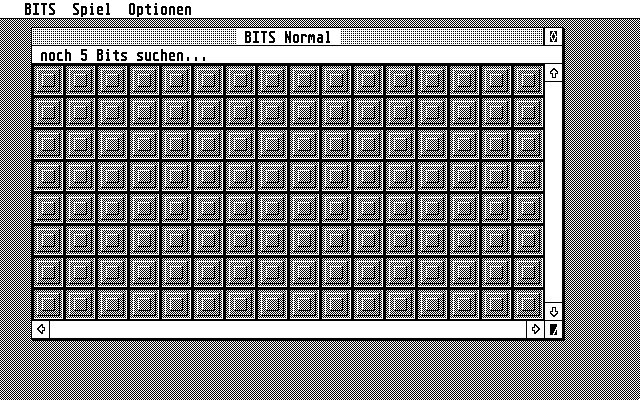
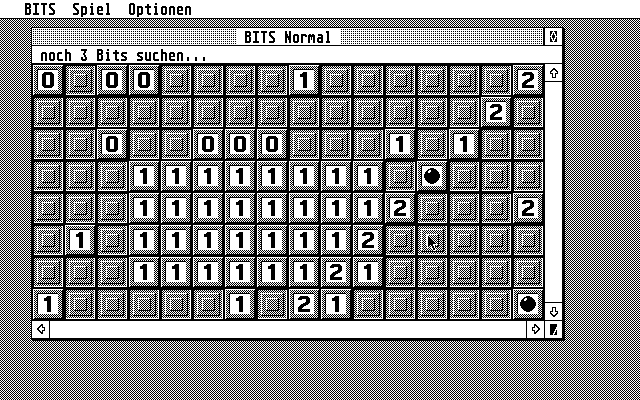
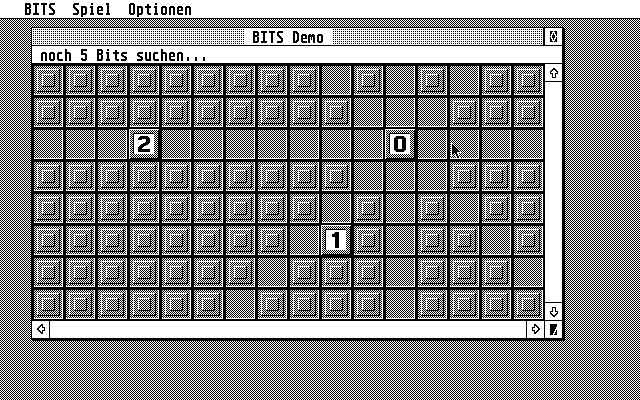
Bits starts in a wonderfully direct place: click tiles, read numbers, and work out where the hidden bits must be. A revealed number counts the bits aligned with it horizontally, vertically, and diagonally, which makes every clue pull double duty. You are not just checking nearby squares; you are tracing lines across the whole board and looking for the one arrangement that satisfies several numbers at once.
The first few moves can feel almost Minesweeper-like, but Bits has its own rhythm because the clues reach in every direction. What clicks is the habit of comparing intersecting rows, columns, and diagonals rather than treating each number as an isolated hint. Once you start doing that, the game becomes less about poking at tiles and more about building a case before you commit to a click.
Its customization is a genuine strength. You can shrink the board to 4×4 for quick, concentrated puzzles or stretch it to 32×32 when you want a longer session, and the hidden-bit count ranges from one to sixteen. That flexibility matters: a large board with few bits asks for broad deduction, while a denser setup can make the clues feel more tangled and demanding.
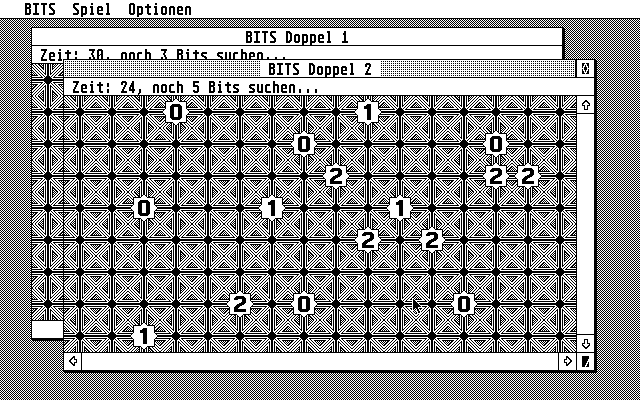
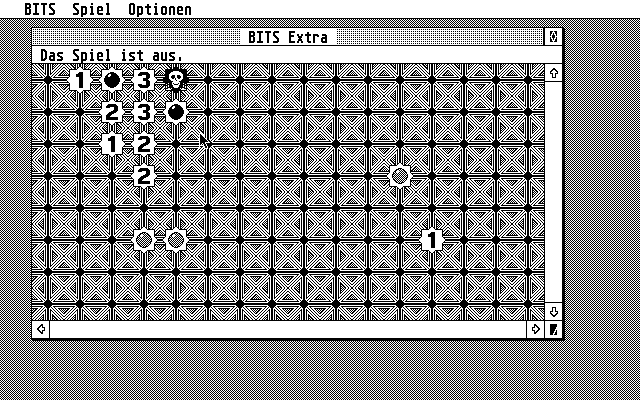
The modes give the basic idea sharper teeth. Demo offers help for learning the logic, Extra introduces a tile that can kill you, and Rätsel becomes a stern deduction test after the computer reveals some tiles: find the remaining bit or bits, because every other choice is fatal. Doppel adds a two-player race with a 30-second limit per move, turning careful reasoning into a contest of nerve as well as speed.
Graphics
Bits is viewed from above as a fixed tile board, with covered squares and revealed number tiles doing nearly all the visual work. The grid is the focus, and that is appropriate for a puzzle where you need to scan rows, columns, and diagonals without losing track of the clues.
Story
Bits creates its tension from a board slowly giving up its secrets. At the start, covered tiles are simply possibilities; after a few revealed numbers, they become suspects. That shift gives even a small puzzle a modest but effective sense of momentum.
Rätsel supplies the strongest little arc. The computer has already opened part of the board, leaving you to make sense of what remains, and the no-mistakes condition turns the final deduction into a proper climax. You either identify the missing bit or watch your reasoning collapse on a single wrong choice.
Doppel tells a more competitive version of the same tale. With another person waiting and a 30-second clock on every move, a clue pattern that would be calmly satisfying alone can suddenly feel urgent. It is a simple framework, but it gives the dry act of deduction some welcome human drama.
Overall Experience
Bits is for the gamer who enjoys puzzle rules that are easy to state and surprisingly demanding to apply. Its best moments come when several clues overlap and a supposedly risky tile becomes certain because you have followed the lines correctly. That kind of clean logical payoff does not need elaborate dressing.
Frustration can arrive when the board gets larger or the stakes rise. Extra and Rätsel are not modes for impulsive clicking, and Rätsel in particular asks you to be confident before touching anything. If you prefer puzzles that let you recover from guesswork, its harsher conditions may feel unforgiving rather than exciting.
Still, the adjustable board size, bit count, and four modes give Bits more staying power than its basic setup suggests. Start with Demo and a smaller grid until the all-direction clue reading becomes natural, then move into Rätsel when you want the rules to demand precision. For a focused Atari ST logic game, it is a smart, nicely scalable challenge.



Reviews
There are no reviews yet.