 Retro Replay Retro Gaming History, Reviews & Emulation
Retro Replay Review
Gameplay
Confrontation earns its name quickly. You and your opponent are fighting for cities across a map of lowlands and rivers, and the suggested victory condition is refreshingly direct: control the cities first. That simplicity gives every move a purpose. You are not merely trying to erase the other side’s army; you are trying to create a route to ground that matters while stopping the other army from doing the same.
The unit list gives the match more texture than a basic tank-versus-infantry contest. Tanks, mechanized infantry, standard infantry, artillery, scouts, engineers, flak, and anti-tank forces each invite different decisions, while paratroops and several aircraft types broaden the fight beyond the roads and front line. Terrain affects what units can do, so the map is not just a backdrop for moving counters. It is part of the argument you are having with the other player.
Air power comes with welcome restrictions. Planes burn fuel and need an airfield from which to operate, preventing fighters, ground-attack aircraft, and transports from becoming an effortless answer to every problem. Paratroops are especially interesting because they make the battle for cities feel less predictable, but they also tie your plans to the infrastructure on the map. The 35-unit ceiling per side is another smart pressure point: you must commit to an army shape instead of taking everything.
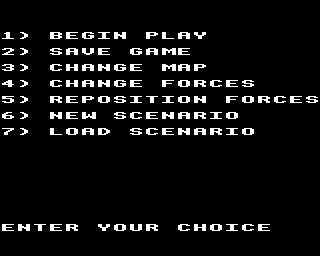
The catch is scope. There is one supplied scenario, so the core experience is a repeated contest on the same modern European battlefield, not a long sequence of changing operations. The ability to alter each side’s forces helps, and the map editor is the feature that gives the game its longest legs. You will get the most from Confrontation with an equally patient human opponent and an interest in testing different force mixes.

Graphics
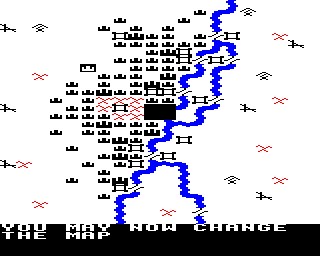
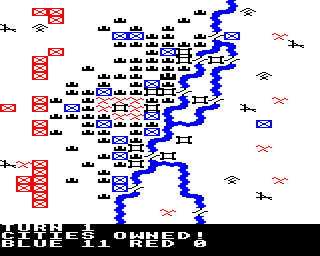
Confrontation uses a static, top-down map for its battlefield. The important visual information is the terrain and the cities between the rivers, with land and air units represented on that fixed strategic view rather than through animated combat scenes.
Story
This is conflict framing rather than a character-led story. Two countries contest the lowlands and cities in a modern European theatre, and that is enough to establish why every captured city matters. The game wisely keeps its focus on the military puzzle instead of asking you to invest in a larger narrative.
That spare setup works because the scenario has a clear territorial stake. Rivers divide the battlefield, cities serve as prizes, and both sides bring land and air forces to the dispute. You supply the drama through your own plans: a push toward a city, a defensive line that holds, or a paratroop move that forces an opponent to rethink a safe position.
Do not come to Confrontation for plot twists or personalities. Come for a clean what-if war game where the story emerges from the turn-by-turn struggle over ground. In a two-player match, the best anecdotes will be the reversals you and your opponent create.
Overall Experience
Confrontation is a focused early two-player wargame with more tactical variety than its one-scenario structure initially suggests. The first few decisions already matter: what forces do you take, which cities deserve immediate attention, and how much of your plan depends on airfields or difficult terrain? Once those questions start colliding, the game’s compact battlefield becomes more engaging.
Its limitations are real. A single official scenario means you need to enjoy revisiting the same broad conflict, and the static map style leaves much of the excitement to your imagination. Still, the adjustable force selection and editor are meaningful tools, not throwaway extras. They let a group that enjoys the rules keep reshaping the contest.
Give it a chance if you like deliberate, turn-based head-to-head strategy and are happy to trade campaign breadth for a dense military puzzle. Confrontation will not overwhelm you with content, but it understands the value of constraints: limited unit totals, terrain concerns, fueled aircraft, and cities worth fighting over. That makes its modest battlefield surprisingly durable with the right opponent.


Reviews
There are no reviews yet.