 Retro Replay Retro Gaming History, Reviews & Emulation

Retro Replay Review
Gameplay
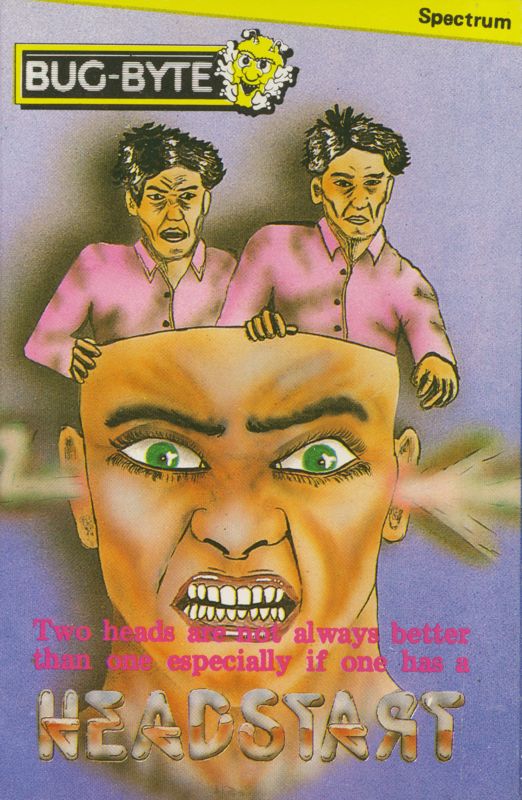
Schizofrenia gets to its point quickly. You are Alphonse T. Nurd, an underling poking around scientist Bogdan Schtunk’s lab after hours, and one ill-advised encounter with the Atomic Particle People Splitter leaves you with a double that would rather enjoy freedom than help clean up the mess. Your immediate job is simple: move through five sections of the lab and reach the Recombination Chamber before your boss finds out.
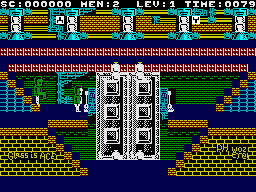
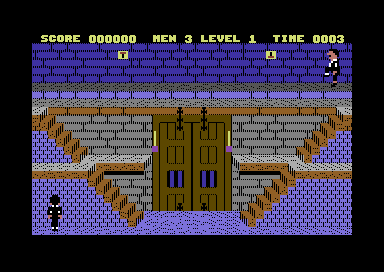
The single-screen, side-view format keeps each obstacle course contained. You work through platforming and puzzles while watching the usual pressure gauges—score, lives, level, and time—sitting on the screen. That makes Schizofrenia feel brisk rather than exploratory: you enter a room, read the problem in front of you, and try to survive it efficiently enough to continue.
The double is the idea that separates it from a routine platform game. Rather than merely being an excuse for the title, he is a direct source of interference, so progress has a mischievous adversarial edge. It is a neat setup, but also one that can make failure feel more irritating than satisfying when you are already trying to solve a room against the clock. If you enjoy terse, old-school platform challenges that demand repeated attempts and a little patience, there is something to dig into here. If you want a forgiving puzzle-platformer, its resistance may wear thin.
Graphics
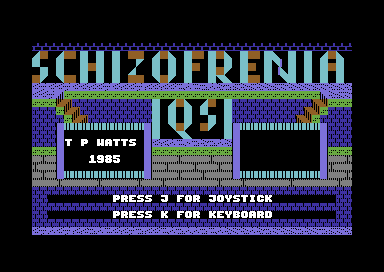
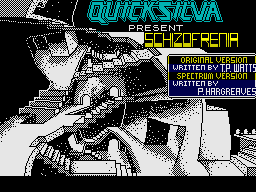
Schizofrenia uses single-screen side-view lab stages, with Alphonse and his troublesome double sharing the action. The fixed view suits the game’s room-by-room challenges: you can see the space you need to navigate without a scrolling camera getting in the way.
Story
The story is broad comic-book sci-fi, and that is exactly the right scale for it. Alphonse is not trying to save a world or unravel a grand conspiracy; he is a curious flunky who has accidentally duplicated himself and needs to put things right before Schtunk discovers the disaster.
That premise gives the conflict a welcome bit of character. The double is not simply a clone standing around to be rescued. He enjoys being free, and his attempts to hinder Alphonse turn the central joke into the game’s actual obstacle.
There is not much room for storytelling in this kind of compact platform game, but the setup does its job. You understand the goal immediately, and the race to the Recombination Chamber gives every lab area a clear purpose. It is a small, silly scenario, yet more memorable than a generic excuse to hop through rooms.
Overall Experience
Schizofrenia is an eccentric little platformer whose best idea is also its harshest one. Having your own duplicate work against you is a funny hook and a credible source of tension, but it asks you to tolerate interference while dealing with timed, puzzle-oriented rooms.
The first stretch should tell you whether it is for you. If the compact single-screen format and the challenge of untangling each lab area make you want another try after a setback, the five-area journey has a clear pull. If the double’s obstruction feels like the game needling you rather than testing you, that same central gimmick will quickly become exhausting.
At 5.6, Schizofrenia lands in the middle for good reason. It has a stronger personality than many bare-bones platform games of its era, and its mad-science setup gives the action a distinct comic edge. Still, the payoff is mainly for gamers who appreciate stubborn 1980s platform design and can enjoy a game that turns an accident in the lab into a sustained battle with yourself.


Reviews
There are no reviews yet.