 Retro Replay Retro Replay gaming reviews, news, emulation, geek stuff and more!
Retro Replay Review
Gameplay
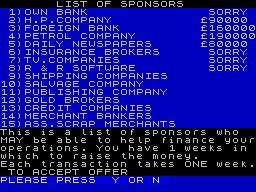
The first hour asks you to commit to the expedition rather than simply dropping you into the wreck. Raising sponsorship and selecting equipment make the treasure hunt feel earned, but they also make the opening deliberately methodical. If you came in expecting immediate underwater exploration, you may find yourself impatient. If you enjoy the planning phase in old text adventures, though, it gives the journey a welcome sense of purpose.
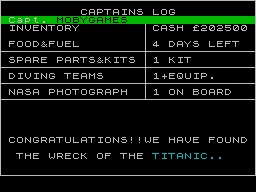
Once you are locating and searching the Titanic, the game’s sheer scope takes over. With more than 400 rooms to investigate, this is not a brisk puzzle box; it is a large, potentially disorienting place that invites careful mapping and persistence. The hunt for lost gold gives all that searching a clean, tangible objective, which helps when the room count starts to feel daunting.
The changing location of both the wreck and the gold is the feature that keeps Titanic: The Adventure Begins… from being a one-and-done exercise. You cannot rely completely on a remembered solution, and a replay has a real reason to exist. That same unpredictability can turn a stalled search into frustration, especially when you have already put time into funding and equipping the trip. Bring a pencil, keep notes, and treat progress as part of the reward.
Graphics
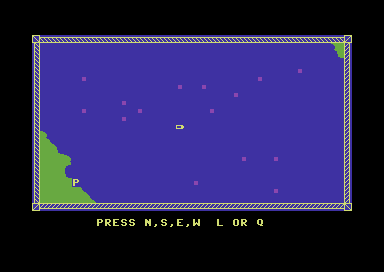
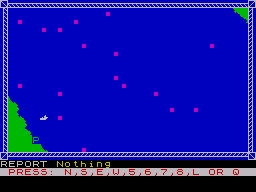
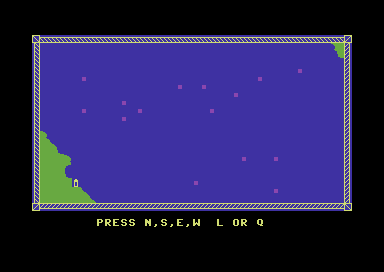
This is a text adventure with graphics, so the written exploration remains at the center while pictures add visual punctuation to the journey. On Commodore 64 and ZX Spectrum, that combination suits the era: you are meant to imagine much of the wreck through the words while the graphics give the adventure a little more texture than pure text alone.
Story
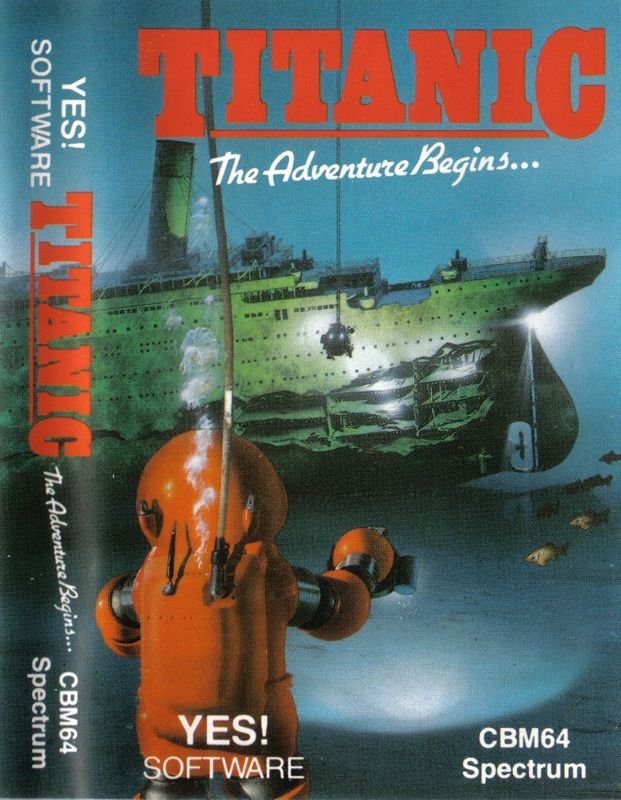
The story is built around an expedition to the Titanic rather than a character-driven drama. You begin with the practical problem of getting the venture funded and equipped, then move into the far more evocative business of finding the wreck and entering it. That progression gives the game a satisfying expedition arc: preparation first, discovery second, treasure hunt last.
Searching for lost gold is a simple goal, but it is a good fit for interactive fiction. Every room can feel like it might contain the breakthrough, and the enormous ship turns the premise into something closer to an archaeological scavenger hunt than a conventional linear tale.
Because the wreck and target room can move between games, the narrative is less about reaching one fixed sequence of discoveries and more about making your own search feel successful. That makes it easier to remember the route you worked out than a scripted plot beat, which is exactly where this kind of adventure finds its personality.
Overall Experience
Titanic: The Adventure Begins… is for the gamer who finds satisfaction in the labor of exploration. Its structure is unusually committed to the whole expedition, including the less glamorous fundraising and preparation, and its hundreds of rooms demand more concentration than most quick-play adventures. The payoff is the feeling that you have genuinely mounted a search rather than merely selected dialogue until the treasure appears.
That commitment cuts both ways. The large search space and shifting objective can make a bad run feel long, and there is little reason to recommend it to anyone who dislikes getting lost in text adventures. But for fans of 1980s interactive fiction with a strong theme, the randomized treasure hunt gives it more staying power than a fixed walkthrough puzzle.
Give it a chance if you want a patient, map-friendly expedition game and can enjoy the process even when the answer is not close at hand. Skip it if you need rapid momentum or a heavily scripted story. Titanic: The Adventure Begins… is demanding in a very period-specific way, but its ambition makes the search memorable.


Reviews
There are no reviews yet.