 Retro Replay Retro Gaming History, Reviews & Emulation
Retro Replay Review
Gameplay
The opening puts you in a satisfying kind of trouble: the Enterprise is damaged, time is implied to be against you, and you need to start making sense of a wrecked ship. That is a strong setup for a text adventure because it gives every search and item check a clear purpose. You are not wandering a strange world merely to see what happens; you are trying to get a familiar starship back under control.
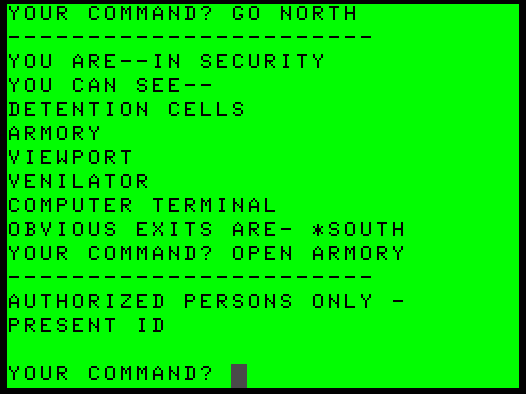
Its interaction is classic interactive fiction. You move around, look at objects, pick them up, and solve simple item-based puzzles. That makes the game easy to understand on a basic level, especially if you have spent time with early adventure games. The challenge comes from paying attention to locations and working out where an item belongs, not from learning a complicated system.
The same simplicity will decide whether it hooks you. If you like the slow, methodical rhythm of examining a room, taking an object, and trying a sensible solution, there is a clean little disaster-recovery puzzle here. If you want fast action or elaborate systems aboard the Enterprise, the text-adventure format may feel narrow. Give it a chance for the focused repair mission, not for a broad simulation of Star Trek.
Graphics
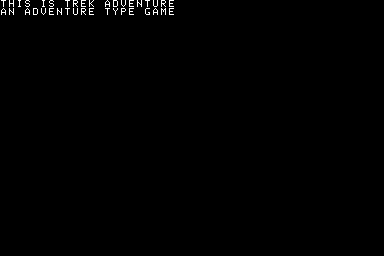
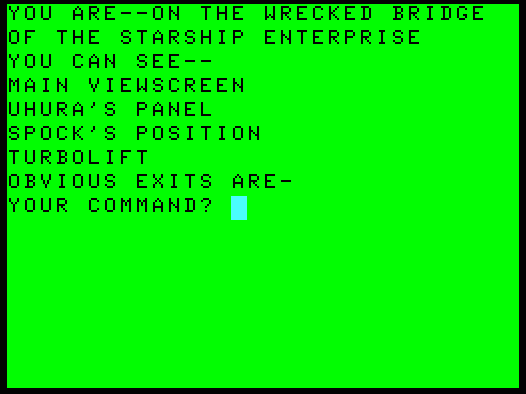
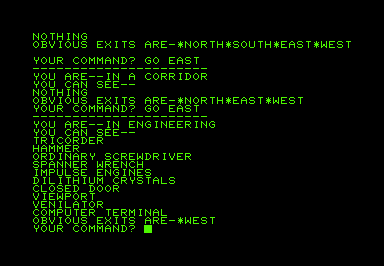
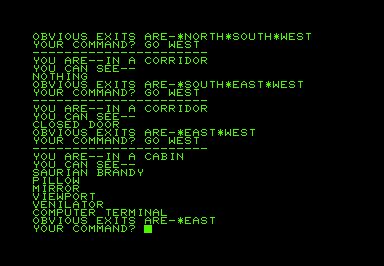
This is a text adventure, so you experience the damaged Enterprise through written descriptions and typed actions rather than detailed character art or space scenes. The imagined wrecked bridge and ship interiors have to do their work in your head, which suits the era and puts the emphasis squarely on the next command.
Story
The story starts with a freak ion storm leaving the Enterprise in bad shape. You begin on its wrecked bridge with a simple but effective objective: repair the ship before it crashes into a planet. It is immediate stakes, and it wastes no time explaining why you need to start searching.
That premise borrows familiar Star Trek ingredients without requiring a long introduction. A crippled Enterprise and an approaching catastrophe are enough to make ordinary adventure-game tasks feel connected to an emergency. Finding and using an item is not just arbitrary puzzle business; it is part of getting the ship out of danger.
Do not expect the setup to turn into a character-driven episode. The supplied premise centers on the ship, the damage, and the rescue effort. That can be a virtue for a short-form text adventure: the game has one urgent problem, and it stays pointed at solving it.
Overall Experience
Trek Adventure sounds most appealing when you meet it on its own early-1980s terms. The fun is in methodically restoring order after a disaster, one examined object and simple puzzle at a time. Its Star Trek connection gives the premise a stronger hook than a generic stranded-in-a-building adventure.
The first stretch should be inviting for anyone comfortable with text parsers: you know the goal, you know the basic verbs, and the ship itself is a natural place to investigate. Frustration is more likely to set in if you dislike the traditional adventure-game habit of searching carefully and testing item uses. Patience is part of the price of admission.
For Star Trek fans who also enjoy vintage interactive fiction, the payoff is the chance to play through a small, self-contained Enterprise emergency rather than just read about one. For everyone else, it is a modest period adventure whose strengths are clarity and atmosphere, not scale. Its straightforward puzzle design makes it a reasonable curiosity if you want a concise trip back to the genre’s early command-driven days.


Reviews
There are no reviews yet.