 Retro Replay Retro Gaming History, Reviews & Emulation
Retro Replay Review
Gameplay
The first hour of K-1 Tank has a pleasingly direct rhythm. You get a briefing, pick from four tanks, adjust the supply of HEAT and APFSDS rounds, and drive into a mission with a concrete order. Destroy all enemy tanks, stop a convoy, or level designated headquarters structures: the objectives are simple enough that you always know why you are shooting.
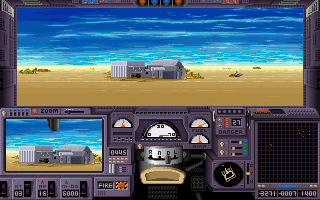
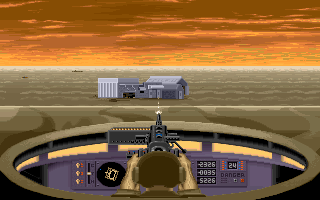
What gives that structure some bite is the ammunition choice. Loading up before a mission asks you to think beyond simply carrying as much of everything as possible, and the distinction between main-gun ammunition types gives each briefing a little weight. Once fighting begins, you can steer the tank, rotate the turret, zoom the cockpit sight, and swap to a machine-gun view. The machine gun has a specific use against nearby helicopters, so it is not merely an extra button to ignore.
The campaign’s escalating difficulty should suit you if you enjoy repetition with a purpose. Finish the objective and the story moves on; leave it incomplete but survive and you can take another run at the same mission. Lose the tank, however, and the game ends outright. That rule makes every engagement tense, though it can also make a late mistake feel disproportionately punishing. Medals offer a welcome bit of recognition, but the real reward is surviving a mission that initially seemed beyond you.
Graphics
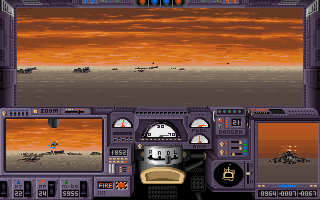
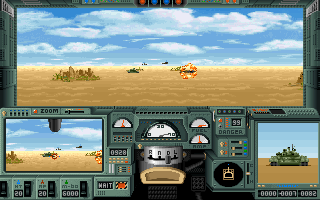
K-1 Tank puts you behind the armor through a cockpit view, with a separate machine-gun view when you need to deal with close helicopters. The zoomable cockpit aim is the most useful visual touch, because it lets you tighten your view before committing a main-gun round.
Story
The narrative is a mission-to-mission Desert Storm framework rather than a heavily dramatized war story. Set during the operation that began in January 1991, it uses briefings and forward progress through the campaign to establish your role as a tank commander.
That restraint works reasonably well for this kind of simulation. Each assignment gives the conflict a practical shape: enemy armor must be removed, a convoy must be stopped, or headquarters targets must be destroyed. You are not asked to manage a large cast or untangle a complicated plot between battles.
Still, the story is mainly there to carry you from one battlefield to the next. If you want characters or major narrative turns, K-1 Tank will feel spare. If you prefer a military campaign where the next briefing is the motivation, its straightforward approach fits the game’s no-nonsense tone.
Overall Experience
K-1 Tank is at its best when you treat it as a stern sequence of tank problems rather than a broad war epic. The objectives are varied enough to stop the 20-mission campaign from becoming entirely about eliminating armor, while tank choice and shell allocation add a small but meaningful layer before the shooting starts.
The rough edge is its all-or-nothing destruction rule. Being able to retry an incomplete mission after surviving gives you room to learn, but a destroyed tank ends the game completely. That will either make the campaign compellingly high-stakes or needlessly old-school, depending on how much patience you bring to repeated missions.
Give it a chance if you like focused first-person tank combat, explicit objectives, and campaigns that demand steady improvement. Skip it if you need a forgiving failure system or a story with more going on than briefings and battlefield progress. For the right kind of DOS combat fan, its severity is part of the point.


Reviews
There are no reviews yet.