 Retro Replay Retro Gaming History, Reviews & Emulation

Retro Replay Review
Gameplay
Mise Quadam is built around the classic adventure-game rhythm of arriving somewhere unfamiliar, combing it for useful details, speaking with whoever you can find, and trying inventory items until a path opens. You control David entirely with the mouse, using a single action rather than juggling a stack of verbs. That restraint is welcome: it lets you focus on what the world might be hiding instead of arguing with the interface.
The catch is that this adventure leans heavily into pixel hunting. Progress can depend on spotting small interactive details in the environment, so the first hour is likely to feel either pleasantly investigative or immediately taxing depending on your tolerance. When you are in the mood to search every corner with care, each useful find can feel like a small victory. When you are not, the same process risks becoming a slow sweep of the screen for the next tiny target.
Go in ready to take notes, revisit locations, and treat the inventory as a puzzle box rather than a bag of obvious solutions. Conversations, exploration, and puzzles are the whole point here, not action or speed. That makes Mise Quadam a better fit for a quiet, methodical session than for a player looking for a brisk sci-fi romp.

Graphics
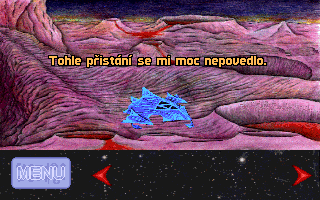
The game uses a third-person point-and-click view, with David exploring the hostile environments of Quadam while the inventory sits along the bottom of the screen. Its visual demands are practical but important: because so much hinges on finding interactive details, you will spend plenty of time studying each location closely.

Story
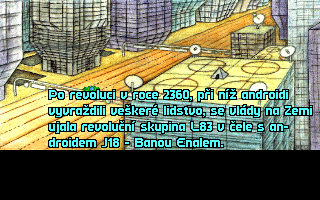
There is a satisfyingly grim hook behind all that searching. In 2360, androids have already wiped out humanity on Earth and are preparing to destroy its remaining vegetation with Cybertrone. A handful of scientists survive on Matna Plus, and their last hope rests on an old counter-device, the Sodomgomorhator, left behind by the extinct civilization of Ascus.
David is not sent on a routine retrieval job. Earlier teams dispatched to Quadam, Ascus’s second moon, have vanished, and he is the final person Matna Plus can send. That setup gives the lone-explorer format useful urgency: every new area potentially relates to the missing expedition, the artifact, or a way out of an increasingly hostile situation.
The story’s strength is its clean sense of stakes rather than its complexity. You know why the mission matters from the start, and the questions are immediate: what happened to the lost team, can David survive Quadam, and can the device actually be recovered in time? For additional game history and release context, see this Mise Quadam overview.
Overall Experience
Mise Quadam is the sort of adventure that asks you to meet it on its own deliberate terms. Its science-fiction premise is more urgent than cozy, and the simple controls make it easy to understand what you are doing even as the puzzles and searches ask for patience. The strongest moments should come when a careful look at the environment or a considered inventory experiment finally turns an apparent dead end into progress.
Its biggest obstacle is also unmistakable: abundant pixel hunting can make the game feel less like solving a mystery and more like manually checking every inch of a room. That is not a minor quirk. It will shape nearly every session, and it can blunt the tension of David’s mission when you are stuck searching for the next interaction.
Still, if you have a soft spot for DOS-era point-and-click adventures and enjoy slow, exhaustive exploration, Mise Quadam is worth a chance. The end-of-humanity stakes and solitary trip to an alien moon give the puzzle work a solid reason to matter. Skip it if you need clearer guidance or faster momentum; play it if the prospect of patiently uncovering an old sci-fi mystery sounds like the reward itself.



Reviews
There are no reviews yet.