 Retro Replay Retro Gaming History, Reviews & Emulation


Retro Replay Review
Gameplay
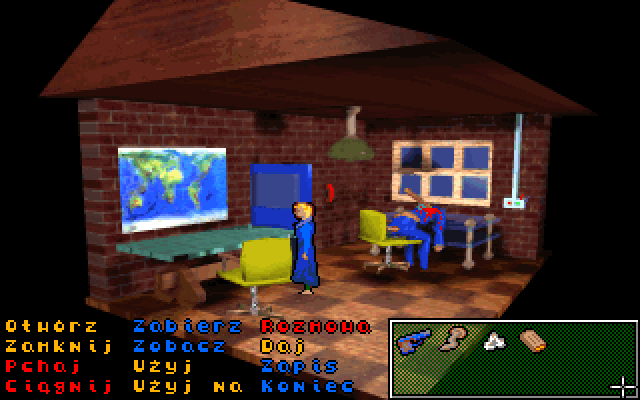
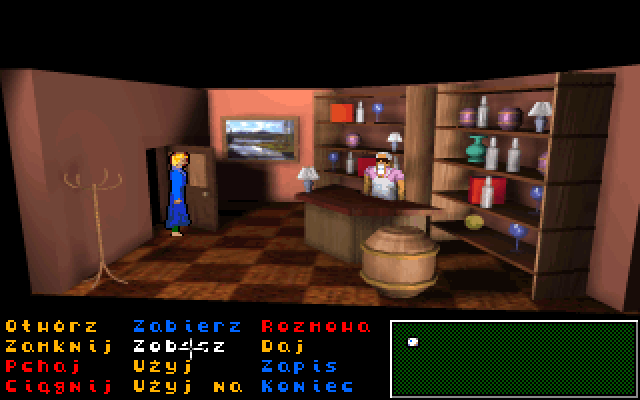
Noc puts you into a familiar point-and-click rhythm: choose a verb from the commands along the bottom of the screen, point at something in the environment, and see whether your idea gets you closer to the next solution. If you grew up with LucasArts-style adventures, the first few screens should feel immediately comfortable. The interface asks for observation and experimentation rather than quick reflexes, which suits a game built around moving through other people’s dreams.
The hacker-or-butcher selection is the game’s biggest missed opportunity. Intelligence versus strength sounds like it should change how you approach problems, and it is easy to imagine replaying the game to see different solutions. Instead, the distinction is largely confined to opening doors. Once that becomes clear, the choice stops feeling like role-playing and starts feeling cosmetic, so do not go in expecting two substantially different adventures.
That does not make the basic structure useless. A traditional verb-driven interface can still be satisfying when you are in the mood to inspect scenes carefully, combine the right action with the right object, and accept that progress comes from patience. Noc is better suited to that deliberate, old-school mindset than to anyone wanting flexible character builds or a choice-heavy adventure.
Graphics
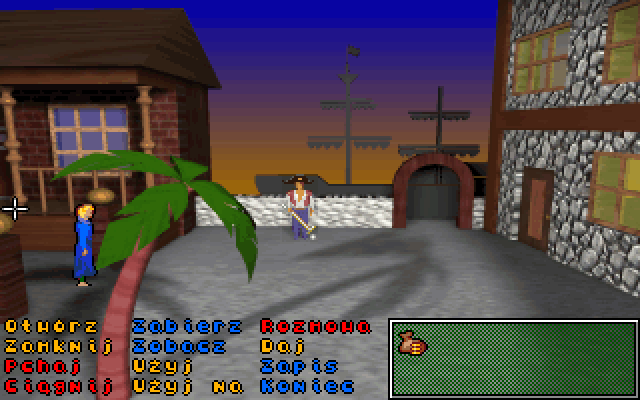
Noc uses a third-person adventure view built around environmental interaction, with the command list kept at the bottom of the screen. The CD-ROM edition adds animated cut-scenes, giving its major transitions more motion than the standard adventure screens.
Story
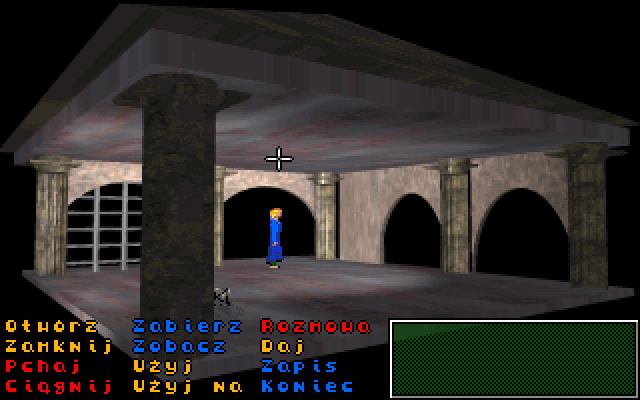
Searching for lost friends across another reality is a strong foundation, and the dream-travel angle gives Noc a naturally uncanny reason to move from one situation to the next. You are not merely hunting for an item or escaping a locked room; you are entering the private dream spaces of people who have disappeared. That is a more intriguing motivation than many adventure games of its era manage.
The story’s weakness is tied to the player-character choice. Calling one hero a hacker and the other a butcher immediately suggests contrasting personalities and approaches, yet the limited gameplay effect makes that contrast feel underused. The premise invites you to expect clever differences in how each rescuer navigates this strange mission, but the game does not build much on that expectation.
Still, the central rescue mission gives the puzzles a useful throughline. If dream-focused adventure setups appeal to you, Noc has enough of a hook to make its familiar interface feel less generic. Just value it for the odd premise itself, not for deep branching around its two protagonists.
Overall Experience
Noc is a curious DOS adventure with a better opening idea than execution. Its LucasArts-like command interface makes it approachable for veteran adventure players, and the search through friends’ dreams is unusual enough to create genuine interest. For a while, you may keep playing simply to see where that premise leads.
Frustration is most likely to set in when you realize the hacker and butcher do not meaningfully reshape the journey. A choice introduced as brains versus muscle should affect more than doors, and the game loses replay value by leaving that contrast mostly unexplored. That is not a tiny complaint; it directly weakens one of Noc’s clearest selling points.
Give it a chance if you enjoy mid-1990s DOS adventures, verb menus, and offbeat concepts that reward patient curiosity. Everyone else will probably find the idea more memorable than the game around it. Noc earns some credit for taking you somewhere stranger than the average rescue quest, but it never fully turns that strange place into a richer adventure.


Reviews
There are no reviews yet.