 Retro Replay Retro Replay gaming reviews, news, emulation, geek stuff and more!



Retro Replay Review
Gameplay
At its core, Rampart ingeniously blends the cerebral thrill of Tetris-style block placement with the explosive action of a shoot-’em-up. Each turn begins with a fragmented battlefield that you must reclaim by slotting together tetromino-like wall pieces. This phase demands spatial awareness and quick planning, as the more territory you enclose, the more cannons you earn.
(HEY YOU!! We hope you enjoy! We try not to run ads. So basically, this is a very expensive hobby running this site. Please consider joining us for updates, forums, and more. Network w/ us to make some cash or friends while retro gaming, and you can win some free retro games for posting. Okay, carry on 👍)
Once your fortress is reconstructed, the game shifts into artillery mode. You position your cannons within your newly built walls and take aim at your rival’s stronghold. The shooting mechanics are straightforward yet deeply satisfying: adjust your trajectory, gauge the power, and fire. The resulting explosions not only damage enemy castles but also reshape the battlefield, creating fresh opportunities—or hazards—in the next construction phase.
The alternating cycle of building, firing, and repairing keeps the pace brisk and tense. If your walls are breached, you must scramble to plug gaps before the next onslaught arrives. This push-and-pull loop rewards both quick reflexes and foresight, as an ill-placed piece or a mistimed shot can snowball into a swift defeat. With single-player, two-player head-to-head, and later three-player modes, Rampart caters to solo strategists and frenetic multiplayer showdowns alike.
Graphics
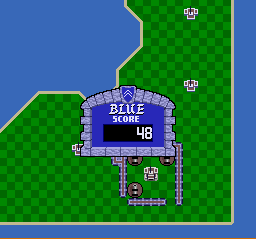
Rampart’s visuals may appear modest by modern standards, but they burn bright with 1990s arcade charm. The color palette is bold and distinct, ensuring every wall segment, cannon, and projectile stands out clearly. The simple geometric shapes of the walls recall Tetris, while the dynamic explosion animations bring a satisfying blast to each cannonball impact.
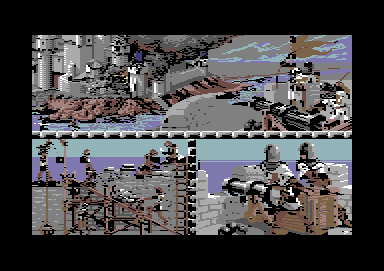
On home-console ports and later revisions, the graphics see slight enhancements—sharper sprites, smoother animations, and more varied backgrounds that reflect different medieval landscapes. These updates preserve the original’s clarity and immediacy while adding a touch of polish. Even today, the minimalist aesthetic keeps the focus squarely on gameplay rather than flashy effects.
UI elements are likewise functional and intuitive. The game clock, score counters, and remaining cannon counts are prominently displayed with no unnecessary clutter. Whether you’re playing in a dimly lit arcade cabinet or on a modern handheld screen, Rampart’s straightforward presentation ensures you spend less time squinting and more time strategizing your next siege.
Story
While Rampart does not boast an elaborate narrative compared to today’s story-driven titles, it still carves out a simple yet engaging medieval scenario. You assume the role of a castle commander defending your realm from rival lords. Each match represents a skirmish in the broader war for territory and supremacy.
The minimal plot works to the game’s advantage by keeping you laser-focused on the action. There’s no lengthy exposition or cutscene interruptions—just the relentless cycle of fortification and bombardment that puts your strategic mettle to the test. This stripped-down approach respects the arcade ethos: quick engagement and instant gratification.
For those seeking lore, the manual and promotional materials hint at a tapestry of feuding kingdoms and relentless border wars. These details add a dash of context to each siege, but Rampart’s true narrative unfolds through the ebb and flow of gameplay itself. Your personal story emerges from crushing victories, last-minute repairs, and narrow defeats shared with friends and rivals alike.
Overall Experience
Rampart stands as a timeless classic that rewards both quick-thinking strategists and action-minded players. The marriage of puzzle-like construction and ferocious artillery exchanges creates a unique loop that’s easy to learn but hard to master. You’ll find yourself drawn back match after match, eager to refine your building patterns and perfect your shots.
The multiplayer component is where Rampart truly shines. In two- or three-player modes, alliances form and dissolve on the fly, leading to unpredictable confrontations and thrilling comebacks. Few arcade classics capture the spirit of competitive creativity quite like this one, making every local session a memorable test of wits and reflexes.
Modern ports and emulations ensure Rampart’s accessibility for today’s gamers, from home consoles to mobile devices. While it may lack the cinematic grandeur of contemporary releases, it more than makes up for that with pure, unadulterated gameplay. If you appreciate games that challenge your mind and reflexes in equal measure—and if you enjoy outthinking as much as outshooting your opponents—Rampart remains an essential experience.


Reviews
There are no reviews yet.