 Retro Replay Retro Gaming History, Reviews & Emulation
Retro Replay Review
Gameplay
The first hour of Samgukki is about getting comfortable with a stripped-back version of grand historical conquest. You choose from rulers and warlords caught in Korea’s Three Kingdoms struggle, look over a Korea divided into provinces, build up your military position, and decide where to press next. There is little room to hide behind busywork: the central question is whether your armies are ready to invade and whether the territory you gain is worth the risk.
That military emphasis is Samgukki’s strongest argument for itself. Romance of the Three Kingdoms fans will recognize the basic turn-based rhythm, yet Samgukki is explicitly simpler and more concerned with strategy and combat than deep state management. If elaborate court politics and layers of domestic bookkeeping have ever made you bounce off Koei-style campaigns, this more direct approach can click fast. You spend more of your attention on borders, forces, and the next war.
The trade-off is that the game’s scope can start to feel narrow if you need lots of different systems to sustain a long campaign. Conquest is the point, so each decision feeds back into the same hard territorial contest. That is satisfying when you enjoy careful expansion and the tension of committing troops, but less so if you want diplomacy, character drama, or administration to carry equal weight. Go in wanting a focused war game rather than a sprawling ruler simulator.
Graphics
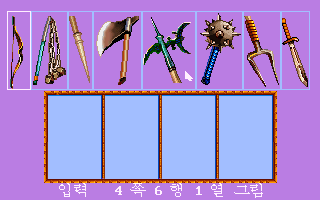
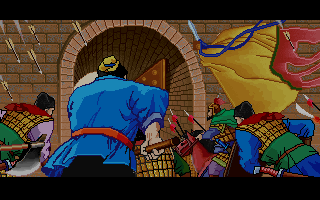
The key image is the map of Korea broken into provinces, the board on which the three kingdoms’ struggle unfolds. It is a functional fit for a strategy game built around moving armies and planning invasions: you are looking at territory first, not elaborate battlefield spectacle.
Story
Samgukki draws its momentum from a substantial historical conflict rather than a single hero’s tale. The struggle between Goguryeo, Silla, and Baekje began in 57 A.D. and stretched across roughly five centuries, giving every scenario the feeling of one chapter in a much larger fight for the peninsula.
That setting matters because it moves the familiar Three Kingdoms template out of China and into Korean history. The names, factions, and geography give the campaign a distinct historical frame, and taking control of different rulers or warlords lets you approach that rivalry from more than one political position.
Do not expect the historical material to pull you through with a heavily authored narrative. Here, the story emerges from campaigns: a province seized, an invasion launched at the right moment, or a ruler’s attempt to outlast rival kingdoms. If you like history as a reason to care about the map, rather than as a sequence of scripted scenes, Samgukki uses its era well.
Overall Experience
Samgukki is a compact, purposeful turn-based strategy game with a strong sense of place. Its Korea-focused Three Kingdoms setting is more than a coat of paint, because the entire campaign is organized around competing for that peninsula province by province. The result is easy to understand: raise armies, make a plan, and try to turn a vulnerable frontier into an advantage.
Its simpler design is both the invitation and the limitation. You can get into the strategic heart of the game without wrestling with the denser management associated with Romance of the Three Kingdoms, but you will also find fewer distractions from the repeated demands of war. The payoff comes when your planning pays off and a campaign begins to feel like a genuine contest of positioning rather than a series of routine attacks.
Give Samgukki a chance if you have a taste for older DOS strategy, historical campaigns, and deliberate turn-based expansion. It is especially worth your time if the Korean Three Kingdoms period interests you and you want a more combat-forward alternative to Koei’s better-known formula. Anyone looking for a broad political simulation may find it too spare, but its discipline is exactly what makes it appealing to a patient armchair commander.



Reviews
There are no reviews yet.