 Retro Replay Retro Gaming History, Reviews & Emulation
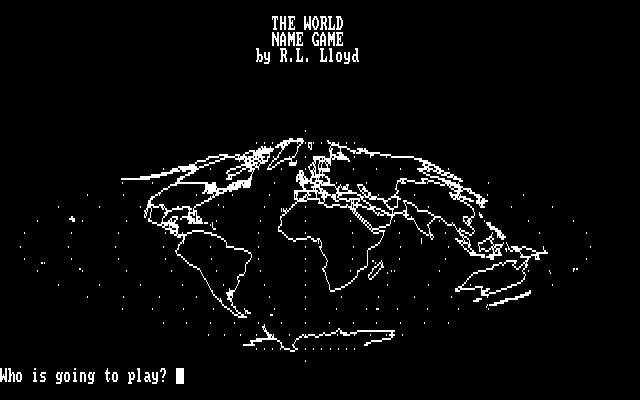


Retro Replay Review
Gameplay
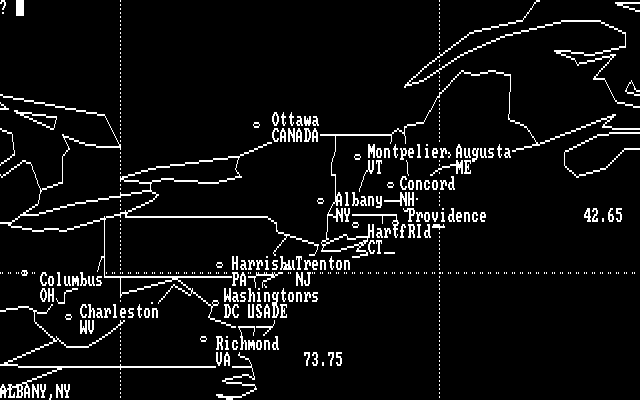
The World Name Game starts with a wonderfully unforgiving little test: find the city marked by a dot inside a circle on an outline map, then type its name correctly. There is no long introduction or layer of busywork between you and the question. If you enjoy the moment where a map outline suddenly clicks and you can place a capital from shape and location alone, this has a clean, immediate pull.
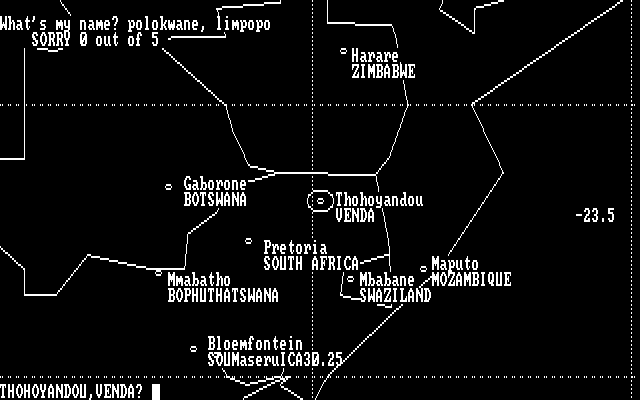
What makes the exercise tougher than it first sounds is the combination of recognition and spelling. Knowing roughly where a city belongs is not enough; you have to recall the name accurately at the keyboard. That can be satisfying when you nail an answer from a sparse map, and irritating when you know the place but stumble over the spelling. The frustration is fair, though: the game is very clear about what it is asking you to learn.
You can narrow the focus to US cities or work through world capitals and their countries, which gives the program more use than a single undifferentiated quiz. The study modes are the practical half of the package. Displaying target cities on a map lets you build the association before being tested on it, so you are not simply repeating blind guesses. Switch to study when the quiz starts feeling like punishment; return to testing once the locations have begun to stick.
Graphics
The visuals are functional outline maps built around location rather than decoration. Surrounding countries or cities may appear as clues, while the target is plainly marked by a dot within a circle. It is sparse, but the map keeps your attention on the one thing that matters: where that answer belongs.
Story
There is no narrative campaign wrapped around the questions. Your progress is measured in recognition: a coastline, a border, a city position, then the answer you can or cannot summon.
That lack of story suits the subject. Geography drills do not need a fictional excuse when the tension comes from testing your own memory, and the game does not pretend otherwise.
The only real context is historical: its world-capital material is rooted in 1990. That gives the game a specific snapshot of the world rather than a timeless reference, which matters if you are using it to study rather than simply revisiting an older educational program.
Overall Experience
This is a narrow educational game, but a purposeful one. It turns map knowledge into a quick challenge instead of burying it under decorative rewards, and that simplicity can be refreshing if you want to practice rather than be entertained between lessons.
Its limits are equally obvious. Repeatedly identifying marked cities and typing names will not hold you if you need variety, personality, or a sense of discovery beyond improving your recall. The keyboard-driven format also asks you to meet it on its own dry, old-school terms.
Give it a chance if you enjoy self-testing, want to sharpen your map knowledge, or have a soft spot for direct DOS-era educational software. The payoff is modest but real: locations that once felt like vague labels can become places you can point to and name without hesitation.


Reviews
There are no reviews yet.