 Retro Replay Retro Gaming History, Reviews & Emulation


Retro Replay Review
Gameplay
Transland gets you moving quickly: your cheap new spaceship catastrophically fails, and you are left in a combined escape pod and scooter on an unfamiliar planet. From there, the game is a short first-person 3D trek toward restoring a communications hub. The immediate pull is simple curiosity. You can roam, find people in houses, pick up items, and work out what piece of equipment will let you reach the next place.
The structure is more rigid than that opening suggests. Three house-bound characters hand out quests that must be completed in the intended order, and the route runs through four worlds. Hedgeville’s maze leads to the jump unit, which becomes the key to activating elevated buttons and fans around Waterville. That sort of old-school gating can be satisfying when you realize why an earlier route was blocked, but it can also leave you circling the same terrain if you have missed the required object or instruction.
Shooting is present, though it does not sound like the reason to play. You begin with the Lame Gun, can locate a stronger weapon later, and must treat its ammunition carefully because it is limited. Enemies are obstacles to clear rather than the basis for a deep combat system. The inventory matters more: Transland works best when you treat every picked-up item as a possible answer to the current environmental problem.
There is a clean, brisk rhythm to its progression—explore, accept a task, locate a tool, return to use it—that keeps the game from overstaying its welcome. Still, the maze and prescribed quest order are where patience can run out. If you enjoy mapping space in your head and poking at a compact world until its logic clicks, the final restoration of communications should feel earned. If you need frequent guidance or flexible solutions, the friction will likely outweigh the reward.

Graphics
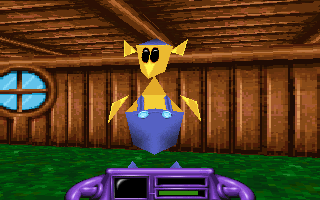
Transland uses a first-person 3D view, putting you inside its sci-fi environments rather than showing the action from an overhead map or side-on camera. The journey moves through named areas including Hedgeville, Waterville, and Iceville, with Iceville broken into ice-separated islands. That changing geography gives the short trip a welcome sense of moving from one distinct problem space to another.
Story
The setup is cheerfully direct: you are no longer a kid, want to see the galaxy, buy a bargain spaceship, and promptly discover why it was a bargain. The explosion and safe crash landing give Transland a playful excuse to strand you somewhere strange without spending much time on ceremony.
From that point, the story is carried by practical goals rather than dramatic turns. The people in Waterville send you on ordered errands, and each assignment feeds into the larger job of restoring the communications hub. It is a functional adventure frame, but a useful one: every trip through a maze, search for equipment, or return to an earlier area has a clear place in the escape effort.
The last stretch through Iceville, searching its separated islands for a panel remover, brings the premise back into focus. Once you find it, you can restore communications and finish the game. Do not come expecting a sprawling space opera; the story’s payoff is the pleasingly concrete feeling of fixing the thing that will finally get you unstuck.
Overall Experience
Transland is the sort of small 1996 DOS game that asks you to meet it halfway. Its first hour has a nice exploratory hook, especially if the idea of roaming a strange place in first person and slowly turning odd equipment into access tools sounds inviting. The game has a recognizable old 3D adventure/shooter flavor, with light role-playing elements in the quest structure rather than in character-building complexity.
Its limitations are also central to the experience. Combat begins with an intentionally underpowered-sounding weapon, stronger firepower has limited ammunition, and progress depends on following the quest chain correctly. None of that makes for a carefree action game. Instead, the fun lies in persistence: checking houses, keeping track of inventory, retracing your path, and noticing how a new device changes an old obstacle.
For you, the deciding factor is tolerance for maze-driven backtracking. Bring a little patience, and Transland offers a concise sci-fi scavenger hunt with a proper beginning, middle, and end. Skip it if you mainly want a responsive shooter or a role-playing game with broad choice. For a focused afternoon of first-person exploration and modest puzzle-solving, though, its straightforward goal and compact finish make it easier to recommend than many longer, less disciplined quests.


Reviews
There are no reviews yet.