 Retro Replay Retro Gaming History, Reviews & Emulation


Retro Replay Review
Gameplay
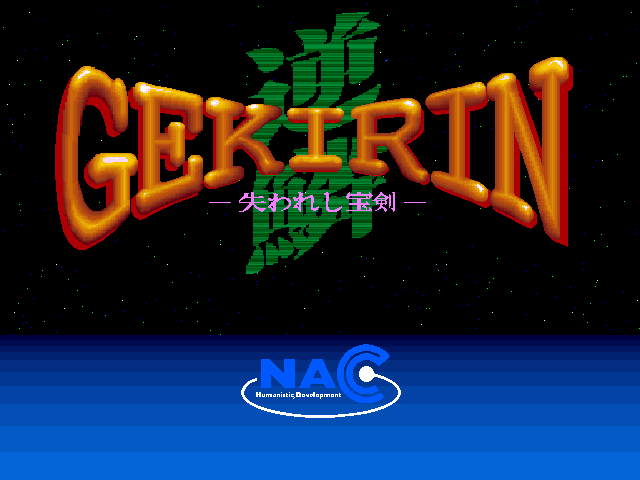
The first hour of Gekirin is about accepting its blunt terms. You are a nameless adventurer with basic equipment, a town full of practical shops, and a huge dungeon between you and a valuable sword. There is no lengthy setup to soften the landing. You head underground, fight, open chests, gather experience, and decide how far down you dare to go before the dungeon takes its payment.
Its strongest idea is the mix of action combat and dungeon persistence. Enemies respawn, so a cleared route never feels entirely safe, while both melee and ranged weapons give you options beyond simply running into every threat. Bombs and other attack items add another layer of resource judgment, and keys can open fresh areas. The constant question is not merely whether you can win the next fight, but whether spending supplies now leaves you prepared for what is deeper below.
Equipment deterioration is where the game becomes either compelling or aggravating, depending on your patience. Weapons and armor rapidly lose their rating, and gear that reaches zero has to be repaired or replaced in town. That creates a satisfying survival-economy tension when you are weighing a chest, a shop visit, and another descent. It can also feel punishing when your hard-won momentum is interrupted by maintenance. Treat town as part of every expedition rather than a place you visit only after disaster, and the loop makes much more sense.
Random dungeon layouts help repeated attempts stay uncertain, and being able to attack walls is a genuinely welcome wrinkle. Making an alternate path can feel like a clever escape plan instead of passively accepting whatever corridors the dungeon hands you. Death returns you to town rather than ending the entire game, so failure becomes a reset of your current push, not a reason to stop experimenting. Gekirin rewards stubbornness, route-finding, and a willingness to rebuild after a bad run.

Graphics
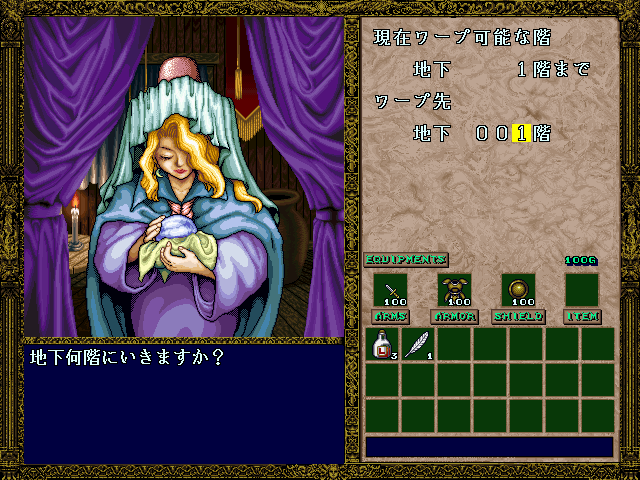
The action is viewed from above, fitting the dungeon crawl well: rooms, corridors, chests, enemies, and breakable walls are all part of the same compact exploration space. The medieval town and the multi-story dungeon give the game a clear contrast between a safe resupply stop and the hostile place where most of your time is spent.

Story
Gekirin calls itself an RPG without a story, and it means it. You play a nameless male adventurer searching for a precious sword in an abstract medieval setting. There are no character arcs or plot turns here to give each descent extra emotional weight.
That absence changes how you read its progress. Experience, treasure, stronger replacement gear, and access to deeper dungeon areas become the narrative in practice. Your best tale is likely to be the run where you found a useful item, cut an unexpected route through a wall, and barely made it back after your equipment started failing.
For some gamers, that stripped-down approach will feel refreshingly honest. For others, it will make the dungeon feel like a long series of tasks without a reason to care. If you want an RPG’s story to provide momentum, Gekirin has very little to offer. If you like supplying the motivation yourself, the single-minded sword hunt is enough of a frame.
Overall Experience
Gekirin is narrowly built, but not empty. Its entire identity rests on the tension between pressing downward for loot and experience, conserving equipment and items, and knowing death will send you back to town. When that rhythm clicks, it has the satisfying, slightly anxious feel of a dungeon run that was never guaranteed to work out.
The rough edge is that nearly every system pushes back. Respawning enemies slow complacent exploration, degrading gear demands money and planning, and randomly generated floors deny easy memorization. That friction is the point, yet it will wear you down if you want smooth advancement or frequent narrative rewards. The payoff comes from adapting to a fresh dungeon and making progress through persistence rather than from reaching a scripted spectacle.
Give it a chance if you enjoy old-school action RPGs that ask you to manage a risky expedition one decision at a time. Skip it if a story, memorable cast, or a relaxed power climb is essential. Gekirin’s quest for a sword is spare to the point of austerity, but its dungeon loop has enough resource pressure and improvisation to hold the right kind of player.


Reviews
There are no reviews yet.