 Retro Replay Retro Gaming History, Reviews & Emulation
Retro Replay Review
Gameplay
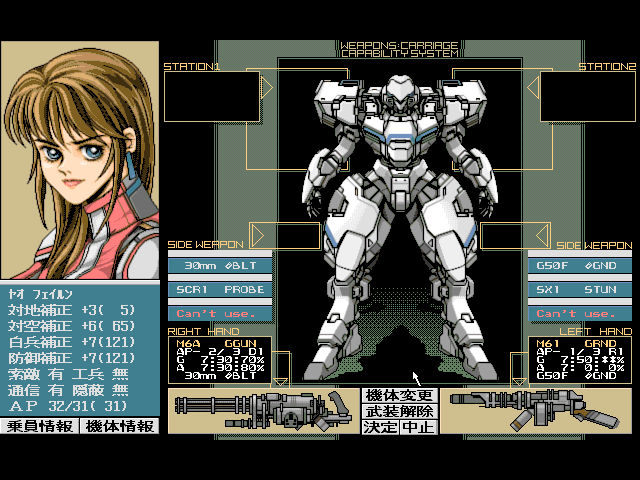
Power Dolls 2 makes you feel like a commander rather than a trigger-puller. Before each operation, you build a squad from the available pilots and assign machines suited to the job: mechas, planes, mobile rocket launchers, and other craft. That preparation is not a decorative prelude. A poor team choice can put you on the back foot before the first turn begins, while a sensible loadout gives the mission room to breathe.
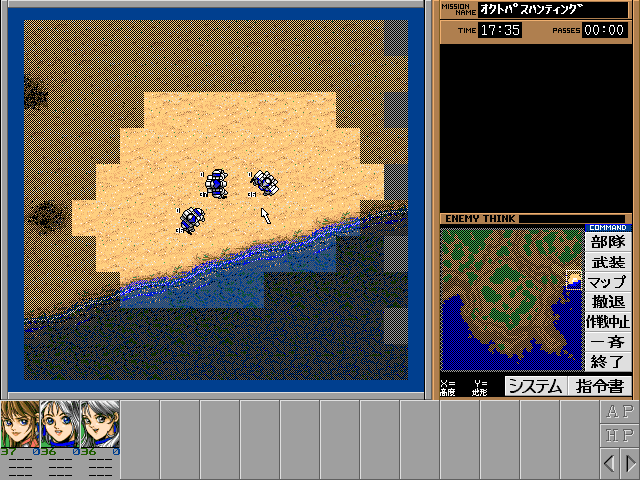
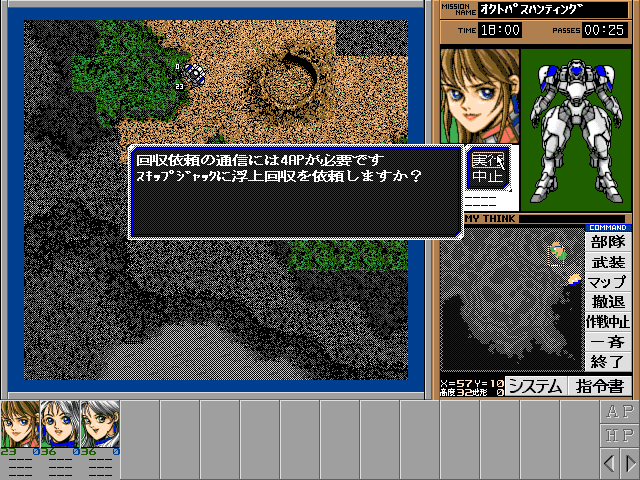
Once you enter the top-down battlefield, the pace is methodical. Units move in turns, and positioning carries serious weight. You are encouraged to think about where each Doll belongs and what role her machine can fill instead of simply charging toward the enemy. The strongest moments come when a plan assembled in the briefing starts to click on the field; the frustrating ones arrive when an early deployment mistake leaves the squad poorly placed for the task at hand.
The added customization is the key reason this sequel has more to offer than a simple repeat of its predecessor. More detailed mecha outfitting gives the pre-mission game extra texture, especially for anyone who likes to tune a force to a scenario rather than rely on one all-purpose team. You can take the campaign in its linear order or select individual missions from the main menu, which makes it easier to revisit the tactical side without always committing to a full run.
Patience is the price of admission. Power Dolls 2 favors forethought over immediate fireworks, and it can punish casual deployment choices. But if the prospect of solving a battlefield through squad composition, vehicle selection, and careful movement sounds satisfying, that pressure is exactly what gives the game its pull.
Graphics
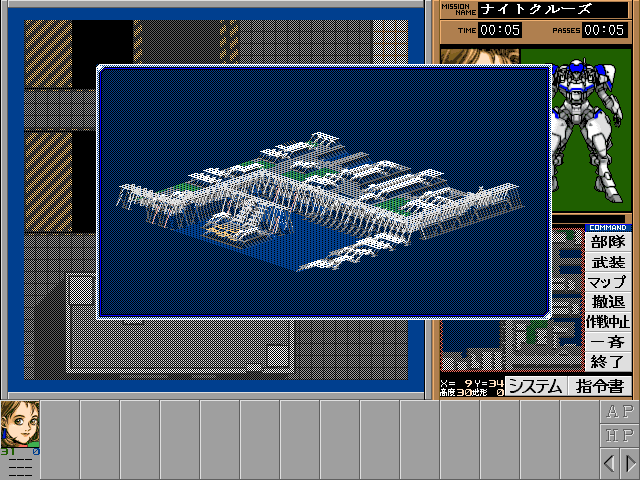
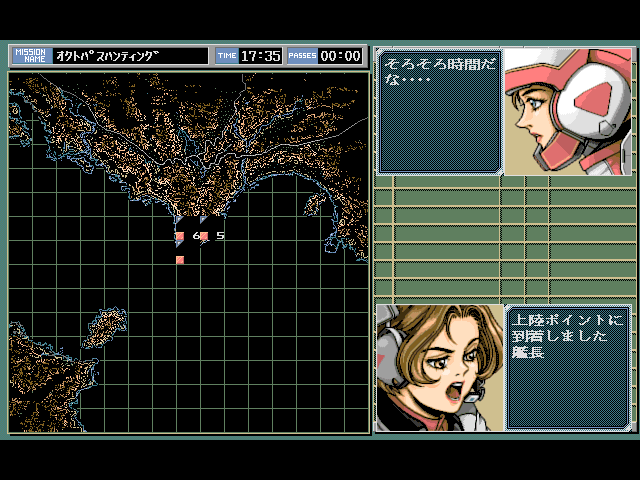
The action is viewed from above, with squad members and their machines moving through top-down mission areas. Mechas, aircraft, and mobile rocket launchers give the battlefield a broader military palette than a game built around one unit type, while the anime framing fits its all-female Dolls squad and futuristic conflict.
Story
The war between Earth and Omni returns from the first Power Dolls, placing the Dolls in a 26th-century conflict rather than dropping them into disconnected skirmishes. That familiar war gives each assignment a useful strategic frame, even when the immediate concern is simply getting the right machines onto the map.
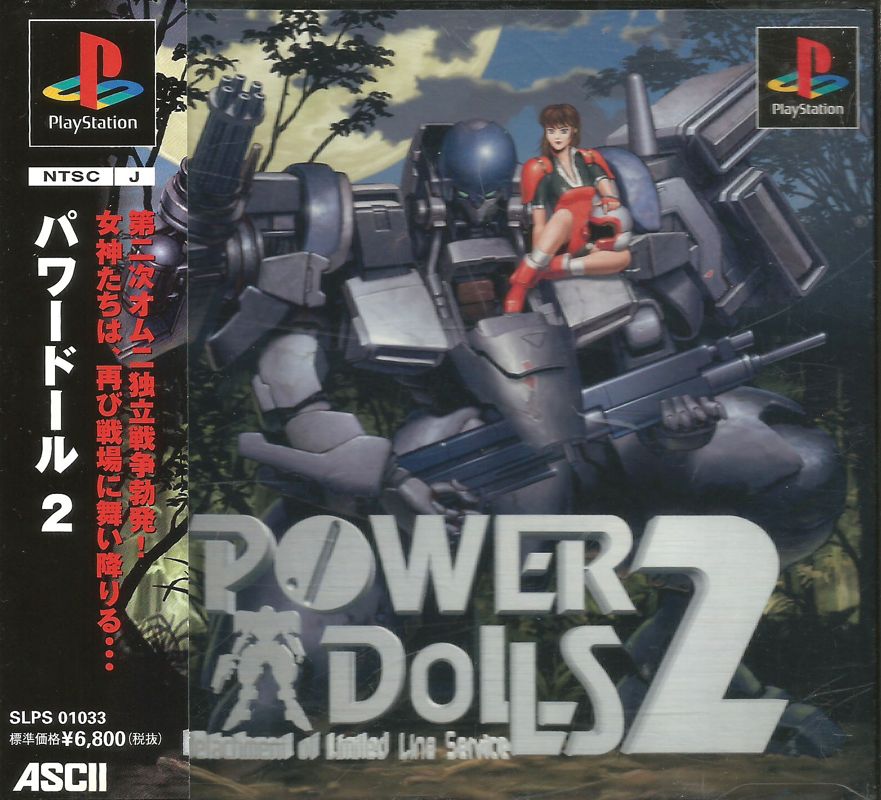
The Dolls themselves are the center of the premise: an all-female Detachment Of Limited Line Service asked to handle these missions. Their identity gives the game a more distinctive angle than a generic army-command scenario, particularly alongside the anime and mecha trappings.
Still, the story’s main function is to carry you from one military problem to the next. The campaign is there for gamers who want the Earth-versus-Omni conflict in sequence; mission selection better suits anyone eager to get back to squad planning and turn-based operations.
Overall Experience
Power Dolls 2 is rewarding when you meet it on its own terms. It wants you to care about the briefing, the roster, and the machine assignments as much as the clashes themselves. That can feel demanding at first, but it gives victories a pleasing sense of ownership: you did not merely win a fight, you built a force that could win it.
It is an especially good fit if you enjoy tactical games where the answer begins before the map loads. Fans curious about the foundation can also look at the earlier Power Dolls, since this sequel deliberately retains that game’s core approach while expanding its interface and customization options.
The payoff is worth it for strategy-minded mecha fans. Power Dolls 2 does not chase constant action; it asks you to commit to the slower satisfaction of preparation, placement, and adapting your squad to each mission. When that rhythm lands, the combination of futuristic warfare and careful unit command is hard to shake.


Reviews
There are no reviews yet.