 Retro Replay Retro Gaming History, Reviews & Emulation


Retro Replay Review
Gameplay
The Atlas II starts with a strong fantasy: you are not simply moving an army across a map, but trying to become the merchant who finds the next valuable opportunity for the Portuguese crown. Exploring, discovering goods, and turning those discoveries into profitable trade creates a naturally compelling loop. You are always weighing whether to travel farther, establish a foothold in another city, or make the safer play and capitalize on what you already know.
The century-later setting gives this sequel a broader age of overseas ambition to work with. Land and sea routes matter because they turn exploration into infrastructure; a discovery is only truly useful once you can build a dependable business around it. Setting up offices in other cities adds another welcome layer of commitment, asking you to think beyond a single lucrative trip and toward a network that can keep earning.
Its pace will be the dividing line. The Atlas II is for the gamer who enjoys setting a goal, making a careful commercial decision, and living with the consequences rather than being pushed through a string of immediate set pieces. Treasure hunting and meetings with important figures help break up the pure trade focus, but the central pleasure remains methodical expansion. Give it a chance if a good route feels more rewarding to you than a big battle.
Series newcomers can get a sense of the foundation in the earlier Atlas, but The Atlas II has its own reason to exist: it carries that merchant-explorer idea into the 16th century, where overseas trade feels like a bigger and more tempting gamble.

Graphics
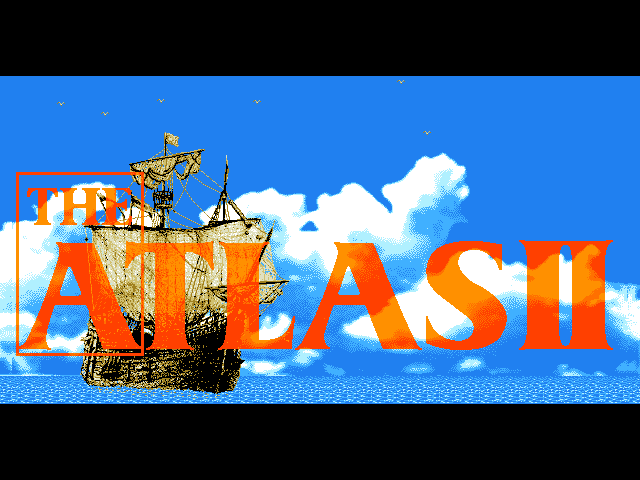
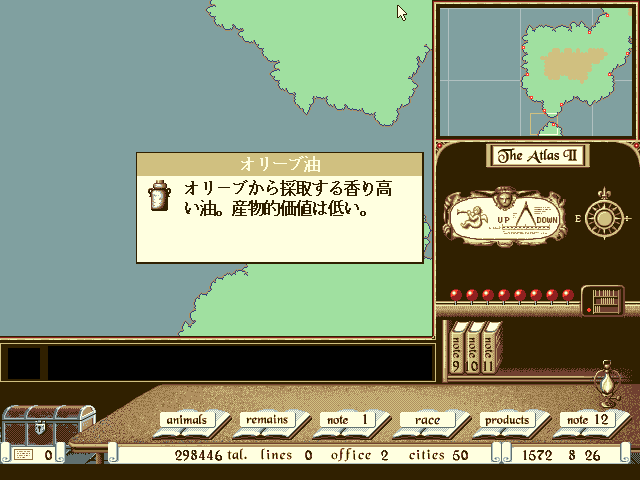
The game’s imagery is built around a 16th-century merchant journey: Portuguese trade, travel by land and sea, foreign cities, goods, and little-known countries. That historical scope is more inviting than a generic business-game backdrop, because every new destination is tied to the promise of a better trade opportunity.

Story
The Atlas II frames its campaign around service to the King of Portugal, which gives your commercial ambition a useful sense of purpose. You are exploring for personal success, certainly, but you are also expected to extend the crown’s reach by finding goods and opening contact with other countries.
Do not come in expecting a tightly authored adventure with a dramatic plot constantly taking center stage. The story is carried by your career: the places you reach, the people you meet, the offices you establish, and the discoveries that alter your prospects. It is a framework for self-directed historical ambition rather than a tale that demands to be watched.
That approach works particularly well for a trade simulation. Being first to explore a little-known country has more weight when it belongs to your own growing record as a merchant, not merely a checklist. The payoff is the feeling that your network and reputation have been earned one expedition at a time.
Overall Experience
The Atlas II has a specific kind of pull: it makes trade feel adventurous. Rather than treating commerce as dry bookkeeping, it connects profit to distance, discovery, political purpose, and the risk of venturing into unfamiliar territory. When that rhythm clicks, planning routes and chasing new goods can be quietly absorbing.
Patience is essential. This is a managerial strategy game built around gradual progress, so its rewards arrive through foresight and accumulation. Frustration can set in if you want every decision to produce instant drama, but the slower structure is also why a successful expansion feels like your achievement rather than a scripted win.
For fans of historical strategy who would rather build a web of trade than command troops, The Atlas II is an easy recommendation. Its focus is narrow, but it commits to that focus with enough moving parts—routes, offices, goods, exploration, notable encounters, and treasures—to make a merchant’s rise feel like a genuine campaign.



Reviews
There are no reviews yet.