 Retro Replay Retro Gaming History, Reviews & Emulation
Retro Replay Review
Gameplay
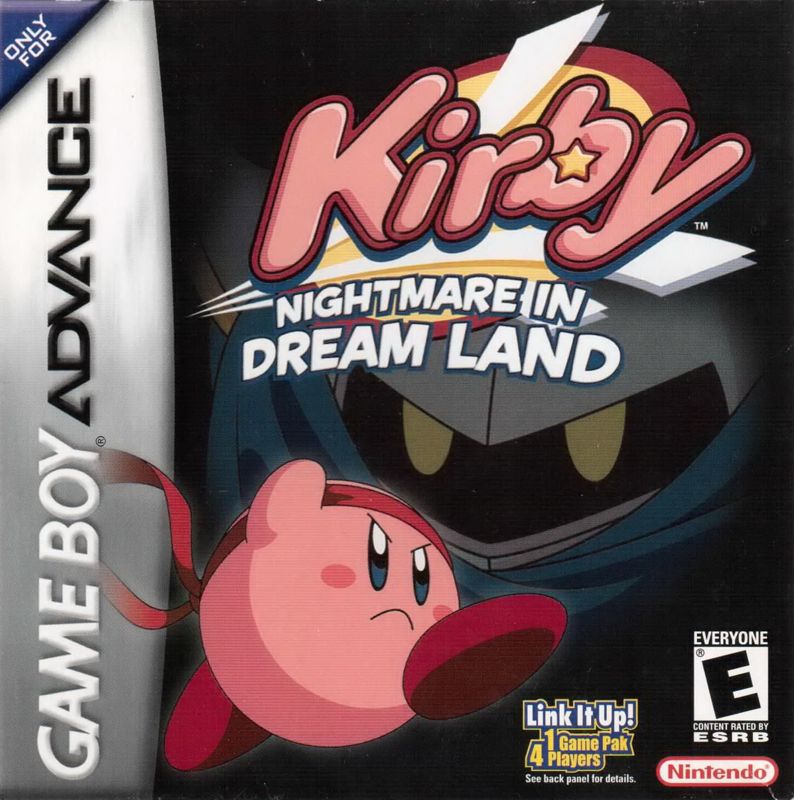
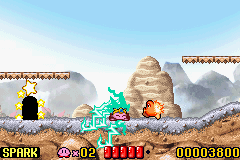
The first hour of Kirby: Nightmare in Dream Land is hard to dislike. You are dropped into clean, brisk side-scrolling action where almost every enemy doubles as a possible new tool. Swallowing foes and copying their powers is still the whole hook, but it has aged well because it turns curiosity into action. Rather than merely hopping over an obstacle, you naturally start wondering whether the enemy in front of you offers a better way through it.
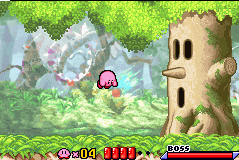
That simple rhythm keeps the game lively. Kirby is easy to control, and the basic act of inhaling enemies makes the early stages inviting even if you do not usually chase older platformers. The altered level designs help this remake stand as more than a straight visual redo, while the larger mini-bosses give these interruptions a little more presence. One original mini-boss has also been replaced: the rolling turtle is out, replaced by an elephant-like opponent.
Its softness can become a limitation. Nightmare in Dream Land is built to welcome you, not relentlessly test you, so experienced platform-game fans may find themselves wanting more resistance from the journey. Still, the steady turnover of copy powers prevents it from feeling passive. It works best when you treat every new enemy as an invitation to change your approach rather than sticking with one comfortable ability.
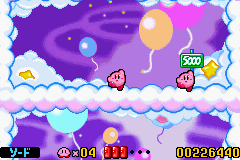
The replacement mini-games are a nice extra, particularly with other people around. Air Grind has Kirbys racing by grinding Warp Stars along rails, while Bomb Rally turns four Kirbys into a tense little bomb-tossing circle with frying pans. Neither is why you should buy the game, but both fit its playful mood and make better use of multiplayer than a menu-bound distraction ought to.
Graphics
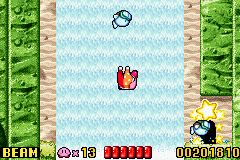
The remake’s graphical update gives this Game Boy Advance version a brighter, more polished look than its source material. The enlarged mini-bosses are the clearest visual change during play: they make encounters feel less like routine obstacles and more like chunky cartoon confrontations.
Story
This is not a platformer you come to for dense character writing or elaborate plot turns. The story mainly gives Kirby a reason to travel onward, while the real personality comes from the familiar contrast between his cute round shape and the fact that he can swallow enemies to steal what they do.
That light touch suits the game. You can pick it up, clear a stage, experiment with a power, and put it down without needing to keep track of a complicated narrative thread. The focus remains squarely on forward motion and playful action.
If you want a story with emotional weight or a long-running mystery to unravel, this will feel slight. If you want Kirby’s world to stay out of the way and keep the platforming moving, it does exactly that.
Overall Experience
Kirby: Nightmare in Dream Land is a confident remake because it does not overcomplicate a sturdy formula. Its best moments are small ones: seeing an enemy, taking its power, and immediately finding a new use for it in the next stretch of level. That loop is friendly, quick, and consistently satisfying.
The low pressure is both its charm and its ceiling. You can breeze through long stretches, especially if you are already comfortable with 2D platformers, and the game rarely feels interested in punishing mistakes. But its compact, upbeat pace makes it a strong fit for a relaxed afternoon or for anyone looking for a welcoming entry into Kirby’s older adventures.
Give it a chance if you value variety over brute difficulty. The remake’s updated look, revised stages, bigger mini-bosses, and multiplayer diversions add worthwhile polish, but the enduring reason to play is still the copy-power system. At a 7.3, it lands as a very good, easygoing platformer: not the deepest challenge on the shelf, but a reliably cheerful one.


Reviews
There are no reviews yet.