 Retro Replay Retro Gaming History, Reviews & Emulation
Retro Replay Review
Gameplay
The first hour has a familiar hook: you are learning, testing cards, and trying to turn a modest collection into a deck that can reliably win. That loop is the reason Pokémon Card GB2 works. Every duel asks you to weigh your hand, your bench, and the cards you have chosen to bring, so victories feel earned through preparation as much as luck.
Its biggest strength is volume with purpose. Nearly the full Base Set, Jungle, Fossil, and Team Rocket sets feed into deck-building, giving you far more room to experiment than the original game. You can chase a cleaner version of a deck that nearly worked, rebuild around a newly acquired card, or simply enjoy the gradual climb from whatever collection you can assemble.
The expanded world matters because it keeps card battles from feeling like a menu of opponents. Team Great Rocket’s takeover turns the journey into more than collecting badges or beating experts; you are pushing back against an organized threat while working toward the Legendary Cards. If you already know the first game, this is the sequel that makes its basic formula feel less like a tutorial and more like a full campaign.
Graphics
On Game Boy Color, the game centers its look on the cards themselves and the top-down world used to move between challenges. The collectible-card focus gives the screen a pleasant sense of variety as your collection grows, even if the main attraction remains the duel rather than elaborate scenery.
Story
The original Pokémon Trading Card Game had a light framework for its duels; this sequel gives you a clearer reason to care about the clubs and their leaders. Team Great Rocket has kidnapped many Club Masters and is trying to take the Legendary Cards, so each step forward lands as part of a larger recovery effort.
That premise is straightforward, but it is exactly the right scale for a card-game RPG. You are not being asked to juggle an overly complicated plot between matches. Instead, the story keeps the next destination meaningful and lets the duels remain the main event.
Mint’s addition as a female player character is a welcome expansion to the player choice offered by the adventure. Along with the larger world, it helps this feel like a genuine sequel rather than a revised card list attached to the same journey.
Overall Experience
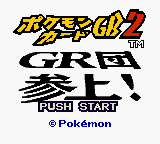
Pokémon Card GB2: GR Dan Sanjō! is easy to recommend to anyone who wanted the first Game Boy card game to go further. It understands that the pleasure is not just winning a duel; it is improving a deck, finding a card that opens a new idea, and taking that idea into the next challenge.
The trade-off is inherent to collectible-card games: your options grow gradually, and not every card or deck experiment will pay off immediately. If you need rapid mechanical change from battle to battle, the steady rhythm can wear on you. But if the thought of patiently tuning a deck sounds relaxing rather than tedious, the campaign gives that process a stronger destination.
This is a fuller, more story-driven follow-up built on a solid card-battling foundation. For more in the series, Pokémon Card Game: Asobikata DS is another related card-game release worth knowing about. GB2 remains the better fit when you want an RPG-shaped solo journey wrapped around a deep pool of classic Pokémon cards.


Reviews
There are no reviews yet.