 Retro Replay Retro Gaming History, Reviews & Emulation
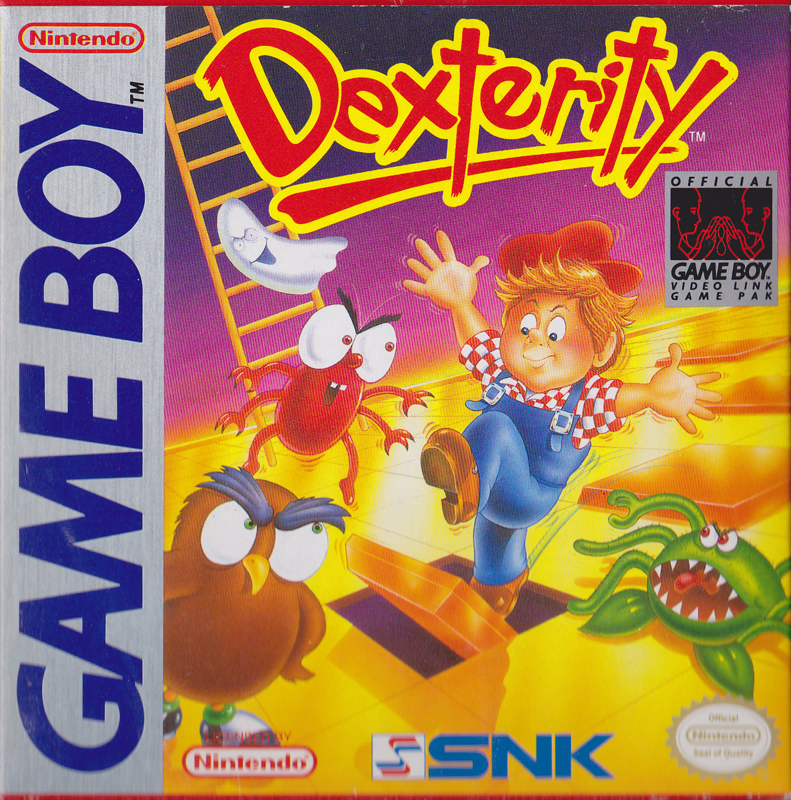
Retro Replay Review
Gameplay
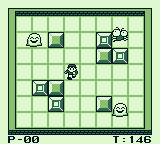
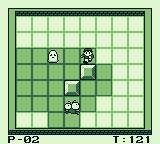
The first few boards invite you to think Dexterity is about speed: run across the 7×8 grid, hit the button, and flip every tile before the clock wins. That changes once you understand how much distance a well-placed flip can cover. If another tile is already flipped, every tile between it and your position flips as well. Lining up those connections is the heart of the game, and a clean chain can rescue what looked like a hopeless board.
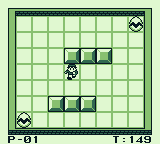
Then the obstacles start asking more of you. Stationary blocks break up your routes, holes create danger, and movable blocks are useful only if you can control where they go. A normal push is one thing; sending a block flying with a strong kick opens up more aggressive solutions. Shoving an enemy into a hole or off the board is especially gratifying, because it turns a cramped puzzle board into a small, improvised arena.
The five monster behaviors give that arena its bite. They do not simply chase you: they can reverse flipped tiles, while some can push blocks or destroy tiles. You need to watch the board rather than rush blindly toward the last unflipped square. Killed enemies eventually respawn, but their egg phase creates a fleeting opportunity to pick one up and use it against another enemy. Stunned enemies can also become weapons after standing on a multi-flipped row. These interactions give the game more tactical range than its compact grid suggests.
Frustration arrives when the timer and monsters combine to ruin a careful setup, especially if an enemy reverses tiles you thought were safely handled. Still, losing a life does not reset your flipping progress. That choice keeps failed attempts moving forward and makes the pressure feel stern rather than needlessly punishing. Power-ups from pushing blocks into corners—such as extra time, points, or a temporary enemy stun—are worth pursuing when the board allows it, but chasing one at the wrong moment can cost more than it returns.

Graphics
The Game Boy view is a top-down 7×8 playfield built around tiles, blocks, holes, and enemies. Its compact, fixed-screen layout makes positions easy to parse: you can see the line between your character and a previously flipped tile, which matters when setting up a chain, and the board keeps the action focused rather than sprawling.

Story
Dexterity does not lean on a story to carry you from one board to the next. Its context comes from the immediate problem in front of you: clear the tiles, survive the monsters, and make the board work in your favor before time expires.
That stripped-back approach fits the game’s arcade-like rhythm. There is no narrative pause between the action and the next challenge, so your own close calls become the memorable moments: the row you flipped at the last second, the block kick that removed a monster, or the enemy that undid your route just before you reached safety.
If you need characters or plot to create momentum, Dexterity will feel bare. If you are happy letting a puzzle board supply its own drama, the escalating mix of enemies, blocks, and timer pressure gives each round enough tension without needing anything more elaborate.
Overall Experience
Dexterity earns its interest through the way its systems overlap. Flipping tiles is the objective, but the best decisions often concern enemy control, block placement, and preserving a route through the grid. It has the satisfying quality of a good compact puzzle: a board that looks crowded and confusing can become manageable once you spot one useful alignment.
At the same time, it is not a gentle brain-teaser. The time limit forces quick reads, the monsters can erase your progress, and the different behaviors mean you cannot rely on one safe routine. The game asks you to absorb its rules through repetition and to stay composed when a plan falls apart.
Give it a chance if you enjoy fast, slightly combative puzzle games where spatial planning matters as much as reflexes. The 6.2 score feels fair: Dexterity has genuine depth in its chain flips and enemy interactions, but its pressure-heavy structure and unforgiving hazards make it more rewarding for persistent puzzle fans than for anyone looking to unwind.


Reviews
There are no reviews yet.