 Retro Replay Retro Gaming History, Reviews & Emulation
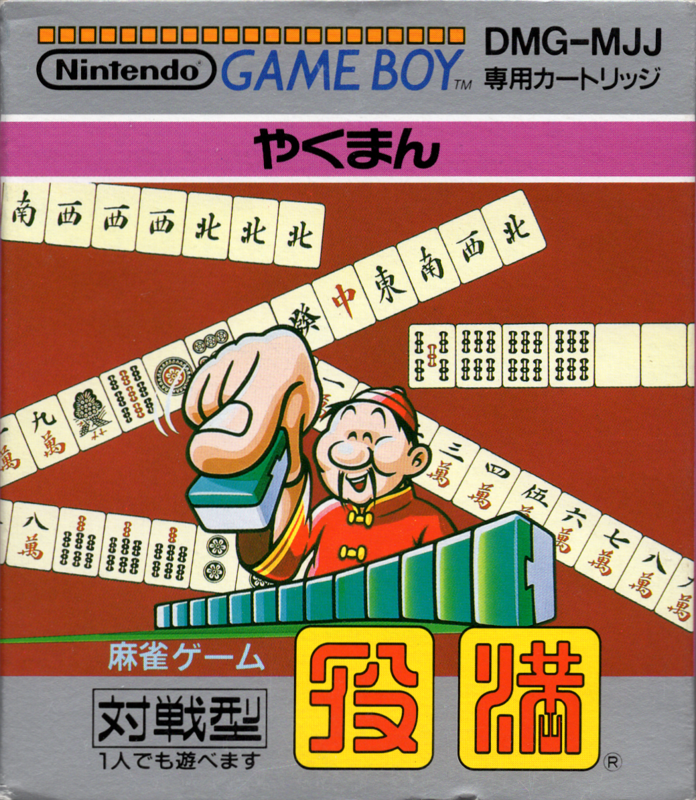
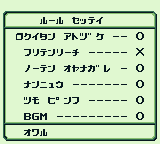
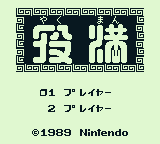
Retro Replay Review
Gameplay
Yakuman gets to the part that matters quickly: sitting down with Mahjong and trying to make smarter decisions than the person across from you. The first hour will feel satisfyingly brisk if you already understand the rhythm of the game. Instead of waiting for a larger adventure to reveal itself, you are immediately dealing with the small, absorbing pressures of building a hand and judging the table.
That directness is its best quality. Mahjong has enough tension in its basic back-and-forth to carry a game like this, and Yakuman does not need to dress it up. When your read of a hand starts to come together, the pleasure is in seeing a plan take shape under pressure. When it goes wrong, frustration is personal: you can usually point to the decision that left you stranded.
The Game Boy version’s two-player mode is the real draw for anyone with another Mahjong fan nearby. Linking two systems turns a solitary rules exercise into a sharper contest, where every choice has somebody on the other end trying to outthink you. If you want a game to teach you why Mahjong is fun, Yakuman is a less generous starting point; if you already enjoy the game, its focus is refreshing.
Graphics
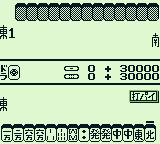
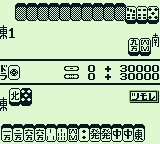
Yakuman is a compact Game Boy rendition of a tabletop tile game, so the pictures are centered on the Mahjong board rather than characters or elaborate locations. It is a functional look for a game where you need to keep your attention on the tiles and the state of a hand.
Story
Yakuman’s story is the one Mahjong creates at the table. A promising hand can make you feel clever for a few turns, then a single bad turn can turn that confidence into a scramble. That small-scale drama is more important here than any written plot could be.
The opponent matters because they turn your calculations into a contest. You are not simply arranging tiles in a vacuum; you are trying to pursue your own hand while respecting the possibility that someone else is getting closer to theirs. That is enough conflict to make a short session feel consequential.
As a result, the game lands best when you bring your own appreciation for Mahjong’s rituals and rivalries. If you need characters, scenes, or a reason to keep playing beyond improving at the game itself, Yakuman will feel austere. Its payoff is the satisfaction of a well-played hand, not a narrative finish line.
Overall Experience
Yakuman is an appealingly pure piece of early portable game design. As one of the original Game Boy launch titles in Japan, it feels built around a single confidence: Mahjong is already compelling enough to survive the transition to a small screen. For the right player, that confidence is justified.
Its limitations are inseparable from that commitment. You are getting a digital Mahjong game, not a broad strategy package built to win over every curious newcomer. The more familiar you are with the rules and the more you enjoy replaying them for their own sake, the more value you will find in its compact format.
The 2023 Nintendo Switch release gives Yakuman another chance to be enjoyed as a historical Nintendo release, but its core recommendation remains simple. Give it a chance if you want traditional Mahjong with a direct competitive option and little distraction. Skip it if you are hoping for a richer solo journey around the board game.


Reviews
There are no reviews yet.