 Retro Replay Retro Replay gaming reviews, news, emulation, geek stuff and more!
Retro Replay Review
Gameplay
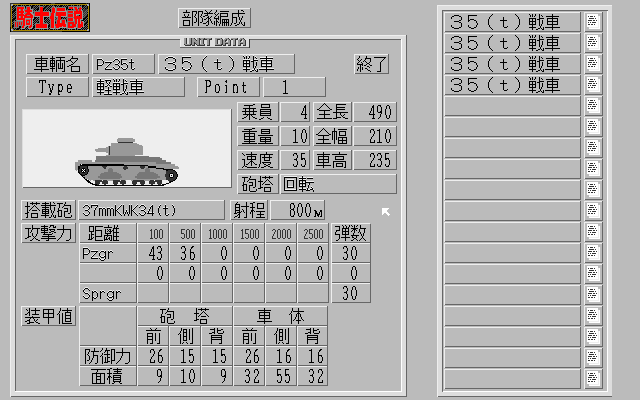
Kishi Densetsu starts with the kind of decision that can make a military simulation immediately absorbing: before a map begins, you choose what equipment and troops will actually go into the fight. That makes the battle feel like a commitment rather than a puzzle with a pre-written answer. If you enjoy weighing a force before the first order is issued, there is real tension in knowing that your deployment choices have to carry you through the stage.
Once fighting begins, you issue commands through menus—move, fire, retreat—while the action progresses continuously rather than in strict turns. You can pause, and you will want to. This is not a game that rewards frantic command selection; it rewards stopping, reading the field, and deciding whether an advance is worth exposing your units. The rhythm is unusual for tactical combat, sitting between a turn-based board-game mentality and a live battlefield that will not politely wait forever.
The catch is that menu-led control can put distance between you and the action. Players who want immediate, tactile tank combat will likely find the command layer stiff. But if you can settle into its deliberate pace, the game’s structure gives sensible weight to defensive withdrawals as well as attacks. A bad stage result can alter the scenario’s subsequent path, so retreating is more than an admission of defeat; it can be a hard tactical choice with campaign consequences.
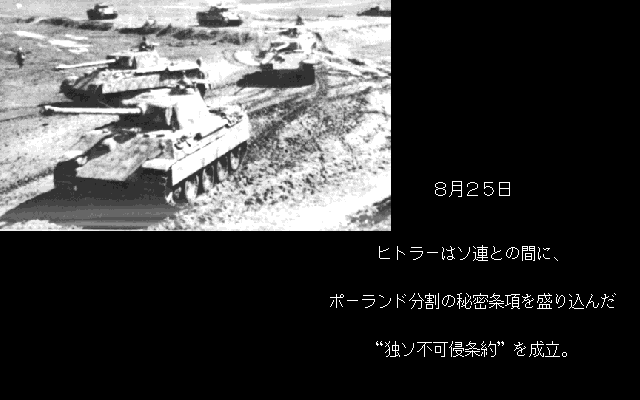
Its historical scope also deserves direct acknowledgment. You command an SS tank corps through World War II, from the invasion of Poland to the Battle of Berlin. The game may stick closely to major European Theater battles, but its perspective centers an organization that was a central instrument of Nazi persecution and genocide. That makes Kishi Densetsu difficult to recommend as uncomplicated historical entertainment, regardless of the tactical interest of its systems.
Graphics
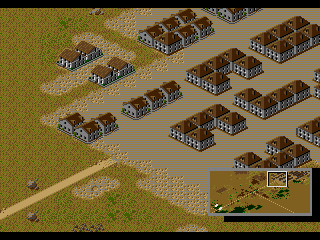
The game uses a diagonal-down, isometric viewpoint for its battles. That angle suits a map-focused tactical game, giving you a clear way to follow the placement and movement of tanks and troops as you issue orders through the command menus.
Story
Kishi Densetsu does not appear to build its campaign around a character drama. Its narrative is the historical march through major European battles, starting in Poland and ending around Berlin, with your stage performance causing slight shifts in how the scenario progresses.
That branching structure is the story’s strongest interactive element. Success or failure is not simply a tally at the end of a mission; it can nudge the campaign onto a different route. For a simulation this focused on operations, that is a more useful payoff than a pile of exposition would be.
Still, the campaign’s historical framing carries a serious limitation: it places you inside the command structure of the Nazi SS. A game can model tactics and chronology, but that viewpoint is ethically loaded from the first map onward. If historical war games are part of your library, this is one to engage with critically rather than treat as a heroic armored campaign.
Overall Experience
Kishi Densetsu has the bones of a demanding tactical campaign: force selection before battle, pauseable continuous action, and outcomes that can reshape the next scenario. The satisfying moments are likely to come when a cautious deployment and a timely retreat preserve enough of your force to keep the campaign moving. It asks you to think like a commander, not a trigger finger.
Its age shows in the menu-heavy control scheme, and the real-time progression can turn a simple order into a pressure point if you are not ready to pause and reassess. That friction will be part of the appeal for simulation devotees and a clear barrier for everyone else. There is little room here for casual sightseeing through World War II.
For genre specialists, the alternate scenario progression gives the campaign more replay value than a fixed sequence of historical maps. For most gamers, the perspective is the larger issue. The tactical design is interesting enough to study, but commanding an SS formation through Nazi Germany’s war makes the experience a deeply uncomfortable proposition. It is a niche simulation with worthwhile strategic ideas, burdened by a premise that cannot be separated from the crimes of the force it asks you to lead.


Reviews
There are no reviews yet.