 Retro Replay Retro Gaming History, Reviews & Emulation
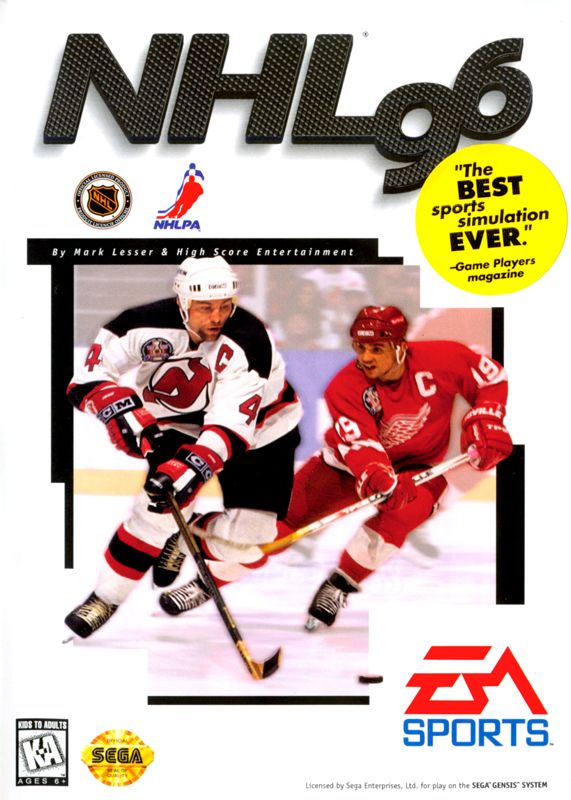
Retro Replay Review
Gameplay
The first few minutes of NHL 96 feel immediately familiar if you know EA’s Genesis hockey games: the action is quick, physical, and built around getting the puck up ice before the defense can settle. But this is not just a roster update. The added offensive options give possession more texture. You can work a give-and-go, set up a one-timer, sell a fake shot, spin away from pressure, or leave a drop pass for a trailing teammate. Once those options start clicking, rushes become less predictable and goals feel far more satisfying.
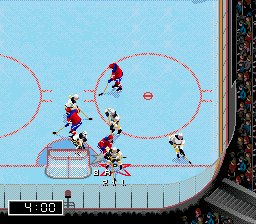
The diagonal-down viewpoint remains an excellent fit for this kind of hockey. You have room to see passing lanes ahead of the puck carrier, and the pace encourages fast decisions rather than careful, stop-start setup play. NHL 96 is still happy to turn loose pucks and body contact into chaos, so you will have possessions that dissolve into a messy scramble. That roughness is part of its charm, though: a clean breakout or a well-timed pass through traffic stands out because the rink rarely stays orderly for long.
Difficulty settings are a welcome addition, especially because the game’s faster flow can punish sloppy defense. Start at a level that lets you learn the newer moves instead of treating every possession as a race to fire the first available shot. Fights also return, bringing back a bit of old-school hockey-game attitude. They are not the reason to play, but they suit a game that likes its action loud and bruising.
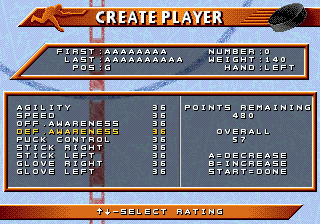
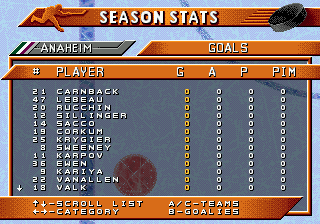
The mode selection has real staying power. Regular games and shootouts are easy ways to get a quick fix, while single-elimination and best-of-seven playoffs let you chase a more focused championship run. The full season is the bigger commitment: choose a team, play or simulate its scheduled games, make trades, create players, and push toward the postseason. Unlike NHL 95, you cannot freely jump into any game on the schedule, which makes the season feel more like a team campaign but less flexible for casual pick-up play.
Graphics
Genesis NHL 96 sticks with the series’ 2D diagonal rink view rather than the PC version’s move to 3D. It is a practical choice that still looks right in motion: skaters, puck movement, and developing attacks are easy to follow from the high angle, which matters far more than flashy camera tricks in a game moving this quickly.
Story
There is no traditional story here; your narrative comes from the season you make. Pick a club from the 1994–95 NHL lineup, manage the schedule, make trades, and see whether your team is still standing when the playoffs arrive.
That structure creates the kind of sports-game drama that works even without cutscenes or scripted rivalries. A simulated game can change the standings, an early decision to end the regular season can send you straight into the postseason, and a best-of-seven series gives individual wins and losses some weight. It is a simple framework, but it gives your games a reason to matter beyond the final score.
There is a slightly odd historical wrinkle in its full-season setup: the real 1994–95 NHL campaign was shortened by a lockout, yet NHL 96 uses the originally planned 82-game schedule. In practice, that means a longer fantasy season for anyone who wants it, with the option to simulate games when the calendar starts to feel demanding. For background on the game’s release and history, see NHL 96’s history.
Overall Experience
NHL 96 is a strong Genesis hockey game because it balances immediate arcade energy with enough new tools to reward practice. The first hour is fun on speed and contact alone; the longer you play, the more satisfying it becomes to use a fake shot to open a lane or turn a routine rush into a deliberate passing play.
Its biggest frustration is also the cost of commitment. The season mode asks you to stick with one chosen team instead of sampling any scheduled matchup as you could in NHL 95. Simulation and the option to skip ahead to the playoffs soften that limitation, but gamers who mainly want to stage specific matchups may spend more time in regular games or the playoff modes.
Still, this is an easy recommendation for anyone who enjoys 16-bit sports games with speed, accessible controls, and enough tactical flourishes to keep repeat games from blurring together. NHL 96 does not need to abandon its classic 2D formula to improve it. It adds meaningful on-ice choices, restores a little edge with fights, and backs it all up with a generous set of ways to play.


Reviews
There are no reviews yet.