 Retro Replay Retro Gaming History, Reviews & Emulation



Retro Replay Review
Gameplay
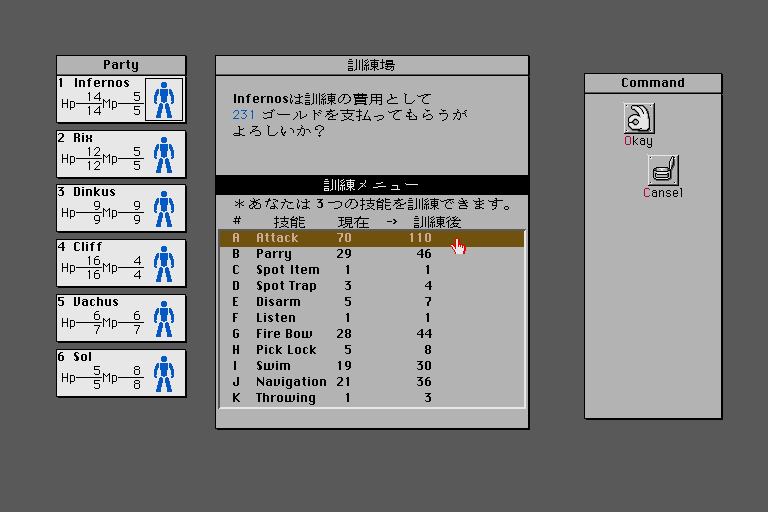
The first hour is about commitment: making adventurers, deciding what kind of party you want, then accepting that Scandor is not going to rush you toward its danger. Up to six active combatants can travel together, and Phantasie IV gets much of its pull from asking you to assemble a group you can live with. The option to include the series’ familiar non-human “random creatures,” from ogres to minotaurs and lizardmen, gives the lineup a welcome bit of strange fantasy flavor.
Parentage is the clearest reason this fourth entry is more than a straight repeat. You choose parents for a new character, and their race pairing affects the child’s parameters and affinities. That makes character creation feel consequential before the party has taken a single step. There is room for playful experimentation, too: a group descended from troll fathers and gnoll mothers is wonderfully specific, even if these creature races are restricted to fighter and thief paths. The system rewards you for thinking about the roster as a set of people with origins rather than six interchangeable stat sheets.
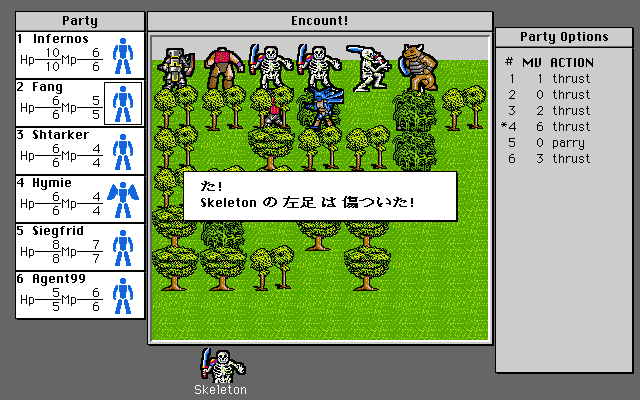
Once you are moving, the rhythm is classic: top-down travel, dungeon descents, and random turn-based battles. Combat offers concrete choices such as Thrust, Parry, and Throw, while battle rows make positioning part of the decision-making. That is enough to give fights a tactical edge beyond simply selecting an attack, particularly when you have built a party around distinct roles. Still, random encounters can turn exploration into a slog if you need constant forward momentum. Phantasie IV asks you to enjoy preparation, repetition, and incremental progress.
The underlying systems start to click when you stop treating each battle as an isolated obstacle. Row placement, commands, party composition, and inherited traits all feed into the same satisfying question: did you build a group capable of surviving the next dungeon? It is a narrow, traditional loop, but a sturdy one for anyone who enjoys taking responsibility for a party’s successes and bad decisions alike.
Graphics
The game uses a top-down view for its world map and separate battle screens with characters arranged in rows. That layout makes it easy to understand where your party stands during combat, and its look stays close to the earlier Phantasie games rather than trying to reinvent the series visually.
Story
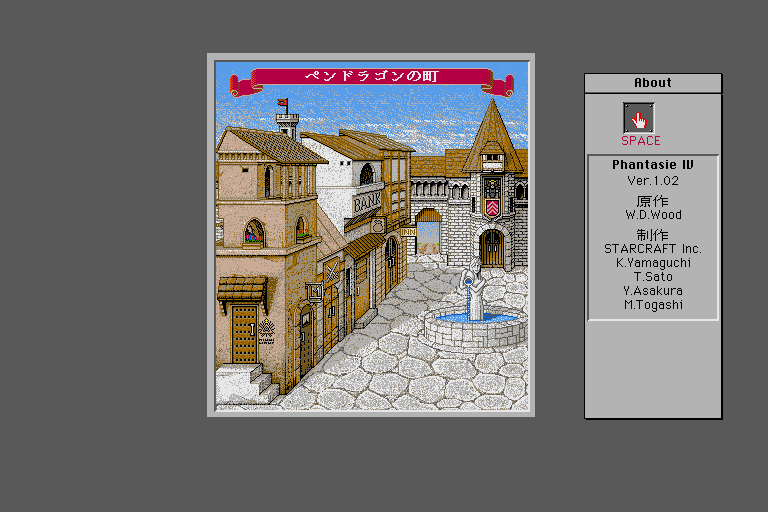
Phantasie IV begins after the defeat of Nikademus, when Scandor has enjoyed twenty years of peace. That calm ends with a ship’s unexplained disappearance near Skull Island, a simple but effective hook for sending a newly made party into danger.
Do not expect the setup to compete with the character-building for attention. The story is a classic fantasy threat rising after a hard-won peace, and its strongest function is giving the journey a clear sense of unease: something has gone wrong, and the island is where answers may lie.
That straightforward framing suits the game. You are not being asked to admire an elaborate narrative web; you are being asked to create heroes and take them into a world where peace has plainly run out. For a party-driven RPG, that is enough motivation to make the expedition feel purposeful.
Overall Experience
Phantasie IV is a disciplined continuation, not a radical overhaul. Its familiar map exploration, dungeons, random battles, and row-based turn combat will either feel comforting immediately or reveal the boundary of your patience. The payoff comes from mastering a party over time, not from constant novelty.
The inheritance system is the part that earns this sequel its own identity. It gives you a reason to linger in character creation, test unusual combinations, and care about how a party begins. Even the limits imposed on creature-born characters create meaningful trade-offs instead of making every eccentric party choice automatically optimal.
Give it a chance if your favorite RPG moments involve planning a group, managing tactical placement, and accepting that dungeon crawling includes friction. You should pass if you want a fast pace or dislike random encounters. For the right kind of old-school RPG fan, Phantasie IV’s traditional structure and unusually personal approach to party creation make the journey worth taking.


Reviews
There are no reviews yet.