 Retro Replay Retro Gaming History, Reviews & Emulation
Retro Replay Review
Gameplay
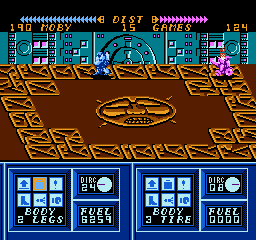
Breeder is at its best when you stop treating its stat allocation as paperwork and start treating it as an argument with yourself. Every robot can draw from up to 999 points across fifteen categories, but upgrades do not all cost the same. That immediately gives each decision some bite: loading up on one desirable trait means leaving something else weaker, and a machine that looks formidable on paper still has to survive the arena.
The seven body types are the game’s strongest invitation to experiment. You can begin with two legs or four, then move into stranger options such as Snake, Hover, three tires, six tires, or Belt. Combined with the broad stat choices, that gives Breeder more personality than a simple “make the numbers bigger” simulator. Building several machines and comparing their results is where the idea starts to click.
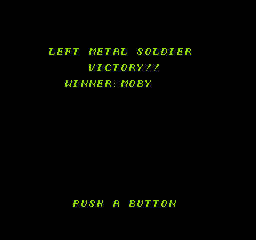
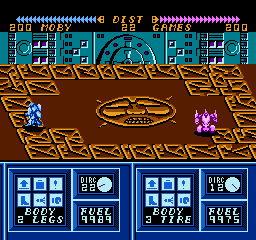
Matches are also ruthlessly clear. A bot loses when it runs out of either hit points or fuel, so durability is not the only resource worth protecting. Since the reward is largely in watching your design perform, frustration can set in if you want immediate arcade control or a lot of spectacle from each bout. Breeder asks you to enjoy iteration: adjust a build, send it back into the coliseum, and see whether your reasoning held up.
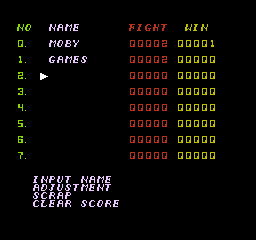
Up to eight metal soldiers can be created for arena competition, which suits anyone who enjoys tinkering with a small stable of specialized designs. The game is much less compelling if you only want to make one robot and dominate quickly. Its narrow rules are the point; this is a compact contest of trade-offs, not a sprawling mecha adventure.
Graphics
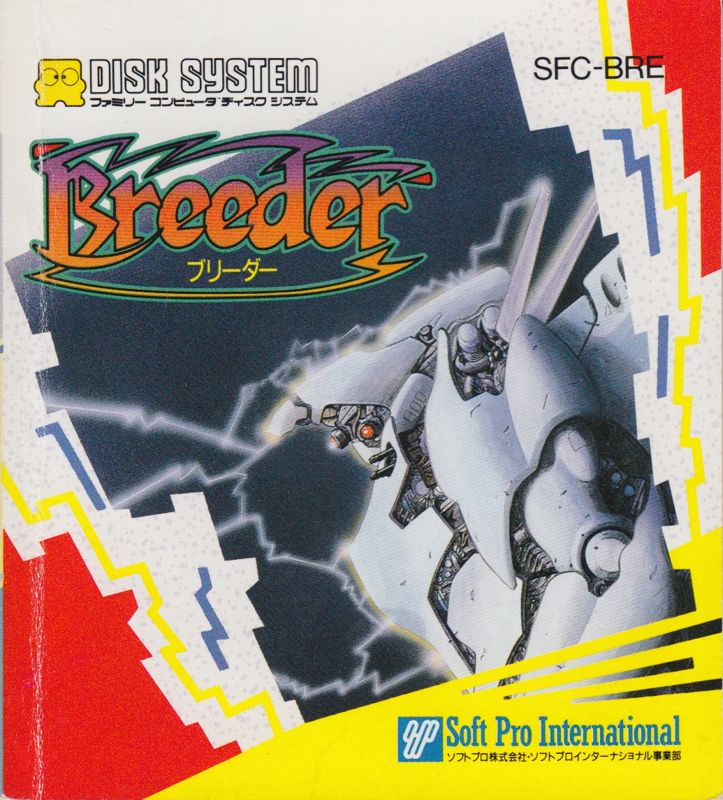
Breeder’s most distinctive imagery comes from the machines themselves: the roster can range from legged robots to snake-bodied, hovering, wheeled, and belt-driven designs. That variety gives the arena combat a pleasantly odd mechanical flavor, even before the numbers behind each build start to matter.
Story
There is barely a conventional story here, and that is an honest fit for the game. The futuristic coliseum exists as a place where a spacefaring civilization researches and develops fighting machines. It is framing for the experiments rather than a plot that pushes you from one dramatic event to the next.
That simple setup does give your tinkering a useful context. You are not asked to identify with a hero or unravel a conflict; you are effectively participating in a program built to test combat designs. The machine you assemble becomes the closest thing Breeder has to a protagonist.
If you need characters, twists, or a campaign with narrative momentum, Breeder will feel extremely bare. If you can enjoy a premise that gets out of the way and lets robot construction carry the experience, the arena-research concept is enough to hold the game together.
Overall Experience
Breeder is an unusually pure design-and-test game. Its first draw is the promise that a different chassis and a different distribution of points could produce a better fighter; its lasting draw is trying to prove that promise in the arena. The best moments are not necessarily the wins, but the realization that a loss exposed a weakness in your own plan.
The limitation is equally plain: much of the action is observed rather than performed directly, so the payoff depends on how much you enjoy analyzing automated robot battles. A gamer looking for hands-on combat will likely find the wait between decisions and results too detached. A patient tinkerer may find that same distance compelling, because it makes each match feel like a test of design rather than reflexes.
Give Breeder a chance if you like old simulations that trust a handful of numbers, chassis choices, and hard match results to create drama. It is a specialized curiosity, but a memorable one: a robot arena game where the real fight begins before the bots enter the coliseum.


Reviews
There are no reviews yet.