 Retro Replay Retro Gaming History, Reviews & Emulation
Retro Replay Review
Gameplay
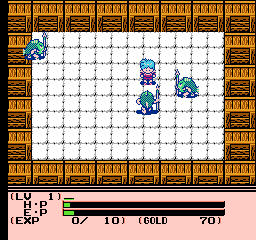
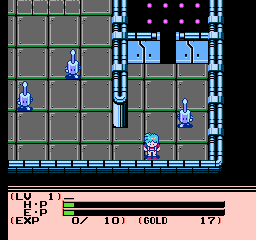
Esper Dream 2 gets its hooks into you through motion and uncertainty. You wander the Book Worlds as Mamoru, knowing that pairs of moving footprints can pull you into combat, and that little threat gives ordinary exploration some welcome tension. Unlike a role-playing game that stops you every few steps for a formal random battle, these encounters are visible enough that you can react to them. Sometimes you will still get dragged into trouble, but at least the game lets you feel involved in the risk.
The sequel’s smartest improvement is its willingness to let you back away. Mamoru can run from a battle that has turned ugly, which matters enormously when HP is low and game over comes at zero. Healing items give you an immediate safety net, while Teleport offers a practical route back to the base town when used outside battle in enclosed areas. That combination makes setbacks less punishing and encourages you to push farther into a world before retreating to regroup.
Each world gives Mamoru one CPU-controlled friend to bring along. They help in battle, but their clues are at least as valuable when the way forward is unclear. You are not micromanaging a full party; the focus stays on Mamoru, with a companion acting as support rather than stealing the show. That keeps the action-RPG structure approachable, though it also means your enjoyment rests heavily on whether you like navigating areas and solving their local problems with only occasional guidance.
The pace can become frustrating if you repeatedly collide with footprints while trying to reach an objective, especially since losing all HP ends the game. Still, the ability to flee, heal, and teleport prevents that pressure from becoming pure irritation. Give this one a chance if you like old RPGs where smart retreat is part of the adventure, not an admission of defeat.
Graphics
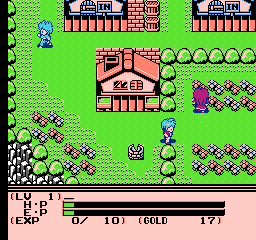
The game uses 2D scrolling for its Book World exploration, while battles shift to separate battlefields rather than unfolding directly on the route you were traveling. The moving footprint pairs are a particularly clear on-screen warning: you can see danger coming before it becomes a fight.
Story
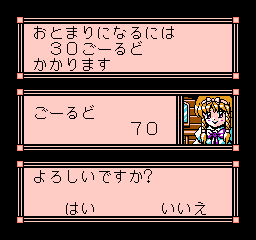
The story’s strength is its playful framing. A world inside the books you read is in trouble, and Mamoru—the bookworm with ESP—is the right sort of hero for a journey that crosses several troubled Book Worlds. It is a premise that immediately fits the game’s structure: every new area can have its own problem without losing the larger goal of collecting five special rings.
Mamoru is not entirely alone, either. A magical fairy and the allies he meets give the trip a sense of companionship, while the one-per-world helpers also point him toward the next task. Their advice does more than decorate the plot; it helps make each world feel like a place with a problem to untangle rather than merely another stretch of combat.
One Book World has already been resolved by the time this sequel begins, leaving Mamoru to tackle the remaining four areas. That is a pleasing nod to the original Esper Dream without forcing the sequel to spend its whole adventure retreading old ground. The stakes are straightforward—save the Book Worlds before Mamoru falls—but the book-bound setting gives that familiar quest a bit more charm than a generic ring hunt.
Overall Experience
Esper Dream 2 is a modest but thoughtful refinement of its predecessor’s formula. The visible roaming encounters, escape option, healing supplies, and Teleport spell all point in the same direction: this is still a game that wants you to respect danger, but it no longer insists that every bad situation must become a disaster. That makes it easier to settle into its rhythm.
The payoff is the feeling of traveling through a set of distinct fantasy problems with just enough help to stay moving. Your companion can lend a hand in fights and steer you when you lose the thread, while the five-ring objective gives the whole trip a clean purpose. It is not a sprawling party epic; it is a focused, slightly eccentric adventure built around Mamoru’s trip through book worlds.
You should try it if early action RPGs appeal to you more for their exploratory tension than for elaborate character management. Expect some friction from the danger of encounters and the hard consequence of running out of HP, but expect useful tools to answer that friction too. For a 1992 NES RPG, its willingness to let you escape, recover, and find your bearings gives it more staying power than a simple curiosity.


Reviews
There are no reviews yet.