 Retro Replay Retro Gaming History, Reviews & Emulation
Retro Replay Review
Gameplay
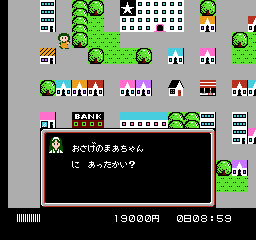
The first stretch of Kieta Princess has an odd but immediate pull. A princess has vanished, the medicine imported from her kingdom is causing a public-health scare, and you are dropped into towns to ask around rather than simply marched from one fight to the next. That makes each conversation feel potentially useful, especially once you realize that the people you meet can vary between day and night.
Exploration is not entirely peaceful. Gang members may open fire, and you have a gun to answer them, but the game makes you live with careless shooting: hit too many innocent civilians and you can be arrested and fined. It is a strong idea because it puts pressure on every hostile encounter. You cannot treat a crowded town like a shooting gallery, and that tension gives the investigation a more wary rhythm than most action games of its era.
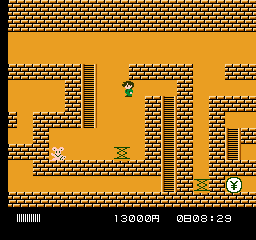
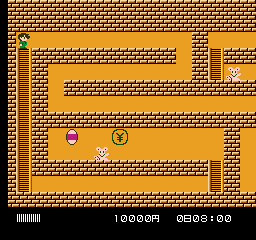
The detours are where the game becomes more divisive. Restaurants, dojo training, and vegetable collecting offer things to do beyond interrogating locals, while money can be earned along the way. Some leads also push you into side-scrolling action stages, where you shoot enemies, gather loose items and cash, and use springs to reach higher platforms. That variety is genuinely distinctive, but it also makes the game feel scattered: you need to be happy moving between detective work, errands, combat, and platforming instead of expecting one discipline to deepen steadily.
Give it a chance if you enjoy old games that make you poke around and assemble an investigation through exploration. If your patience runs thin when a mystery pauses for a combat section or a practical chore, Kieta Princess can feel like several decent ideas tugging in different directions.
Graphics
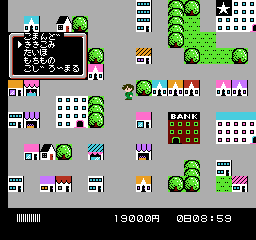
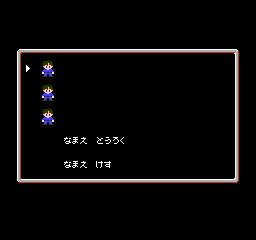
Kieta Princess shifts between town exploration and side-view action stages. The platforming portions give you a clear look at enemies, scattered money and items, springs, and elevated platforms, while the towns frame the investigation around the people you need to question.
Story
This is a more compelling setup than the title initially suggests. Princess Kilala of Rabia comes to Japan to discuss the troubling imported medicine, then disappears before that discussion can resolve anything. The missing-person case and the dementia scare give the search some weight: you are not only looking for a royal visitor, but investigating a situation already affecting the public.
The story works best as a reason to keep pressing strangers for information across the five towns. A detective game lives or dies on whether you want the next clue, and this premise has enough uncertainty to carry that forward. The changing day-night encounters are particularly well suited to a case built around finding the right person at the right time.
Do not come in expecting the investigation to remain solemn every minute. Armed gangs, training sessions, restaurant visits, vegetable gathering, and action-platforming all sit beside the central disappearance. That makes the tone unusually busy, but it also gives Kieta Princess a character that more straightforward missing-person games rarely have.
Overall Experience
Kieta Princess is an intriguing, uneven hybrid rather than a cleanly polished detective game. Its best quality is its willingness to make the search feel like a messy trip through towns with different people, schedules, risks, and distractions. The civilian-fire penalty is especially welcome because it asks you to use the gun with restraint instead of treating violence as a consequence-free solution.
The trade-off is focus. You may be absorbed by gathering information one moment and then asked to engage with combat, money collection, or platforming the next. For some, that will make the case feel alive and unpredictable. For others, it will dilute the mystery whenever they are ready to pursue the next lead.
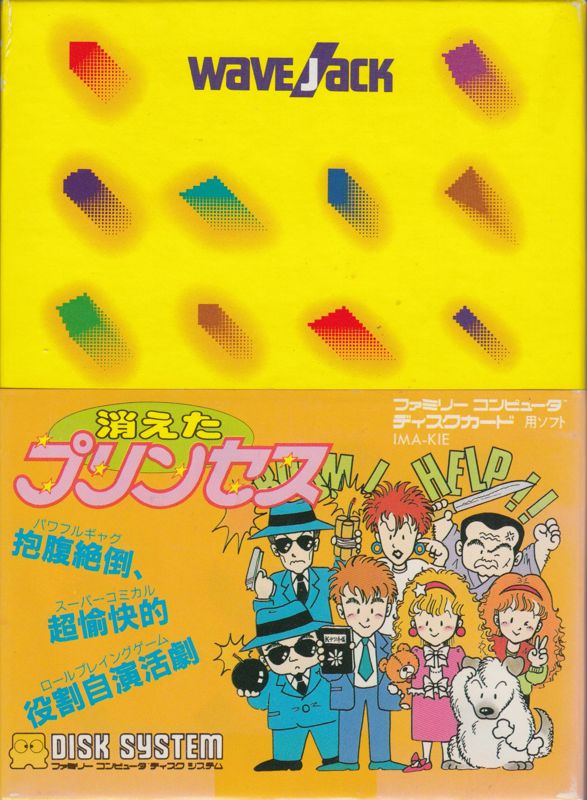
Still, there is real charm in how much this one game attempts. The Wave Jack package even came with a map and an audio cassette containing hints and songs from Yasuko Tomita, reinforcing its sense of being a mystery meant to be explored beyond the cartridge alone. It is worth seeking out if you value curiosity, novelty, and the occasionally unruly ambition of 1980s Japanese game design; just bring patience for its genre-hopping route to the answer.


Reviews
There are no reviews yet.