 Retro Replay Retro Gaming History, Reviews & Emulation
Retro Replay Review
Gameplay
The first hour gives you a clear reason to care about getting Raimon’s football club moving: Mark Evans is effectively trying to rescue a team whose own members would rather idle in the clubroom. That underdog energy carries the game well. You are not simply picking a famous club and playing fixtures; you are building a struggling school side into something capable of meeting a daunting challenge.
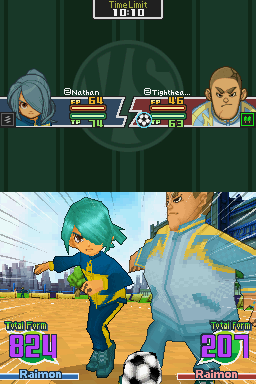
On the field, Inazuma Eleven is not a conventional button-driven soccer game. Matches happen in real time, but you use the stylus to point out or draw where your controlled player should go while the rest of the team moves automatically. It can feel indirect at first, particularly if you come in wanting precise, immediate control of every pass and run. Give it a few matches. The approach starts to make sense when you treat the field less like a simulation and more like a moving tactical board.
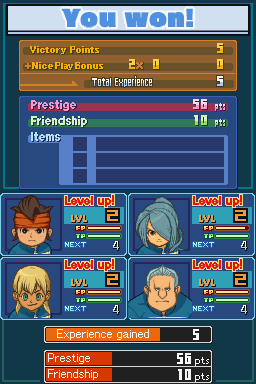
The clever part is what happens when you meet an opponent or reach the goal. Play pauses, and you choose an action from ordinary moves or larger-than-life supernatural skills. That interruption turns key duels into RPG confrontations rather than tests of reflexes alone. Statistics and levels matter to the results, so the satisfaction comes from seeing a developing squad turn previously intimidating situations into manageable ones.
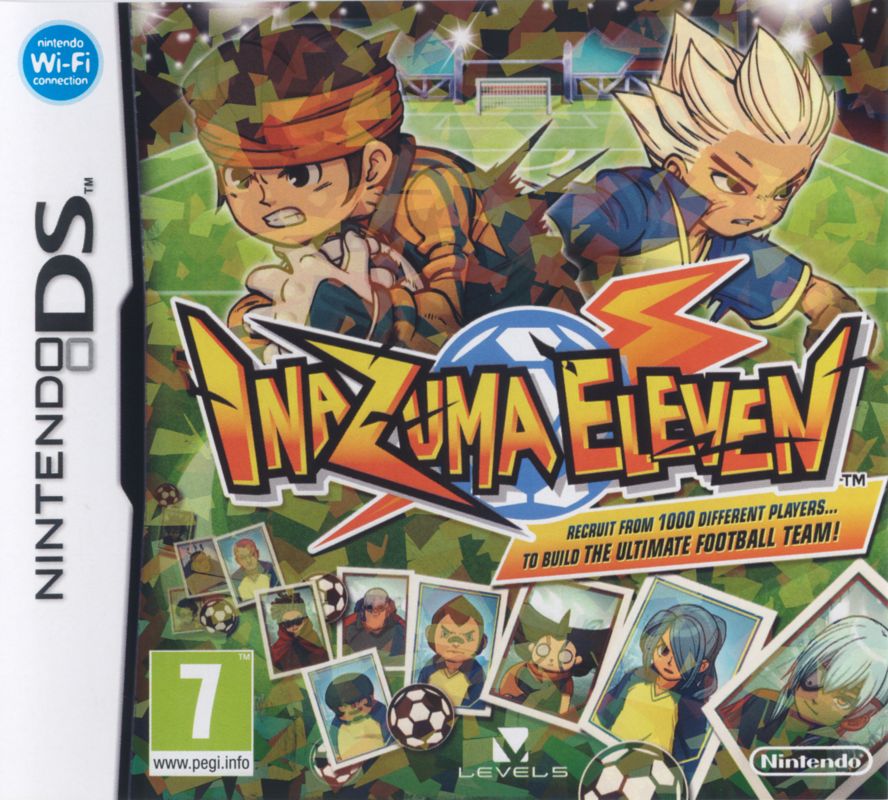
There is plenty to chew on beyond the starting lineup. You can alter positions and recruit from hundreds of additional players, which gives team construction genuine weight. That breadth will reward you if you enjoy tinkering with a roster; if your only interest is quick soccer matches, the RPG progression and management may feel like homework between the moments you really want.
Graphics
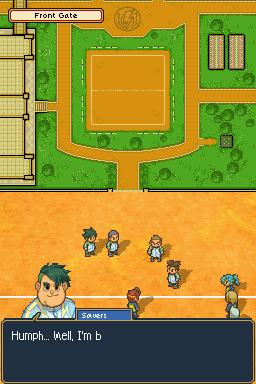
The game shifts between top-down exploration and 2D, diagonal-down soccer action. Its anime and manga styling suits the heightened tone of school football clashes and supernatural techniques, while the overhead field view keeps the movement of multiple teammates easy to track with the stylus.

Story
Mark’s determination gives the story its center. Raimon is mocked around school, nearly disbanded, and handed one last chance in a friendly against one of the best teams. It is a familiar sports-story foundation, but it is an effective one because the stakes stay personal: saving a club matters before any grander ambition does.
Axel Blaze’s arrival is the hook that changes the team’s prospects. As a transfer student with a reputation as a strong player, he gives Mark a believable reason to hope that this ragtag club can compete. The tension is not limited to whether Raimon can win, either; someone wants the club gone, adding an obstacle beyond the next opponent.
This is a story built for anyone who likes earnest team drama over detached sports simulation. The football matches are the action, but the pull comes from collecting a group of reluctant or new teammates around Mark’s stubborn belief that the club deserves to survive.
Overall Experience
Inazuma Eleven works because it commits to the idea that soccer can carry an RPG. Leveling changes how your players perform, recruitment expands your options, and pivotal on-field encounters become choices rather than mere collisions. That makes a win feel like the result of a squad you have shaped, not just a scoreline you happened to reach.
There is friction in the control scheme, and the automated teammates ask you to accept a different kind of command than in standard football games. But the stylus direction, real-time flow, and pause-and-choose confrontations form a distinct rhythm once you stop expecting a traditional soccer sim. It is far more engaging when you lean into its hybrid nature.
Give it a chance if you enjoy school sports anime, JRPG growth systems, and the pleasure of turning an overlooked team into a contender. The payoff is the gradual sense that Raimon is becoming a real club because of your choices, with every newly improved or recruited teammate feeding that comeback story.


Reviews
There are no reviews yet.