 Retro Replay Retro Gaming History, Reviews & Emulation

Retro Replay Review
Gameplay
The first hour has a pleasingly humble Dragon Quest rhythm: protect a village, lend people a hand, earn their gratitude, and slowly realize that your heavenly errand is about to go sideways. It does not need to reinvent the JRPG to hook you. The draw is the steady sense of useful progress—another favor done, another piece of equipment equipped, another step toward the Goddess Fruit and the land of God.
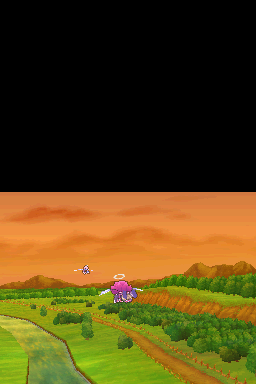
Combat remains decisively old-school. You issue commands to each party member—attacks, spells, items, and the usual careful turn-based choices—then live with the results. That familiar structure is a strength if you like planning a round rather than reacting in real time. More importantly, most enemies appear on the map, so you can choose your fights instead of being interrupted by constant random encounters. That small change gives exploration a smoother pace, especially on a handheld where short sessions matter.
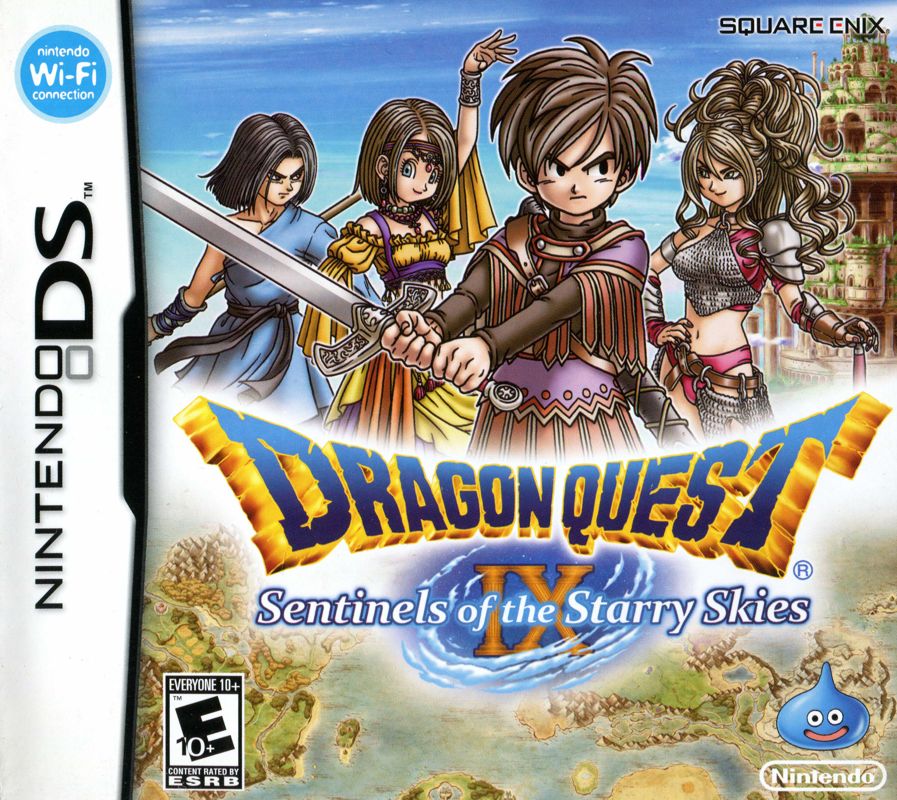
Creating every member of your party is the big trade-off. You get a group that feels genuinely yours, and party members can be changed through a service at inns, which encourages tinkering rather than treating an early lineup as permanent. On the other hand, these created allies are not built to carry major narrative roles. If your favorite Dragon Quest moments come from a fixed cast bantering through the plot, this structure will feel cooler and less intimate. If building a custom adventuring team sounds better, it is a major win.
Wireless multiplayer gives that custom-party idea real purpose. You can bring your adventurer into a friend’s world, fight alongside them, and trade hero copies that can carry special rewards such as treasure maps. Downloadable quests and items add another reason to return. This is not merely a solitary quest with a multiplayer checkbox; the game clearly wants you to share the long haul with other Dragon Quest fans.

Graphics
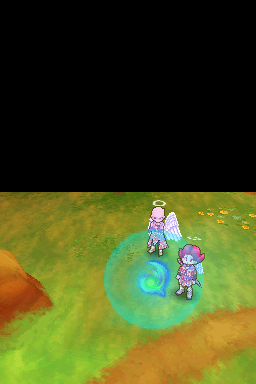
The Nintendo DS visuals lean into clean 3D character models, and the most satisfying detail is that equipped gear stays visible on your characters. Change the outfit or weapon and your handmade party actually looks different, making new loot feel more tangible than a stat line alone. Enemies can also be seen out on the map before battle, giving exploration a clearer, less stop-start look.
Story
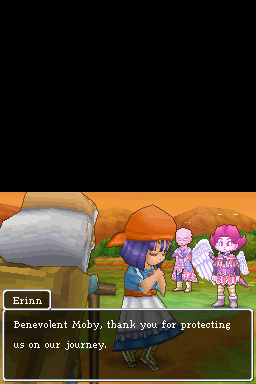
You begin as a celestial charged with protecting a village while working toward entry into God’s land. The initial goal is unusually concrete: gather enough benevolence through good deeds so the World Tree can bear the Goddess Fruit, the one reliable route onward. It is a simple setup, but one that fits Dragon Quest’s fondness for making heroism start with helping people at ground level.
Then the plan fails to unfold cleanly, sending you into the larger adventure. That turn is effective because the opening has already established what your character is striving for. You are not wandering merely because an RPG needs a world map; there is a clear celestial purpose behind the journey.
The storytelling also has to make room for the party-building format. Your hero anchors the premise, while the companions you create are yours to customize rather than fixed personalities with dedicated story arcs. That makes the narrative feel more focused on the hero’s route and the people encountered along it than on party chemistry. It is a different flavor of Dragon Quest, not an inferior one, but it will land best if you enjoy supplying some of the group’s personality yourself.
Overall Experience
Dragon Quest IX earns its reputation through smart adjustments rather than a rejection of tradition. Its battles are comfortably turn-based, its fantasy quest begins with kindness and duty, and its progression invites patient investment. Yet visible field enemies make traveling friendlier, while a fully custom party gives the adventure a personal stamp that few mainline entries can match.
Expect some friction if you want a tightly authored ensemble story. A crew of player-created companions offers flexibility, but it cannot deliver the same built-in personalities as a fixed cast. The payoff is ownership: your party’s look, composition, and shared multiplayer adventures belong to you, and changing characters at inns keeps experimentation open.
For a solo player, this is a substantial, welcoming Dragon Quest with a welcome reduction in random-battle annoyance. With friends, it becomes even more distinctive: bringing heroes into each other’s worlds and exchanging treasure-bearing adventurers turns progress into something social. Give it a chance if you want a classic JRPG that respects your time on the road and lets you make the party feel like your own.

Reviews
There are no reviews yet.