 Retro Replay Retro Gaming History, Reviews & Emulation
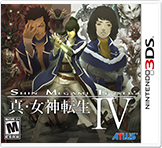
Retro Replay Review
Gameplay
Shin Megami Tensei IV makes you earn confidence early. You begin as a young samurai investigating the Black Samurai and the demon-causing books tied to her, but the immediate lesson is combat: do not walk into a fight assuming raw levels will save you. Battles are turn-based, yet the press turn system gives them a sharp, volatile rhythm. Find an enemy weakness and you preserve momentum; let an opponent strike yours and your side loses actions. A routine encounter can flip from comfortable to disastrous in a single bad matchup.
That pressure is why the demon system remains so compelling. You can recruit demons by speaking with them in battle, and the process turns encounters into more than a conveyor belt of fights. Your roster is not just a collection project; it is a set of possible answers to elemental vulnerabilities and future fusion combinations. Fusion gives you a strong reason to keep reshaping the party instead of clinging to the first demons that work. When you finally produce a demon with the skills you need, it feels like solving a problem you created through planning rather than luck.
The protagonist’s growth has welcome flexibility. You assign attributes on level-up, gain experience from side quests and successful negotiations, and can learn party demons’ skills when the right conditions are met. That makes experimentation feel worthwhile, especially when a difficult enemy exposes a hole in your setup. Enemies appear on the exploration screen rather than arriving through random battles, so you have more control over when to engage. Still, this is not a laid-back RPG: if you dislike rebuilding parties, studying weaknesses, or accepting that a poor tactical call can erase your advantage, the friction will wear on you.
Graphics
East Mikado gives the game a fantasy land shaped by feudal Japan rather than the modern or post-apocalyptic settings often associated with the series. The contrast between samurai, church authority, the Gaia cult, and the demons you recruit gives the journey a distinct fantasy-RPG frame.
Story
The first mystery has a strong, unsettling hook. People are becoming demons after receiving books from the elusive Black Samurai, and your samurai’s investigation starts with a clear threat rather than vague world-saving obligation. It is a good foundation for a story built around suspicion: the danger is personal enough to pursue, but strange enough to make you question what is really happening.
From there, the conflict between the Mikado church and the cult of Gaia puts the series’ familiar Law-versus-Chaos tension at the center. The useful thing about that structure is that it asks you to take a position, not merely watch competing ideologies collide. Crucial decisions affect the hero’s relationship with both sides and lead to different endgame sequences, so your choices are more than flavor text on the way to a fixed conclusion.
It is also a welcoming mainline entry if you are new to this branch of Megami Tensei. The story is not connected to its immediate predecessor, so you can come in cold without treating it as homework. If you want a broader series reference after finishing, the related Shin Megami Tensei entry is a useful next stop, while this game history overview covers its release background.
Overall Experience
What makes Shin Megami Tensei IV stick is the way its story and systems push the same attitude: commit to a choice, then live with the consequences. In combat, that means protecting weaknesses and exploiting an opponent’s. In the story, it means deciding where you stand as faith, order, and freedom collide. Neither side of the game lets you coast for long.
The first hours can be rough because the game expects you to engage with negotiation, fusion, party composition, and weaknesses instead of treating them as optional extras. Once those pieces click, though, the difficulty becomes much more satisfying. You stop seeing a defeat as a wall and start seeing it as evidence that your team needs a different demon, skill set, or approach.
For a gamer who wants a turn-based RPG with real tactical consequences and branching ideological stakes, this is an easy recommendation. It is less suited to anyone looking for a forgiving adventure where one favorite party can handle every situation unchanged. Stick with its demands, and Shin Megami Tensei IV rewards you with a tense, flexible RPG whose best victories feel planned, narrowly earned, and entirely yours.



Reviews
There are no reviews yet.