 Retro Replay Retro Gaming History, Reviews & Emulation

Retro Replay Review
Gameplay
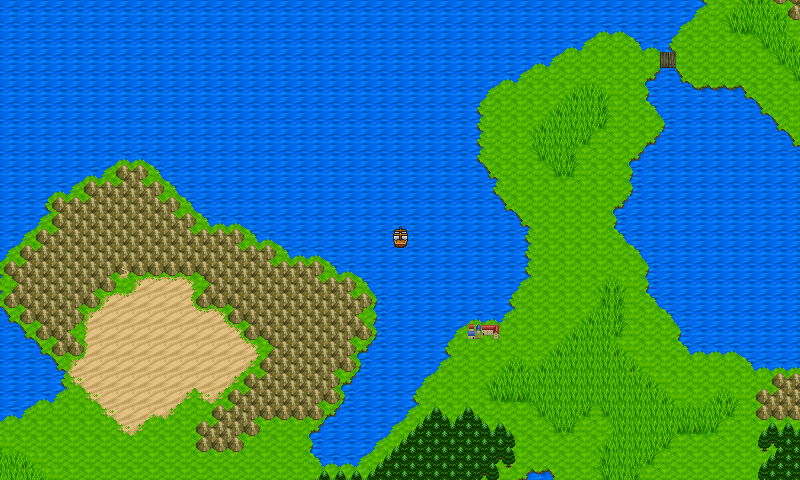
The first hour asks you to meet Symphony of Eternity on very familiar ground. You move across a world map between towns and combat areas, enter forests and dungeons, buy supplies, and fight in round-based battles where every character gets one action. Standard attacks, skills, and items are the basic choices, so you can settle into the rhythm quickly rather than wrestle with an overloaded system.
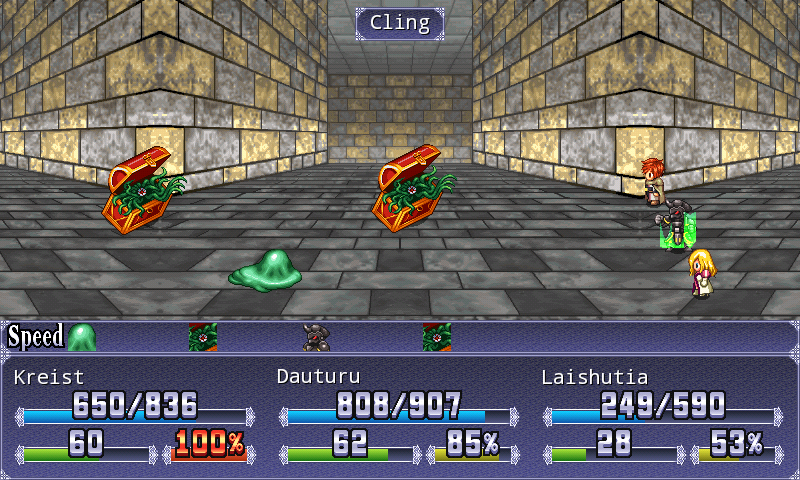
Its smartest decision is putting enemies directly on the map. You can see danger coming and try to avoid it, which makes dungeon travel less draining than a random-battle RPG. When you do engage, targeting the same foe in succession builds combinations for more damage. That gives your turns a useful sense of coordination: instead of simply picking the strongest command, you are encouraged to focus fire and keep momentum going.
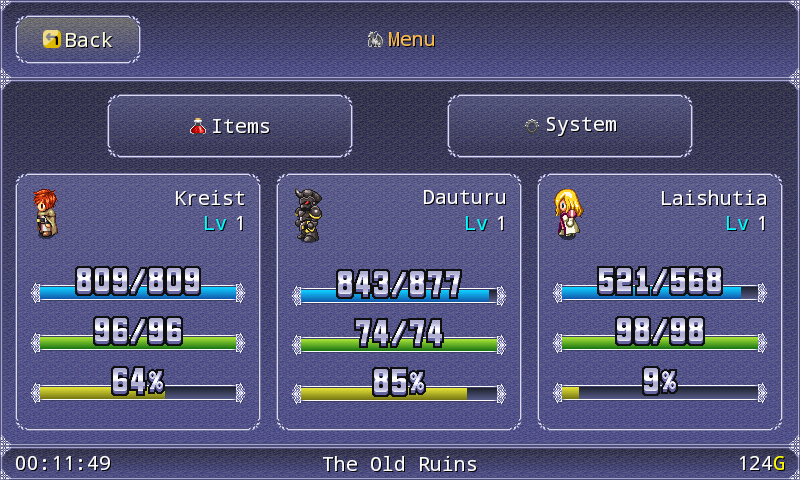
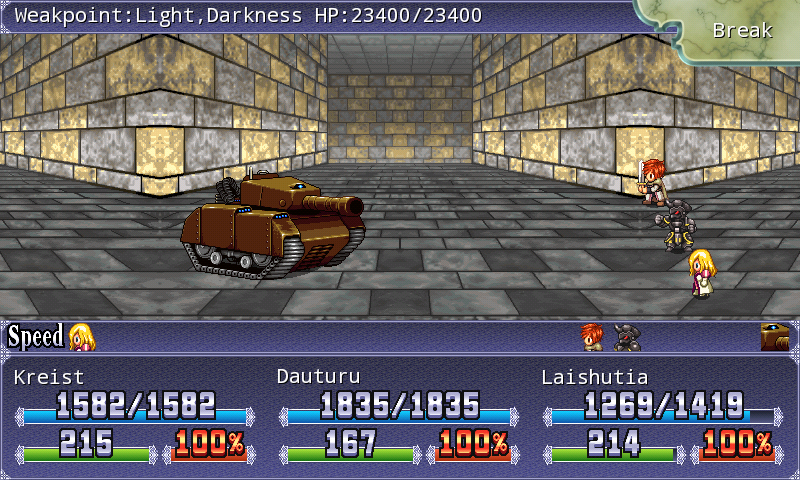
There is more tactical texture once weaknesses and character growth begin to matter. Enemies belong to tribes with weapon and skill preferences, and they also have elemental weaknesses. Break gauges add a satisfying punctuation mark, letting a charged character interrupt the normal flow with an especially powerful action. Merit points are the real long-term hook, since you can invest them across ten attributes, from attacks and defenses to speed, evasion, critical rate, and reduced usage. Crafting gear with assignable merit points and equipping skill-granting tablets give you plenty of room to shape a party around your own priorities.
That depth will land best if you enjoy pausing to consider builds and matchups. If you only want a brisk story with battles that resolve themselves, the layers of equipment, tablets, weaknesses, and merit allocation may feel like more bookkeeping than drama. But for a traditional RPG, Symphony of Eternity gives you meaningful levers to pull rather than treating leveling as an automatic upgrade track.
Graphics
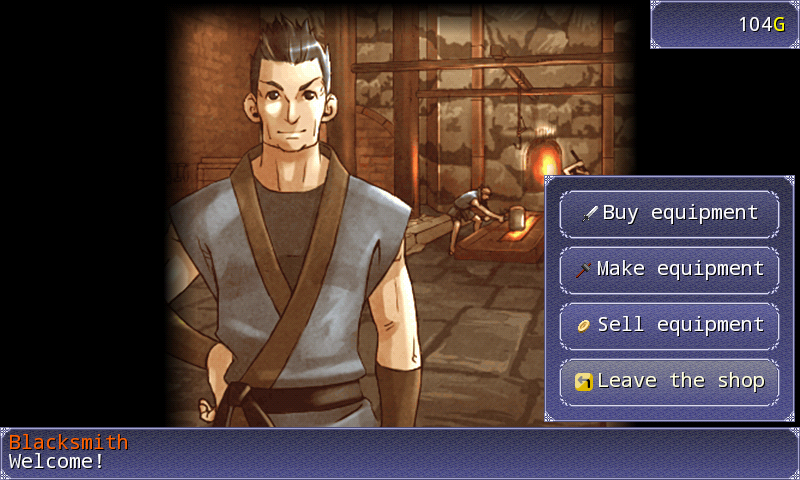
This is a top-down, 2D scrolling fantasy RPG with anime-inspired character art and a clear distinction between towns, world travel, and battle areas such as forests and dungeons. The visible enemies are especially helpful on the map because you can spot encounters before committing to them.
Story
A coup in Eashtend gives the adventure immediate stakes. Lady Safiro seizes the kingdom and kills most of the royal family, leaving a young princess to escape. The hero and his golem companion are already hunting Regratlute, a legendary weapon, when they find a girl under attack by wolves. Her claim that she is the lost princess turns their private quest into a campaign to take back the kingdom.
It is straightforward fantasy material: a traitor on the throne, a hidden royal survivor, and a powerful weapon that may turn the tide. The setup does not pretend to reinvent the genre, but it gives the party a clean goal and makes the search for Regratlute feel tied to the larger conflict rather than like a detached scavenger hunt.
You should go in wanting a classic save-the-kingdom arc, not a story built on ambiguity. The golem companion adds a welcome bit of party flavor to the initial setup, while the princess’s arrival quickly defines the stakes. It is a practical frame for an RPG built around traveling, fighting, and steadily preparing for a confrontation with the usurper.
Overall Experience
Symphony of Eternity is a solid, conventional turn-based RPG that earns its time through customization and combat choices rather than novelty. Seeing enemies before battles is a major quality-of-life advantage, and the combination of combo damage, breaks, elemental vulnerabilities, tribal affinities, and build options keeps fights from becoming pure attack-button routine.
The payoff depends on what you want from an old-school fantasy quest. Its royal-coup story is familiar, and the core loop will feel equally familiar to anyone who has spent time with Japanese-style RPGs. Yet the game gives you enough control over merit points, crafted equipment, and tablets to make character development feel more personal than in many straightforward genre throwbacks.
Give it a chance if you enjoy planning a party, spotting enemies on the field, and gradually tuning stats to suit your tactics. Skip it if you need a radical premise or a stripped-down battle system. At 6.9, it sits in the worthwhile middle ground: not a genre landmark, but a dependable traditional RPG with enough mechanical care to reward the right kind of player.

Reviews
There are no reviews yet.