 Retro Replay Retro Gaming History, Reviews & Emulation


Retro Replay Review
Gameplay
Build-a-lot gets its hooks into you by making an empty lot feel like an opportunity and a run-down house feel like a solvable problem. Early on, the choices are simple: buy a property, put workers on it, spend materials to improve it, then decide whether a sale now is worth more than future rent. Before long, you are staring at several possible purchases and realizing that one careless cash drain can leave you unable to fund the project that actually completes the level.
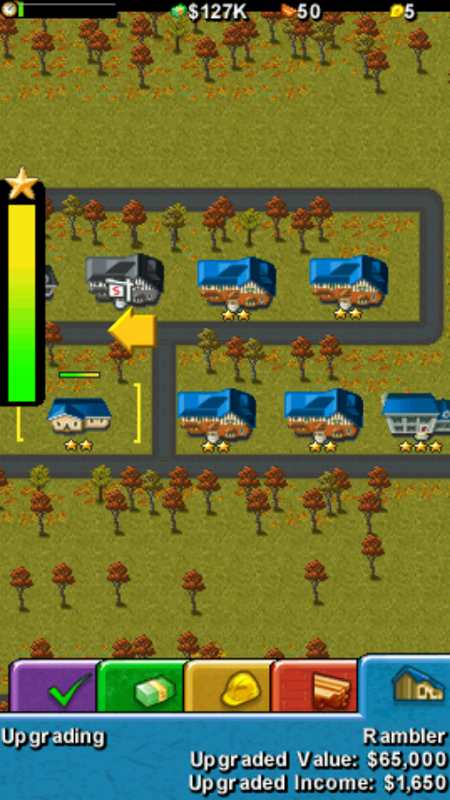
The satisfying part is how often a small decision pays forward. Selling a house can provide the immediate money needed for materials, but holding it brings rental income that keeps your plans moving. Buying workers and materials in bulk can save money, yet it also demands the kind of up-front investment that can derail a tight run. Special buildings add welcome wrinkles: a bank earns interest, while a workshop makes worker training cheaper. They are not just decorations; they change which short-term sacrifice makes sense.
Career mode is where the game has the most urgency. Each map asks for a particular outcome under a timer, such as a housing target and a required rental income, while a much faster completion earns a star. That second clock is a smart motivator if you enjoy refining a route and shaving wasted spending from your plan. It can also be frustrating when you are still learning a level’s economic rhythm, because the best answer is often about timing purchases rather than simply building more.
Casual mode removes that pressure and leaves you with a cash goal. It is a much kinder way to learn how rental income, worker costs, materials, and property sales feed one another. If racing for stars turns the game into a stressful optimization exercise, this mode lets you enjoy the underlying property puzzle at your own pace.
Graphics
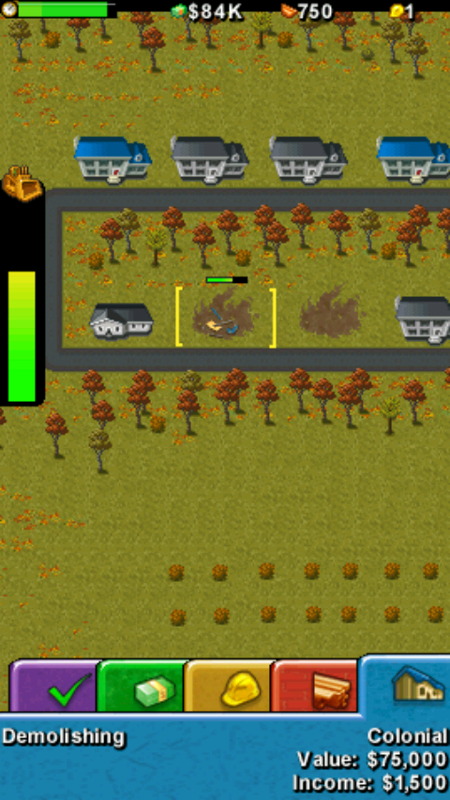
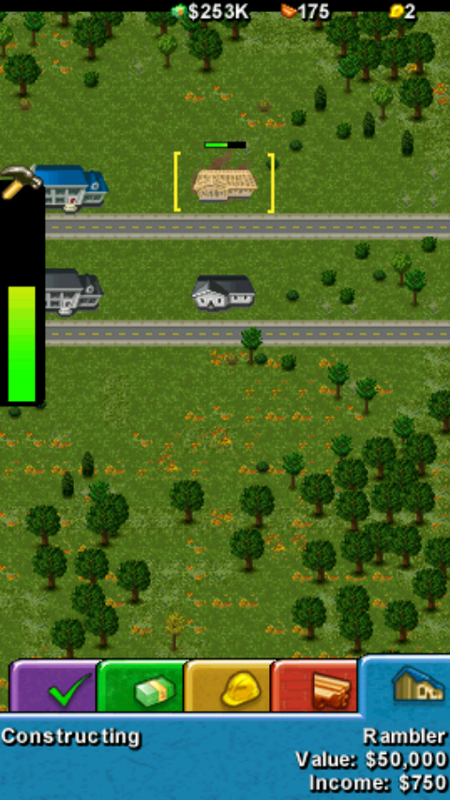
Build-a-lot uses a top-down view of neighborhoods filled with houses and buildable lots. That perspective suits the task well: you can quickly scan which properties are yours, which ones are for sale, and where your next construction decision will happen.
Story
There is no sprawling character story here; you step into the role of a real-estate developer and let each level’s financial target create the drama. The stakes are deliberately practical: turn a patchwork of properties into a profitable operation before time runs out.
That light framing works because the game’s stories emerge from your own close calls. A neighborhood becomes memorable when you barely raise enough cash for a purchase, then watch rental income rescue the plan. Another becomes the map where a costly bulk buy leaves you scrambling to recover. It is a modest form of narrative, but it fits a game built around planning.
The career objectives give each stage a distinct purpose without burying the player in exposition. You are always working toward a concrete result, whether that means constructing certain homes or reaching a rental-income threshold. The focus stays squarely on the decisions that got you there.
Overall Experience
Build-a-lot is a compact strategy game that understands the pleasure of making a plan, watching it wobble, and rescuing it with one smart property deal. Its real-time structure keeps the board from becoming a purely leisurely spreadsheet, while the housing-and-rent loop remains approachable enough that you can grasp the basics quickly.
The main dividing line is your relationship with timers. If you enjoy replaying a challenge to find a cleaner, faster route, the career stars give the game lasting bite. If you hate having a clock turn a thoughtful economic puzzle into a rush, start in casual mode and treat each map as a more relaxed money-management exercise.
At its best, Build-a-lot makes you feel clever without requiring an encyclopedic strategy-game brain. The individual actions are familiar, but the mix of buying, building, upgrading, selling, renting, hiring, and material management produces pleasing pressure. It is worth a look for anyone who likes short, focused strategy puzzles and can appreciate that sometimes the best investment is the house you resist selling.



Reviews
There are no reviews yet.