 Retro Replay Retro Replay gaming reviews, news, emulation, geek stuff and more!
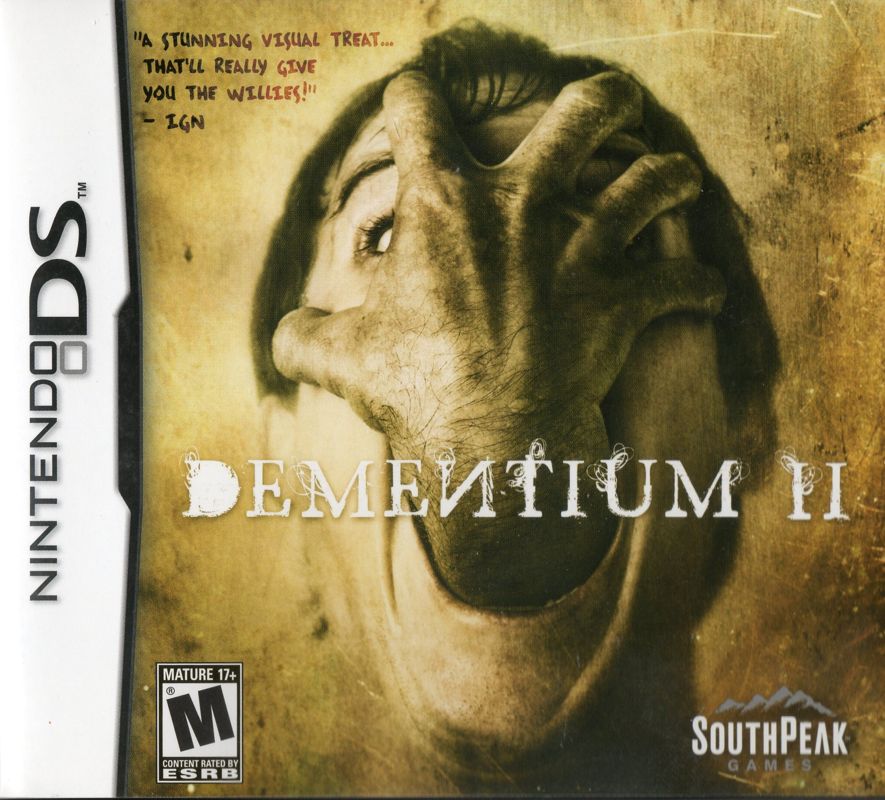
Retro Replay Review
Gameplay
The immediate hook is the pressure of aiming with the stylus while moving through a hostile nightmare. Dementium II uses the D-pad for movement and the touch screen for looking and targeting, so it never feels like a conventional console shooter. At first, you may spend as much time adjusting to the control split as you do fighting. Give it a little time: once your hands settle into the routine, the setup becomes a workable way to build tension rather than a novelty standing in the way.
The sequel makes several smart corrections that matter during an actual playthrough. You can carry a flashlight alongside a single-handed weapon, which means you are not constantly choosing between seeing the threat and defending yourself. Enemies also do not respawn simply because you left and re-entered a room. That change removes one of the most irritating kinds of backtracking and lets cleared spaces stay cleared.
The touch screen handles more than aiming. It is where you access inventory functions, interact with the environment, and use movement options such as jumping and crouching; its central area also serves as a map. That is a lot to put on one screen, but it suits a game that wants you to stay aware of where you are in its shifting spaces. Manual saves at mirrors are another major improvement: progress can still feel hard-won, yet a mistake does not need to wipe out an unreasonable stretch of play. Survival Mode adds a separate reason to return once the main ordeal is done.
Graphics
The game keeps you in a first-person view of a prison turned hospital and its demon- and monster-infested alternate version. That contrast gives the horror a concrete shape: familiar institutional spaces are not merely dangerous, but liable to become something far worse as Redmoor’s treatment unravels.
Story
William Redmoor is not simply escaping a haunted building. He is a brain-surgery recipient undergoing an experimental therapy, and the opening treats the first game’s “Phase 1” as a success. That makes “Phase 2” immediately uneasy. The people running the process consider it treatment; from William’s side, it means fighting through another nightmare world full of monsters.
That setup gives the game more bite than a basic run through spooky rooms. The prison-hospital and its alternate vision are tied directly to William’s attempt to overcome what he sees, so the action carries the uncomfortable question of whether this process is helping him or just finding a more elaborate way to hurt him. The therapy’s questionable nature is the story’s most useful source of tension.
You do not need intimate knowledge of the first game to understand the new premise, but it is plainly a continuation rather than a detached sequel. Fans of Dementium: The Ward will appreciate that it follows Redmoor into the next stage instead of discarding the earlier setup, while newcomers get a clear enough starting point: the first phase ended, and the nightmare has not.
Overall Experience
Dementium II is a sequel that earns its existence through practical improvements. The flashlight-and-weapon pairing, non-respawning enemies, and manual mirror saves directly address the kinds of friction that can make handheld horror feel more exhausting than scary. They do not turn it into an effortless game, but they make its pressure feel more intentional.
The DS control scheme remains the dividing line. If you cannot tolerate touch-screen aiming in a first-person shooter, this will not negotiate you into liking it. If you are willing to meet it on its own terms, however, the unusual input method creates a hands-on, slightly vulnerable rhythm that fits a horror game about navigating threats in close quarters.
For a returning fan, this is the version of the formula with fewer needless frustrations and a continuation of William Redmoor’s grim treatment. For a curious newcomer, it is worth trying if you want a focused handheld horror shooter rather than a relaxed action game. The payoff is a tense, strange DS experience that improves where it counts, even if its platform-specific controls remain an acquired taste.



Reviews
There are no reviews yet.