 Retro Replay Retro Replay gaming reviews, news, emulation, geek stuff and more!
Retro Replay Review
Gameplay
The Hidden Staircase starts with the kind of task that sounds almost too modest to carry a detective game: people ask Nancy to find misplaced things. Yet the twist is important. Rather than clearing one crowded hidden-object scene and moving on, you have to search across the rooms of Twin Elms. That makes the mansion feel like a place you gradually learn, not just a sequence of disposable puzzles.
When you begin remembering where you saw a useful-looking object or which room you have not checked in a while, the searching starts to click. The game rewards methodical players who can keep a mental map of the house and enjoy combing through it again. If you want constant forward momentum, though, the backtracking can feel like busywork, especially when an item is simply easy to miss.
Three chapters give the investigation a tidy shape, and the automatic save at each chapter opening is welcome on a handheld. The time-based score at the end of a chapter adds a little incentive to search efficiently, but it also highlights a tension in the design: taking your time is often the sensible way to solve things. Treat the score as a replay nudge rather than a measure of whether you investigated “correctly.”
The final stretch shifts toward puzzles, which is a smart change after so much item hunting. It gives the game a stronger sense of conclusion than another round of lists would have. The payoff is worth reaching if you enjoy piecing through a house carefully, but it will not convert anyone who already finds hidden-object searches tiresome.
Graphics
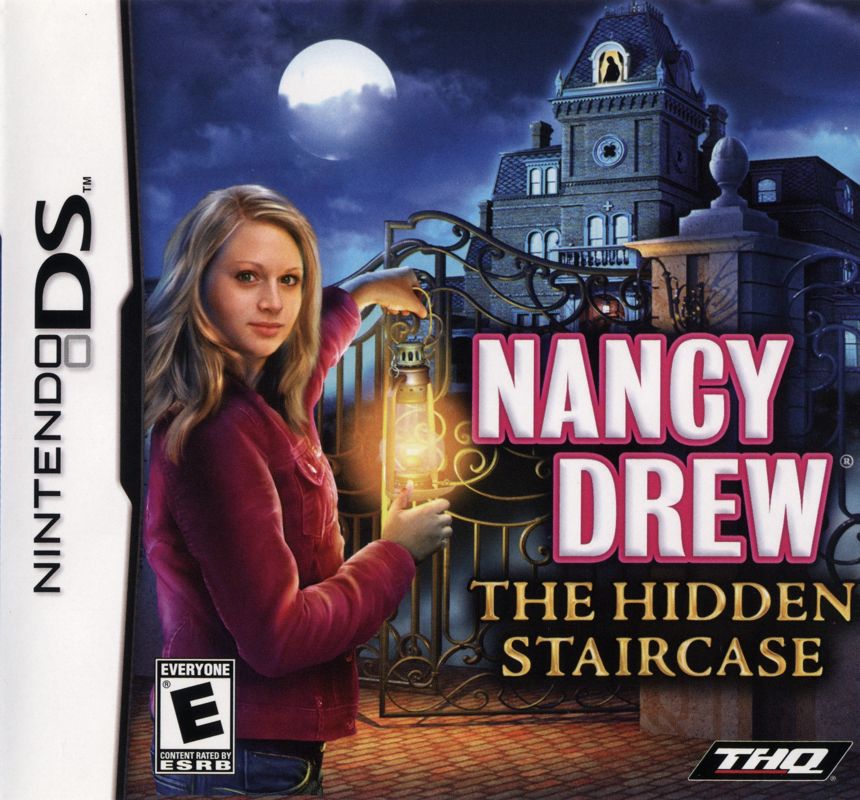
Twin Elms is viewed in first person, with the large mansion broken into rooms you revisit while tracking down items. That room-by-room viewpoint suits the central search well: you are looking at spaces as places to investigate, not merely as a single static hidden-object board.
Story
A suspected haunting at the home of Nancy’s friend Helen is exactly the right kind of setup for a brisk Nancy Drew mystery. Strange happenings give every errand a little extra tension, because the game keeps the question in front of you: is Twin Elms actually haunted, or is somebody arranging the trouble?
The story is not carried by huge dramatic turns so much as the steady act of investigating the mansion. That makes it feel closer to a cozy case than a horror game. You are there to get to the bottom of suspicious events, and the familiar Nancy Drew setup is easy to settle into.
Because the search tasks dominate much of the journey, the mystery works best when you enjoy the atmosphere of being sent around a house with a question hanging over it. The puzzle-oriented finale gives the case a more focused finish and helps the narrative land with more purpose than the early scavenging alone suggests.
Overall Experience
This is a modest, patient detective game with a solid sense of place. Its best idea is making the mansion-wide search part of the investigation: you keep revisiting Twin Elms, noticing what you missed, and slowly turning unfamiliar rooms into known territory. That is a satisfying loop when you are in the mood for a slower mystery.
It is also a game that can test your patience. Searching multiple rooms for a list item is more involving than ordinary one-screen hidden-object play, but it can become a drag when your next step is not obvious. Go in expecting a deliberate scavenger hunt with adventure-game framing, not a nonstop chain of elaborate puzzles.
Nancy Drew fans and younger mystery-game players are the clearest audience, especially if automatic chapter saves and a contained three-chapter case sound appealing. If this particular case leaves you wanting another series stop, Nancy Drew: Ultimate Dare is another Nancy Drew game worth considering. The Hidden Staircase is imperfect but likable: a compact haunted-house whodunit whose simple searches gain charm from the space they ask you to explore.



Reviews
There are no reviews yet.