 Retro Replay Retro Gaming History, Reviews & Emulation

Retro Replay Review
Gameplay
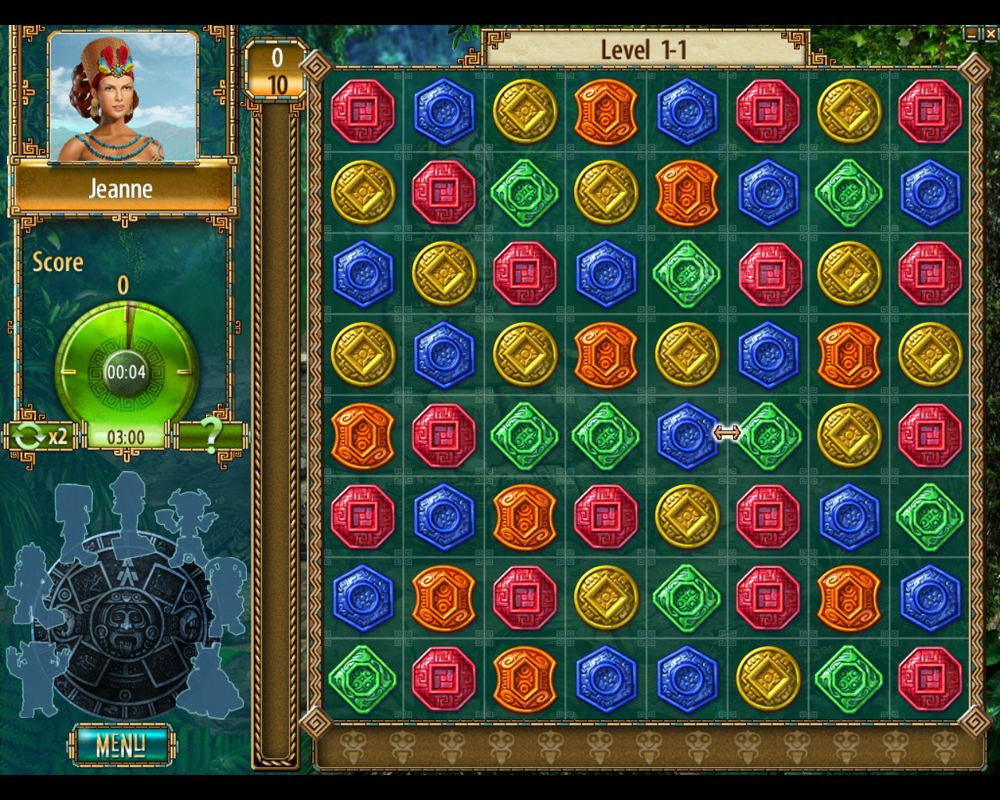
The first few boards make their intentions clear right away: swap adjacent tiles to form groups of three or more, explode them, and dig every gem out of the board before time expires. That simple loop has a satisfying urgency. You are not merely making whatever match catches your eye; you are scanning for the gems that still need clearing, trying to create useful cascades while the clock keeps moving.
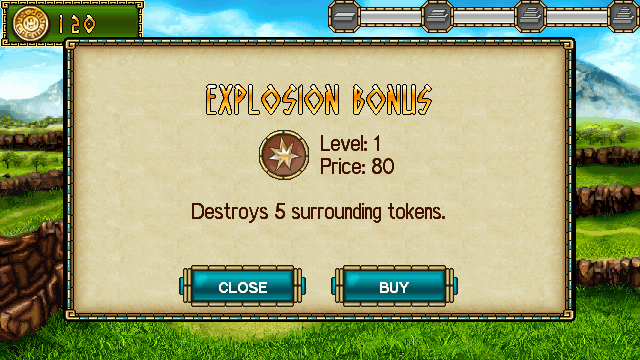
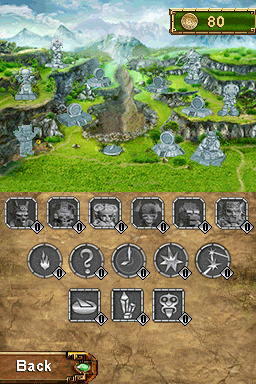
The three-minute opening limit is a sensible starting point, and bonus time can soften a close run. Coins collected during play buy bonuses from the town screen, which gives success a practical payoff beyond the individual puzzle. The game’s power-ups follow the first game’s lead, so this is more refinement than reinvention, but the structure still does a good job of making you feel stronger as you work through Adventure mode’s five chapter stages.
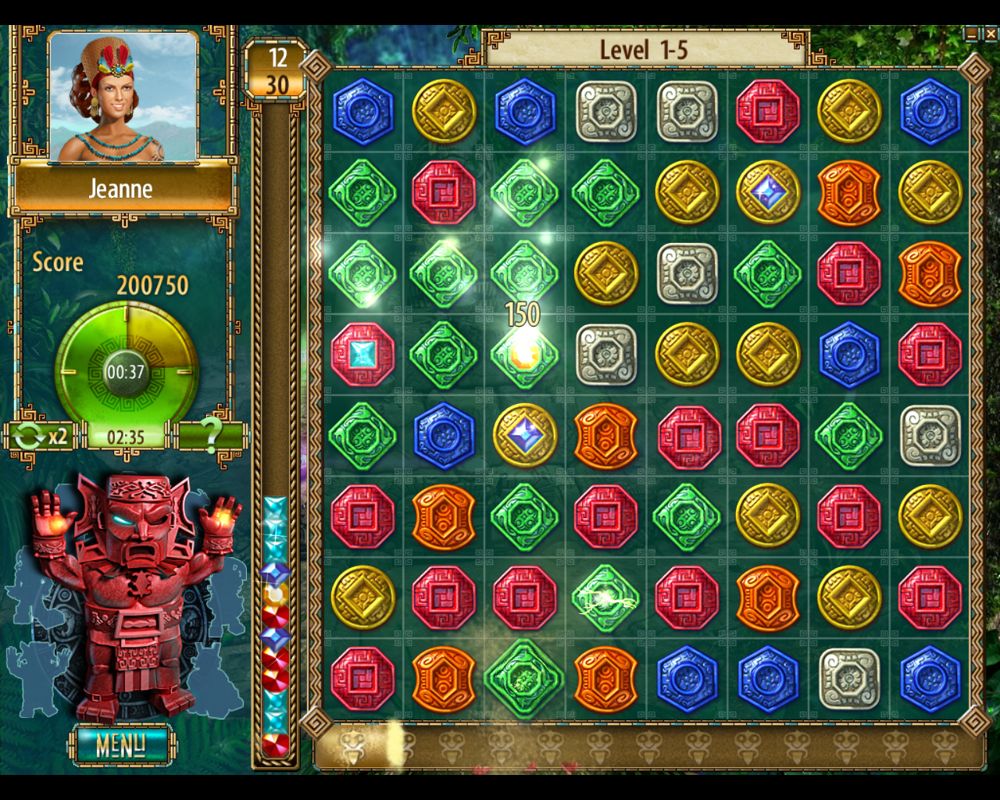
Ice tiles are the small complication that matters most. Needing to match them twice makes stubborn sections of a board demand attention, especially when the gems beneath them are the real objective. Hidden-object mini-games between stages break up the matching and bring in extra money, while Endless mode is the place to relax once it opens—though giving up the power helpers keeps it from becoming mindless. Puzzle mode, with 40 logic-focused challenges, is the best reason to stay after Adventure mode if you prefer deliberate problem-solving over racing a timer.
Graphics
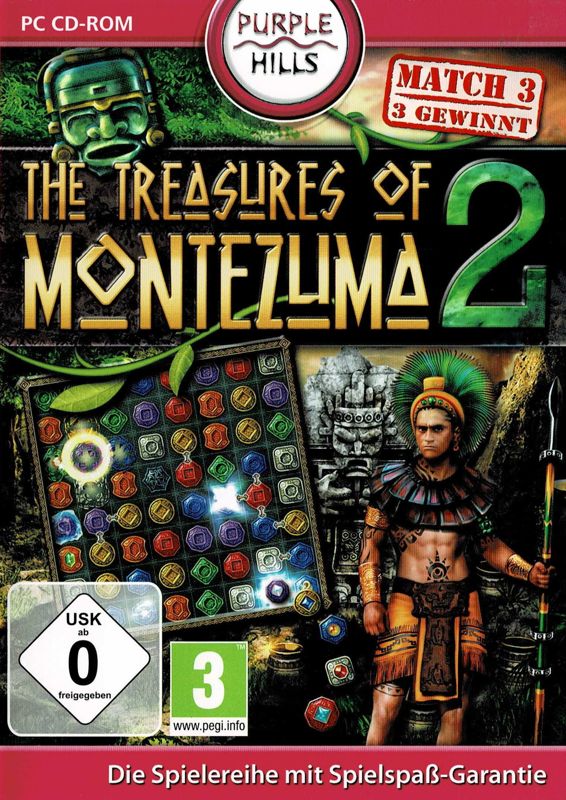
The game returns to ancient Aztec ruins, with colorful match-three tiles, embedded gems, coins, and icy blocks giving the boards their immediate visual landmarks. Choosing a male or female avatar adds a light personal touch, even though the puzzle board remains the real focus.
Story
There is no story here, and that is an unusually clean choice for a game built around ruins and treasure. You pick an avatar, enter Adventure mode, and the chapters serve as a sequence of puzzle milestones rather than a narrative journey.
That means the town screen and the gaps between stages do not ask you to keep track of characters or plot threads. The hidden-object interludes function as pace changes and chances to earn coins, not as chapters in a mystery. For a quick-play puzzle game, the lack of narrative clutter is often welcome.
Still, anyone hoping the Montezuma theme will unfold into an actual adventure will find very little to hold onto. The ruins are a backdrop and the gems are your target. Fortunately, the game is honest about where it puts its energy: the boards, the timer, and the next clear.
Overall Experience
The Treasures of Montezuma 2 earns its 8/10 by understanding the compact pleasures of match-three play. It starts accessible, introduces ice as a meaningful wrinkle, and gives you enough alternate modes to prevent the core task from wearing out too quickly. The timed stages can create that excellent “one more try” feeling when only a few gems remain.
Its biggest limitation is also its defining trait: it stays very close to the familiar formula. If you already know the first game, expect a comfortable return rather than a dramatic overhaul. The hidden-object segments and later Puzzle mode help, but they do not turn this into a fundamentally different kind of game.
Give it a chance if you want a brisk, structured match-three with clear goals and a little extra variety around the edges. Adventure mode is the right place to learn its rhythm, Endless mode is the better fit when you want to unwind, and Puzzle mode offers the strongest payoff for anyone who likes to stop, study the board, and solve rather than scramble.


Reviews
There are no reviews yet.